
Reviewed · HISTORICAL TOURS
Rabbis, Writers and Radicals: Montreal Jewish History Walking Tour
Montreal’s Jewish story is written into the streets of the Plateau and Mile End, not just inside a museum. This walking tour follows that story through former community spaces and surviving traces of Jewish life, while explaining how immigrants, writers, religious leaders, and political radicals helped shape Montreal.
I like the small group limit of 20 and the fact that a local guide leads the route. I also like the price: about $24.03 for two hours is a fair deal if you want context for the neighborhoods you are already exploring. The main caution is that the experience can feel more like a walking lecture than a sightseeing tour, and some guides have spoken too quickly or without enough amplification.
Key points to know before booking
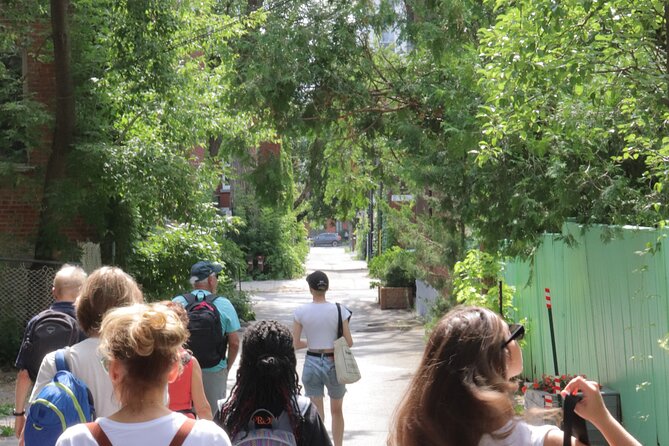
- The route connects the Plateau and Mile End: You walk between neighborhoods where Montreal’s Jewish community once lived, worked, worshiped, and argued about politics.
- The tour focuses on people and ideas: Expect stories about Ashkenazic immigrants, Jewish writers, radicals, anti-Zionist Jews, and the old class divide within the community.
- It lasts about two hours: The pace is manageable for most people with moderate fitness, though you should be ready to walk outdoors for the full tour.
- The start and finish are different: The published meeting details name 4129 Boulevard Saint-Laurent as the start and 5220 Boulevard Saint-Laurent as the end. Check your ticket carefully.
- Guide quality matters: Serafina, Sofia, Vivien, Hannah, and Emily have all been praised for warmth and clear explanations, though one guide was criticized for reading too closely from notes.
- It is best for history-minded visitors: If you want a lively look at Montreal’s Jewish past, it fits well. If you want to tour active synagogues or spend lots of time inside historic buildings, choose carefully.
Why Montreal’s Jewish story belongs on a walking tour
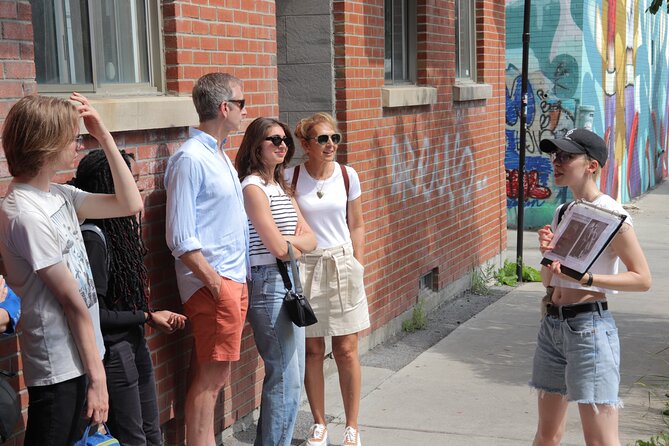
The most useful thing about this experience is its setting. You are not simply hearing a timeline in a room. You are moving through the Plateau and Mile End, two parts of Montreal closely tied to Jewish immigration and cultural life.
That matters because Jewish Montreal is not one simple story. The route touches on immigration, work, religion, language, politics, literature, class, and neighborhood change. It can show you how a community shaped the city while also revealing disagreements within that community.
The tour centers on the Ashkenazic Jewish immigrants who helped form Montreal’s older Jewish neighborhoods. You learn about the pressures of settling in a new city, the practical realities of community life, and the people who used writing and politics to respond to those pressures.
I like that the title includes rabbis, writers, and radicals. It signals a tour with more range than a list of religious buildings. You might hear about spiritual life, but also about secular culture, political arguments, labor and class divisions, and Jews who held anti-Zionist views.
That range is the tour’s strength. It is also the reason the route may feel less tidy than a standard sightseeing walk. Some sections connect naturally, while others can feel like separate pieces of a much larger story.
More Walking Tours in Montreal
- The Original Old Montréal Walking Tour by Guidatour
★ 4.5 · 2,217 reviews - Old Montreal Small-Group Walking Tour | Max 10 | by MTL Detours
★ 5.0 · 2,088 reviews - Montréal: The Original Old Montréal Walking Tour
★ 4.8 · 911 reviews
Starting on Saint-Laurent Boulevard
The published meeting information gives 4129 Boulevard Saint-Laurent as the starting point. Another note says the tour begins and ends at 4040 Boulevard Saint-Laurent, so I would not rely on memory or simply head to the Museum of Jewish Montreal.
Use the exact location printed on your ticket. The route does not begin at the museum’s exhibition building at 5220 Saint-Laurent, and the start and end are different locations around the Plateau and Mile End.
This is an important practical detail. Saint-Laurent Boulevard runs through several neighborhoods, and a wrong address could mean a rushed start or a needless walk. The meeting area is near public transportation, which makes it easier to reach without a car.
Once the group sets off, expect a walking lesson rather than a parade of major monuments. Some of the Jewish presence is visible in buildings and streets. Other parts survive mainly through stories, photographs, and explanations of what once stood there.
That means you need to pay attention to the guide. The tour’s value comes from interpretation. A storefront or ordinary-looking building may not mean much until you hear who lived or worked there, and why the surrounding block mattered.
The Plateau and Mile End as the classroom
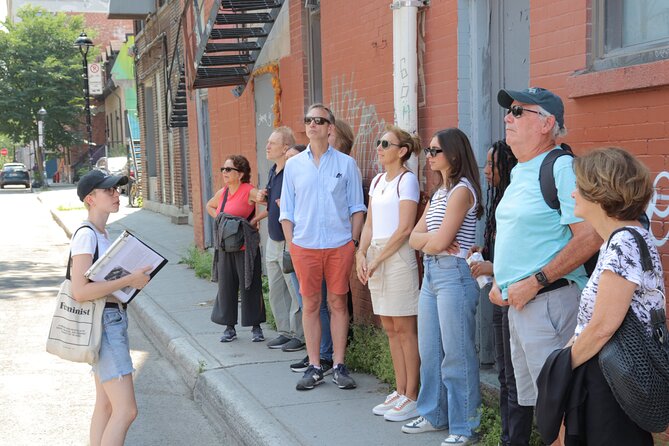
The neighborhoods provide the setting for the central story. You walk through parts of Montreal connected with Jewish settlement and cultural life, while the guide explains how the community changed over time.
The route appears designed to show both what remains and what has disappeared. That can be rewarding if you enjoy reading a city through its layers. It can be less satisfying if you expect every stop to contain a preserved landmark or a grand interior.
One especially interesting subject is the old padlock law. This points to the restrictions placed on Jewish businesses and institutions, and it gives the tour a concrete way to explain how law and social pressure shaped daily life.
The class divide within the Jewish community is another useful theme. Wealthy and poor Jews did not experience Montreal in the same way, and a good guide can help you see those differences as part of the community’s story rather than treating Jewish Montreal as a single block.
You may also hear about anti-Zionist Jews, a topic that adds political complexity. It is one of the areas I would want the guide to explain with care, since it helps show that Jewish political thought in Montreal was never uniform.
The best version of this tour links these subjects into a clear narrative: why people arrived, how they built community, how different groups disagreed, and why the old Jewish center changed. Some guides have done that very well. Others have offered strong individual facts without connecting them as clearly.
Rabbis, writers, and radicals
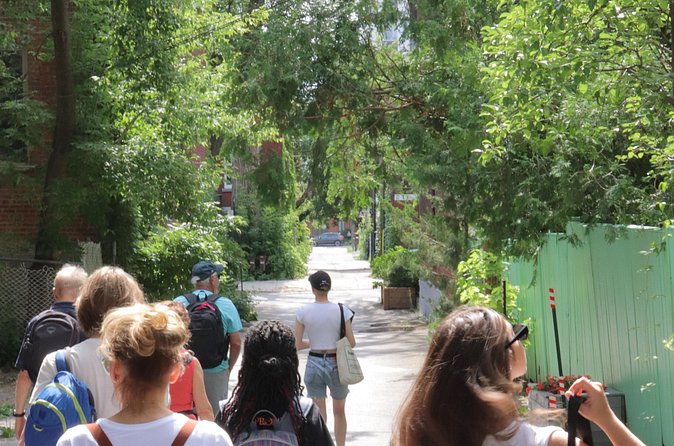
The tour’s title is not just decoration. It points to three different ways Jewish Montreal developed.
The rabbis represent religious leadership and the institutions that helped organize community life. The writers point to Montreal’s literary culture and the role of language, publishing, and storytelling in shaping identity. The radicals bring in politics, labor, social change, and arguments about how Jewish life should develop.
This mix gives the walk more substance than a simple architectural tour. You are not only asking what a building was. You are asking who used it, what they believed, how they supported themselves, and what they thought Montreal should become.
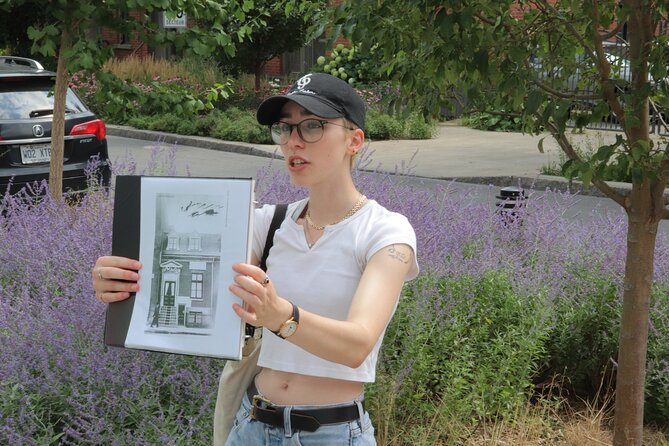
The guide may use photographs or other visual material to show places that no longer look Jewish or no longer exist in their former role. That can be helpful, especially when the modern street gives little clue about its earlier community.
There is a tradeoff. One dissatisfied participant found the guide too dependent on a book and images, with too little to see in person. If you need historic interiors, preserved synagogues, or a large number of obvious landmarks, this may not be your ideal Montreal tour.
I would frame it this way: the experience is strongest for people who like urban history and can enjoy an ordinary street becoming meaningful through explanation. It is weaker for anyone who measures a walking tour mainly by the number of photogenic sights.
More Historical Tours in Montreal:
- Montreal History Guided Sightseeing Cruise
★ 3.5 · 363 reviews - Making Their Mark: Montreal Jewish History Walking Tour
★ 5.0 · 166 reviews - In the Shadow of the Mountain: Montreal Jewish History Walking Tour
★ 4.5 · 33 reviews - Private Montreal City Tour by Car, History & Hidden Gems
★ 5.0 · 22 reviews
Guide style can shape the experience
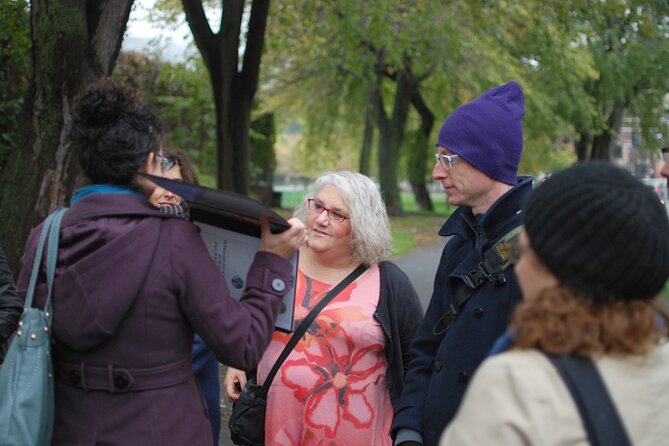
Guide quality is especially important here because so much depends on spoken explanation. Several guides have received warm praise for their command of the subject and their friendly manner.
Serafina has been praised for being clear, kind, patient, and open to different personal experiences. Sofia was described as enthusiastic and highly informed. Vivien was singled out for combining a pleasant manner with strong subject knowledge. Hannah was praised for keeping the pace comfortable for older people and for adding personal observations.
Those details tell you what a good tour can feel like. You get a guide who answers questions, adjusts the walking pace, and makes the subject feel connected to real lives rather than dates on a page.
There is one recurring concern to keep in mind: speed and volume. One guide spoke too quickly for non-native English speakers, and another group had trouble hearing without audio support. The tour is offered in English, so ask questions if you miss a point and stay close to the guide.
The guide may also need to handle questions beyond the prepared route. Some people found the explanations too dependent on notes, while others found the guides able to answer questions with ease. That variation suggests that the individual guide can make a noticeable difference.
For the best experience, arrive ready to listen and ask questions. If you are especially interested in the padlock law, anti-Zionist Jewish politics, class divisions, or Jewish writing in Montreal, mention that early. A good guide can often give those themes more attention.
Pace, group size, and physical effort
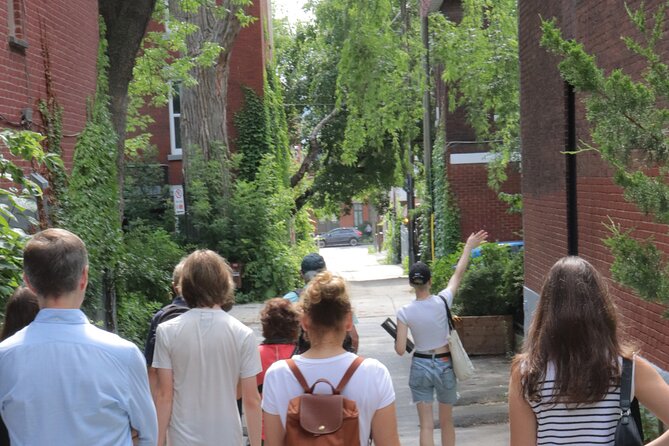
The tour lasts about two hours and has a maximum of 20 people. That is a useful middle ground. The group is large enough to have the energy of a public walking tour, but small enough that you should be able to hear and ask questions when the guide manages the group well.
You need moderate physical fitness. The experience takes place on foot, outdoors, and the route begins and ends in different places. Wear comfortable shoes and plan for city walking rather than a short stroll between indoor attractions.
The pace seems generally reasonable. Hannah was praised for slowing enough for older people without making the walk drag, and another guide was considerate about stopping when needed. Still, the route’s exact demands can vary with the group and the guide.
This is a family-friendly experience, especially for older children who can follow a history discussion. Younger children may find the lecture portions long unless they already enjoy stories about people, neighborhoods, and the past.
The group limit also matters for families. A small party can stay together more easily, but you should still keep children close because the tour takes place in city streets. The supplied information allows service animals.
Is $24.03 a fair price?
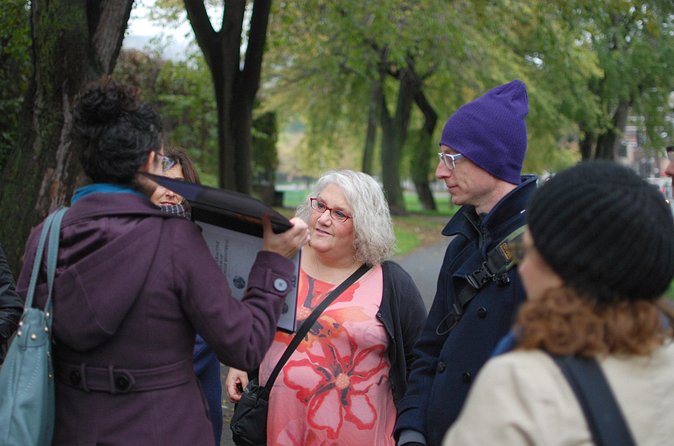
At about $24.03 per person, this is reasonably priced for a two-hour guided walk in Montreal. You are paying for a local guide’s time and research, not for admission to a major attraction or a long list of included services.
The value depends on your interests. If you are already planning to explore Saint-Laurent Boulevard, Mile End, or the Plateau, the tour gives those walks a clearer purpose. You may notice traces and connections you would otherwise pass without understanding.
It is also a good choice if you want Jewish Montreal placed within the wider story of the city. The tour links community life with immigration, politics, literature, neighborhood change, and social divisions.
The value is lower if you expect an indoor museum visit, historic religious interiors, or a large number of preserved sites. The Museum of Jewish Montreal’s exhibitions are at 5220 Saint-Laurent, but those exhibitions are separate from this walking route. The museum building is open to the public on Thursday, Friday, Saturday, and Sunday, with Monday openings beginning in late May 2024 according to the supplied information. Check current hours before planning an exhibition visit.
For the price, I think the tour makes sense as a focused introduction. You are not buying a grand attraction ticket. You are buying two hours of context, and that context is most useful when paired with your own time in the neighborhoods afterward.
Who will get the most from this walk?
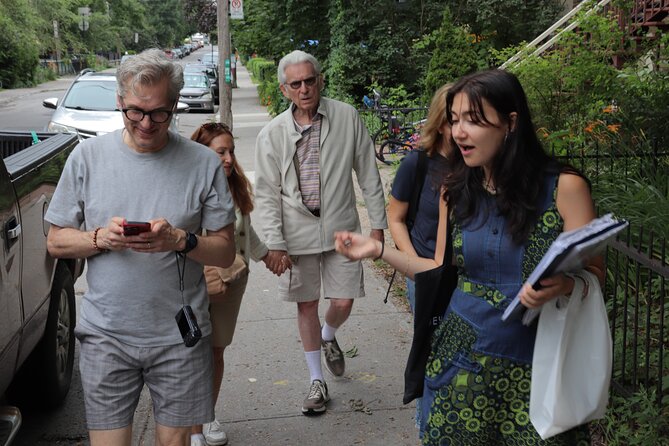
I would recommend the tour to you if you enjoy:
- Jewish history in North America
- Immigration and neighborhood history
- Montreal literature and political movements
- Walking tours that explain ordinary streets
- Local guides who can connect past events to present-day places
- A focused introduction before visiting the Museum of Jewish Montreal
It is also a sensible choice for couples, solo visitors, families with older children, and people who want a compact activity rather than a full-day tour. The two-hour length leaves room for lunch, museum time, or more independent exploring.
I would hesitate if you want a polished, highly visual sightseeing route. The experience can include places that are no longer visibly connected to Jewish Montreal, and the storytelling may feel disconnected if the guide does not build a strong thread between stops.
English ability is another consideration. The tour is offered in English, and one guide’s quick delivery made it difficult for some non-native speakers to follow. If you need a slower presentation, tell the guide at the start and remain near the front of the group.
Practical planning for the day
Check the meeting address carefully because the published information is not fully consistent. One section names 4129 Boulevard Saint-Laurent as the start and 5220 as the end, while another says the tour begins and ends at 4040 Boulevard Saint-Laurent. Your ticket should be the final word.
Do not go automatically to the museum’s exhibition building. The walking tour starts elsewhere and finishes elsewhere, and the route covers the Plateau and Mile End.
Plan for public transportation or a short city walk to the meeting point. Hotel pickup and drop-off are not included.
Confirmation is sent within 48 hours of booking, subject to availability. The tour is generally booked about nine days ahead, so booking a little early is sensible if your Montreal schedule is tight.
Free cancellation is available if you cancel at least 24 hours before the start time. Cancellations or changes made inside that 24-hour window are not refunded or accepted.
Should you book Rabbis, Writers and Radicals?
Book it if you want the story behind Montreal’s Jewish neighborhoods and you are happy to learn through a guide’s words as much as through visible buildings. The price is fair, the route is compact, and the subjects are unusually broad, from religious life to class conflict and anti-Zionist politics.
I would choose this tour early in a Montreal visit, then return to Mile End or the Plateau on your own. That way, the walk gives you a framework, and you can spend more time afterward with the streets, shops, and museum exhibitions that interest you most.
Skip it if you need a fully coherent academic lecture every time, or if you want preserved historic interiors at nearly every stop. The experience can vary with the guide, and hearing clearly is important.
For most history-minded visitors, it is a worthwhile two-hour introduction. Just confirm the meeting point, wear good shoes, and stay close enough to hear the person bringing this vanished and changing community back into view.
FAQ
Where does the Montreal Jewish history walking tour start?
The published meeting point lists 4129 Boulevard Saint-Laurent in Montreal. Another tour note says the tour begins at 4040 Boulevard Saint-Laurent, so check the exact address on your ticket before setting out.
Where does the tour end?
The listed end point is 5220 Boulevard Saint-Laurent, the address of the Museum of Jewish Montreal. Another note says the tour begins and ends at 4040 Boulevard Saint-Laurent, so verify the final details in your booking confirmation.
Does the tour begin at the Museum of Jewish Montreal?
No. The tour information says the walking route begins and ends at locations around the Plateau and Mile End, not at the museum’s exhibition building.
How long does the tour last?
The walking tour lasts approximately two hours.
What language is the tour offered in?
The tour is offered in English.
How much does the tour cost?
The listed price is approximately $24.03 per person.
What is included?
A local guide is included.
Is hotel pickup included?
No. Hotel pickup and drop-off are not included.
How many people can join the tour?
The activity has a maximum group size of 20 people.
What fitness level is required?
Participants should have a moderate level of physical fitness because the experience is a walking tour.
Are service animals allowed?
Yes. Service animals are allowed.
Can I cancel for a refund?
Yes. You can cancel for a full refund up to 24 hours before the experience starts. Cancellations made less than 24 hours before the start time are not refunded.
Just added around Montreal
- Full Day Family Bike Rental★ 5.0 · 17 reviews
- Winter Express: Old Montreal Highlights Walking Tour★ 5.0 · 119 reviews
- In the Shadow of the Mountain: Montreal Jewish History Walking Tour★ 4.5 · 33 reviews
- Under the Surface of Montreal’s Chinatown: Guided Food Walking Tour★ 5.0 · 23 reviews
- The Ultimate Montreal Boat Tour – Fall Colors Apéro Edition★ 4.5 · 31 reviews
- Montreal Premium Driving Tour with River Cruise and Notre Dame★ 4.5 · 164 reviews
- Old Montreal: Self-Guided Tour from Place D‘Armes to Old Port★ 5.0 · 5 reviews
- Immersive Virtual Reality Game Activity★ 5.0 · 19 reviews
Historical Tours, compared.



Vancouver: Gastown Historical Walking Food Tour
The full write-up →
Evening Gourmet Tour 5 Course Dinner – History and Food in Old Quebec City
The full write-up →
Quebec City: Old Quebec Historical Walking Tour
The full write-up →

Combo Historical and Food Tour of Old Quebec
The full write-up →Browse the lists this tour appears in