
Reviewed · HISTORICAL TOURS
Quebec City: Old Quebec Historical Walking Tour
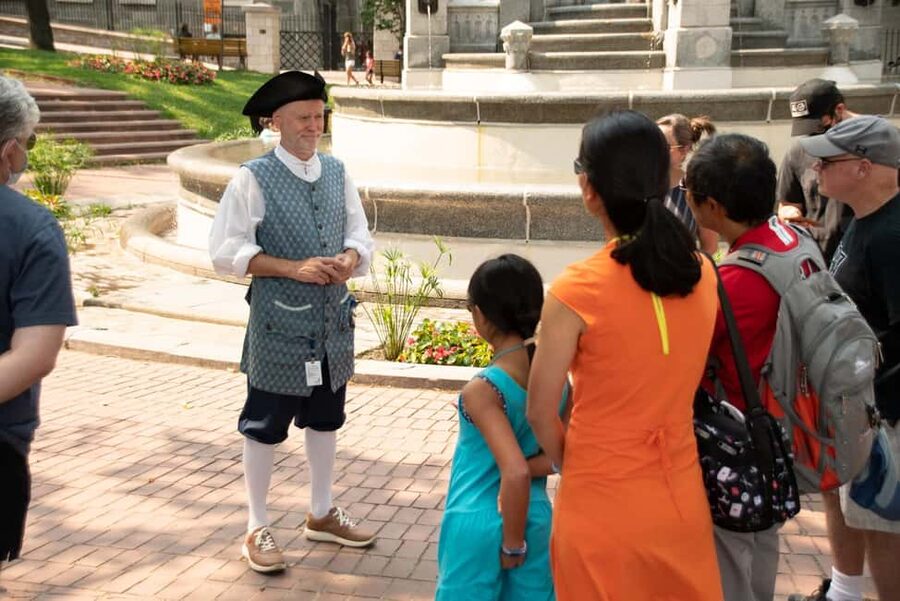
Old Quebec comes alive when a costumed guide leads you through its narrow streets and tells the story from inside the character. One guide may appear as Champlain, another as Louis Hébert, Charles Hubert, or Marie-Anne Barbel, turning a basic city walk into a lively lesson about four centuries of settlement, conflict, faith, and daily life. I especially like the way the tour reaches beyond the obvious postcard views, and the way guides connect political, Indigenous, religious, and present-day Quebec. The drawback is that two hours can feel short, and the walk includes hills and some uneven ground.
I like this tour for two clear reasons: the storytelling is far more engaging than a standard lecture, and the route gives first-time visitors a useful overview of Old Quebec. Guides adjust the pace, answer questions, and sometimes avoid steep stairways by using sloping streets instead. Still, if you want a slow photo walk, lots of sitting, or a detailed visit inside the Château Frontenac, this may feel brisk.
Key points at a glance
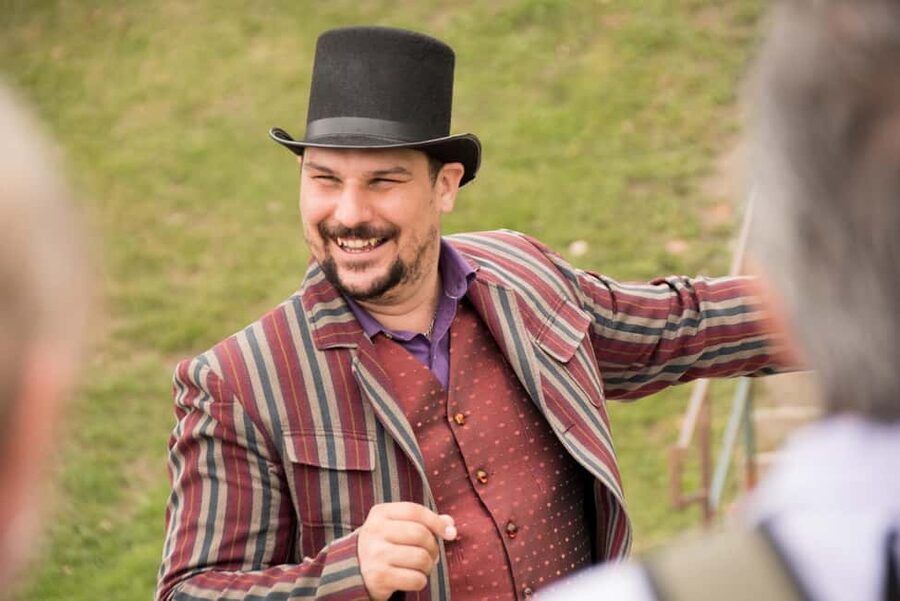
- A costumed history lesson: Your licensed guide presents Quebec’s past through a colonial-era character rather than a plain script.
- The essential Old Quebec sights: Expect stops around Château Frontenac, Dufferin Terrace, Notre-Dame de Québec Basilica, and Place Royale.
- More than architecture: The commentary covers settlement, religion, politics, Indigenous perspectives, geography, and modern Quebec.
- A good first-day orientation: The route helps you understand how the upper and lower parts of the old city fit together.
- A real walking tour: Wear comfortable shoes and expect hills, with no wheelchair access.
- Strong value at $24: For two hours of guided context in one of North America’s most historic city centers, the price is modest.
Why a costumed guide changes the walk
Old Quebec is easy to admire and surprisingly easy to misunderstand. You can photograph stone walls, old churches, steep streets, and grand hotels without knowing what you are looking at or why the city developed in this unusual form.
That is where the Cicerone guide earns the fee. Instead of pointing at buildings and reciting dates, the guide takes on a historical identity. Pierre, Bernard, Gary, Sylvain, Jean-Claude, and Marie-Anne Barbel are among the characters used by guides on different departures. The exact person depends on your date, but the format stays consistent: a licensed guide in full period clothing, speaking English or French, and using stories to connect one place with the next.
I find this approach particularly useful in Quebec City because the past is layered tightly into the streets. A church, monument, terrace, and market square may each represent a different stage of the city’s development. A good guide gives you the links between them.
The strongest part of the experience is the tone. Guides use humor, anecdotes, and questions rather than treating the subject like a school lesson. One guide presented the story through three broad phases of Quebec’s past, while another explained how farmers helped settle the colony. That kind of structure gives you something to hold on to after the tour ends.
More Historical Tours in Quebec City
- Evening Gourmet Tour 5 Course Dinner – History and Food in Old Quebec City
★ 5.0 · 496 reviews - Combo Historical and Food Tour of Old Quebec
★ 5.0 · 360 reviews - Walking Tour Through Quebec City’s History
★ 4.5 · 263 reviews
Starting at Sainte-Anne Street
Check in at the Cicerone information centre at 12 Sainte-Anne Street, G1R 3X2, unless your booked option gives a different meeting point. Confirm the location before you leave your hotel, since the meeting point can vary and one past booking included an incorrect address. In an unfamiliar city, a wrong starting point can cost you valuable time.
Once the group gathers, expect a short introduction before heading into the old city. Small groups may be available, which is helpful on narrow streets and makes it easier to hear the guide. Group size can affect the feel of the tour, so check the selected option when booking.
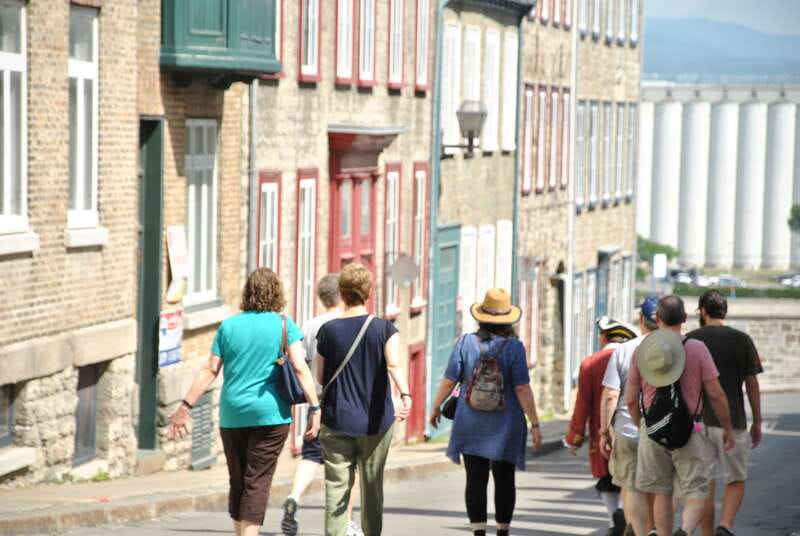
Bring comfortable shoes, not your nicest city shoes. Old Quebec rewards walking, but the streets are not flat and the route may include inclines, uneven paving, and changes in elevation between the upper and lower sections. A guide may choose sloping roads instead of long stairways when the group needs it, but you should still expect a proper two-hour walk.
The pace is generally manageable. Several guides have been praised for keeping the group together and adapting to different abilities. Even so, this is not a sightseeing ride with frequent long breaks. If you are approaching 80, have trouble with hills, or need regular seating, consider your energy before booking. One person found the final section difficult and wished for more rest stops.
Château Frontenac and Dufferin Terrace
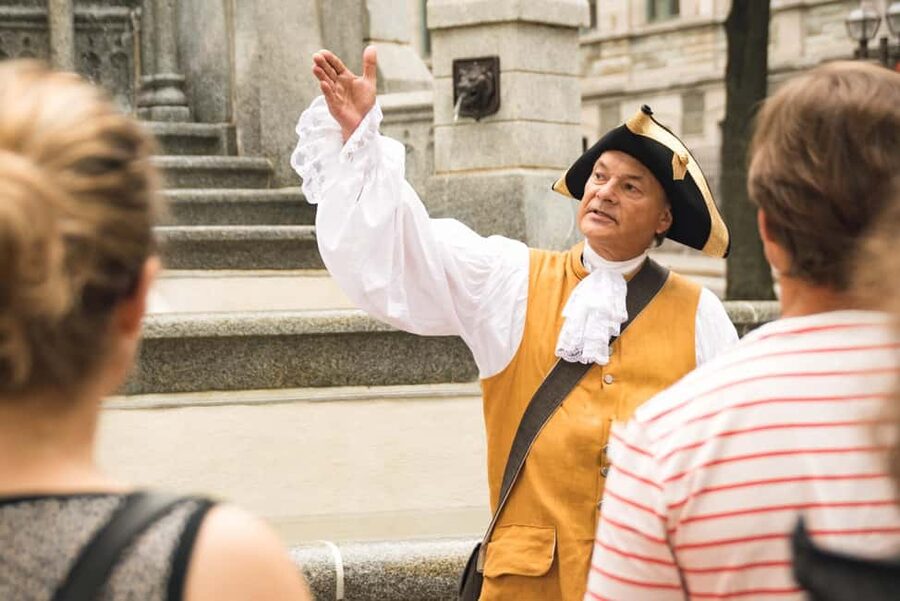
The Château Frontenac is one of the tour’s major visual anchors. Its grand exterior gives you an immediate sense of Quebec City’s confidence and importance. Even if you know little about the building, its position above the river and its elaborate design make it an easy place to begin a discussion about the city’s role in Canadian history.
The tour highlights the hotel’s exterior architecture and includes access to exclusive areas of the Château Frontenac as part of the experience description. The amount of time spent inside may depend on the guide and the day’s route, so keep your expectations measured. The walk is not presented as a full hotel tour.
Dufferin Terrace adds a different view. It is a broad promenade beside the Château, and it helps you understand the city’s position above the St. Lawrence River. The guide can put the upper town into context while you take in the open space and grand sight lines.
I would not book this experience mainly for long photo stops at the terrace. One person wanted more time on the boardwalk and more of the Château. The tour’s main purpose is interpretation, not unhurried photography. If you want the best pictures, you may want to return to Dufferin Terrace on your own after the walk.
Notre-Dame Basilica and the role of faith
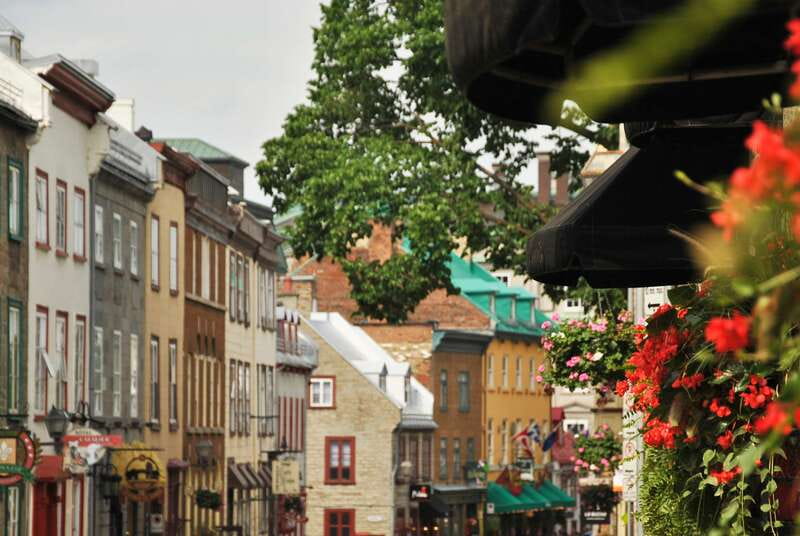
The Basilica of Notre-Dame de Québec brings religion into the story. It is not just another attractive church on the route. The guide uses places such as this to explain how faith shaped the city’s institutions, public life, and identity.
The tour does not promise an extended interior visit, so think of the basilica primarily as a historic stop and architectural landmark within the walking route. Your guide may focus on its exterior, surrounding square, or broader religious importance. The precise presentation can change with the group and the day.
This is also where the tour can become more thoughtful than a simple French-colonial postcard story. Guides have presented Quebec through religious, Indigenous, political, geographical, and modern viewpoints. That wider frame matters. It helps you understand that Quebec City was shaped by more than famous names and military dates.
You can ask questions along the way. Guides have handled both direct questions and side topics, which is useful if your interests extend beyond the standard route. A lively exchange often makes the walk feel personal rather than rehearsed.
More Walking Tours in Quebec City
- Quebec City Walking Tour
★ 5.0 · 4,716 reviews - Old Quebec City: Grand Walking Tour with Private Option
★ 4.8 · 2,609 reviews - Old Quebec Classique Walking Tour with Funicular
★ 5.0 · 1,317 reviews - Quebec: Crimes of New France Animated Walking Tour
★ 4.6 · 926 reviews
Place Royale, the city’s early center
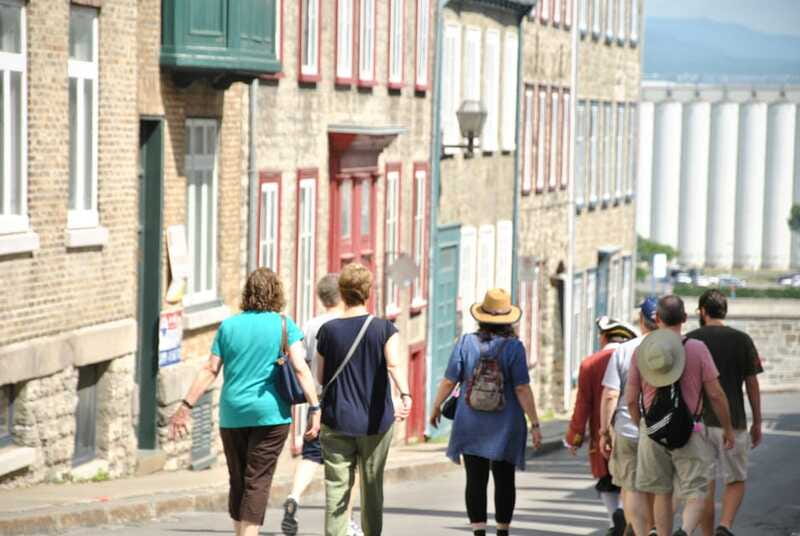
Place Royale is described as the cradle of French civilization in North America, and it gives the tour a strong connection to the beginnings of French settlement. Here, the story moves from grand landmarks to the practical work of building a colony.
This is one of the places where the character format works best. A guide presenting himself as Louis Hébert, for example, can explain settlement through the lives of farmers and early colonists rather than through a list of dates. That makes the story easier to picture and gives you a better sense of how the colony grew.
The square is also a reminder that Old Quebec is not a museum set. Its buildings and streets are part of a living city. The guide can point out how the area developed, how different groups shaped it, and how the old city relates to Quebec today.
Do not expect every corner of Place Royale to receive equal time. Two hours must cover several major stops, and the guide’s storytelling may take priority over a detailed architectural inventory. That is a fair trade for first-time visitors who want the main story without spending half a day on one square.
What you learn beyond the standard postcard story
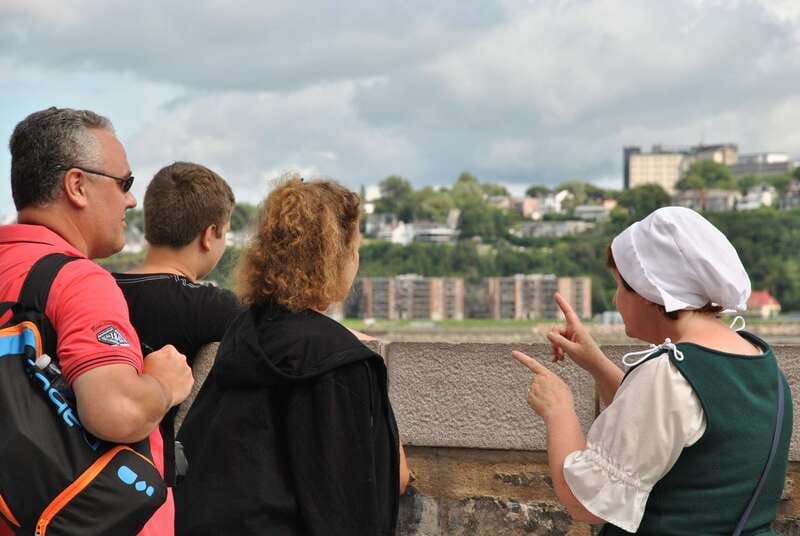
The advertised subject is 400 years of Quebec history, but the value lies in how that history is explained. You may hear about settlement, the people who established farms, religious institutions, political changes, geography, and the forces that shaped the city’s current identity.
The best guides make those subjects feel connected. One guide may begin with a broad outline of Quebec’s history, then use each stop to add another piece. Another may focus on personal anecdotes and small details. The presentation changes, but the aim is the same: help you see why the city looks and feels the way it does.
I also appreciate the effort to include more than one point of view. The tour can address Indigenous perspectives alongside French settlement and religious history. It may also connect the old city to current Canadian issues. That keeps the experience from becoming a simple celebration of colonial architecture.
The humor matters, too. Several guides have been described as funny, animated, or entertaining without becoming over-the-top. That balance is important. Too much theatrical performance can distract from the subject, while a dry lecture loses the energy of the streets. Cicerone’s strongest presentations appear to use the costume as a doorway into the story, not as a substitute for substance.
Pace, terrain, and comfort
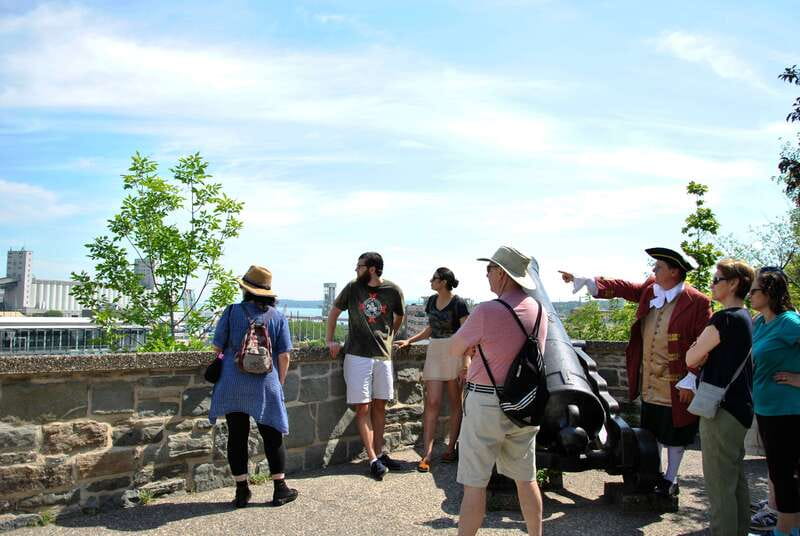
Plan for two hours on foot, with several changes in elevation. Old Quebec’s charm comes partly from its slopes and winding streets, but those same features can tire you. Comfortable clothes and supportive shoes are essential.
The route is not suitable for wheelchair users. Even for other mobility levels, the hills deserve attention. Guides can adapt the walk and avoid some stairways, but the experience still requires standing and walking for much of the time.
There are not many built-in opportunities for tea, souvenirs, or extended sitting. One person wished for more pauses, while another found the walk easy enough and not too taxing. Your experience will depend on your pace, the group, weather, and personal mobility.
Weather also matters. The walk operates in conditions that can make the streets less comfortable, so bring clothing suited to the forecast. An umbrella, warm layer, or sun protection can make a real difference. The tour does not become an indoor history talk simply because the weather turns unpleasant.
Is $24 a good price?
At $24 per person, this is a solid value if you want context as well as sightseeing. You receive a two-hour guided walk with a licensed guide, a period costume, and a route through some of Old Quebec’s most important places.
The price makes the most sense for a first visit. Without a guide, you can see the Château Frontenac, Dufferin Terrace, Notre-Dame Basilica, and Place Royale for free or at little cost, but you may miss the connections between them. The fee pays for the explanation, the route planning, and the chance to ask questions.
It is less compelling if you already have a strong grasp of Quebec City’s history or prefer to wander alone. You may also want a different experience if your priority is seeing the inside of the Château Frontenac in detail. The walk gives you an overview, not a private architectural tour.
Free cancellation up to 24 hours before the start and reserve-now, pay-later booking make it easier to fit into a changing schedule. Check the starting time and meeting point carefully, since departures vary.
Who should book the Old Quebec walk?
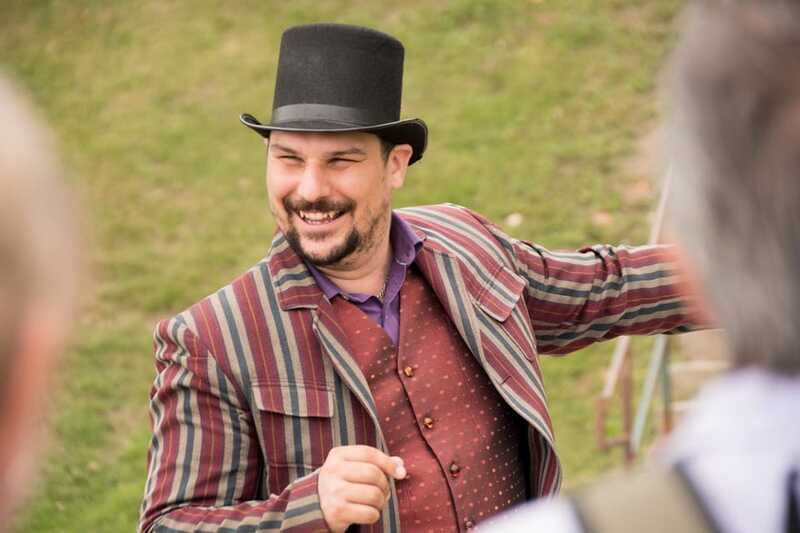
I would recommend this tour to first-time visitors, history-minded couples, families with older children, and anyone who likes learning while walking. It is especially useful early in your stay, since the route can help you decide which streets, churches, squares, and viewpoints deserve a later return.
It also suits people who normally lose interest in formal history talks. The costumes, character names, humor, and anecdotes give the information a human shape. Guides such as Gary, Pierre, Bernard, Alex, and Marie-Anne Barbel have used storytelling to keep the subject moving.
I would be more cautious if you need a fully accessible route, frequent rest stops, or a slow photographic pace. The two-hour length is efficient, but it leaves little room for lingering. You may also want to book only if you are comfortable with the possibility that the Château portion will focus more on the exterior and surrounding area than on extended interior access.
Should you book it?
Book this Cicerone tour if you want Old Quebec to make sense, not just look pretty. For $24, you get a lively orientation to the walled city, its major landmarks, and the people and events behind them. The costumed presentation adds character, while the guides’ humor and willingness to answer questions keep the history approachable.
Skip it if you want a fully accessible route, a leisurely photo walk, or a long Château Frontenac visit. Otherwise, this is a smart first-day choice. You will leave with a clearer map in your head and enough stories to make your later wandering more rewarding.
FAQ
How long is the Old Quebec Historical Walking Tour?
The tour lasts two hours.
What language is the tour offered in?
Live guiding is available in English and French.
Where do I check in?
Check in at the Cicerone information centre at 12 Sainte-Anne Street, G1R 3X2. The meeting point may vary depending on the option booked, so confirm your booking details.
What sights are included?
The route includes or highlights Château Frontenac, Dufferin Terrace, the Basilica of Notre-Dame de Québec, and Place Royale, along with other streets and historic areas of Old Quebec.
Is the tour suitable for wheelchair users?
No. The experience is not suitable for wheelchair users, and the walk includes hills and changes in elevation.
What should I wear or bring?
Wear comfortable shoes and comfortable clothing. You should be prepared to walk for two hours, including on sloping or uneven streets.
Just added around Quebec City
- From Montreal: Quebec City & Montmorency Falls Full Day Trip★ 4.5 · 145 reviews
- Stoneham: Nordic spa Thermal Experience★ 4.9 · 20 reviews
- Quebec : Old Town Walking Tour With A Local Guide★ 4.5 · 38 reviews
- Quebec City’s History in Virtual Reality★ 4.5 · 141 reviews
- Quebec Interactive Street Theatre: “Crimes in New France”★ 4.6 · 175 reviews
- Quebec City: Winter Walking Tour in Old Quebec★ 4.9 · 30 reviews
- Québec: Fortifications-of-Québec Guided Walking Tour★ 4.7 · 60 reviews
- Quebec: Christmas Interactive Walking Tour of New France★ 4.3 · 7 reviews
Historical Tours, compared.



Vancouver: Gastown Historical Walking Food Tour
The full write-up →
Evening Gourmet Tour 5 Course Dinner – History and Food in Old Quebec City
The full write-up →

Combo Historical and Food Tour of Old Quebec
The full write-up →
The Really Gay History Tour in Vancouver, Canada
The full write-up →Browse the lists this tour appears in