
Reviewed · STARGAZING & DARK SKY
Jasper: Jasper Planetarium Dark Sky Experience
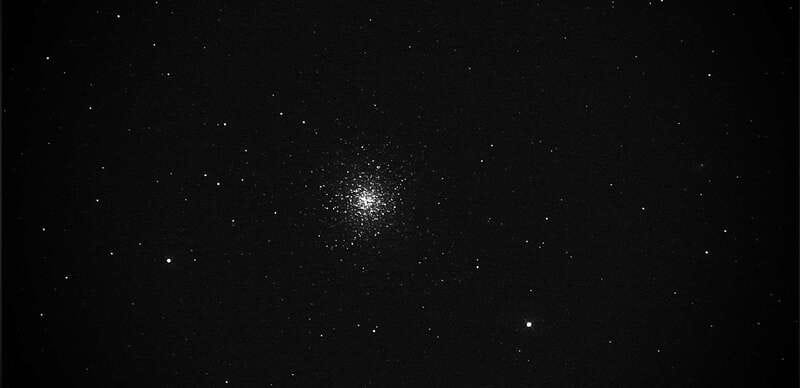
Jasper’s best night show is not only about looking through a telescope. This three-hour experience moves from a planetarium dome to optical telescopes, then out to a darker site about 480 metres away for a laser-guided tour of constellations, Indigenous sky stories, and binocular views of the Milky Way. The mix of indoor and outdoor time gives you a useful backup when Rocky Mountain weather turns cloudy.
I like the friendly, hands-on teaching and the chance to use binoculars supplied by the guides instead of simply watching someone else point at the sky. I also like that the program welcomes families and includes questions throughout. The main drawback is clear: clouds can limit the outdoor viewing, and the planetarium setup may feel more like an educational presentation than a grand theatre show.
Key points
- Three connected parts: Begin in the dome, continue with telescopes, and finish with constellations and binocular viewing at a darker site.
- A short walk matters: The final viewing area is about 480 metres from the lodge, so wear warm, weather-ready clothing.
- You use the equipment: Optical telescopes and supplied binoculars make this more active than a standard lecture.
- Cloud cover is a real risk: The two-year rain check helps, but it does not change the fact that a cloudy night may reduce the outdoor portion.
- Good for curious families: Children aged four and up can take part, and the guides keep the learning accessible.
- Strict arrival rules: Check in 15 minutes early at the Planetarium Retail Desk inside Jasper Park Lodge. Late arrivals are not admitted.
Starting at Jasper Park Lodge
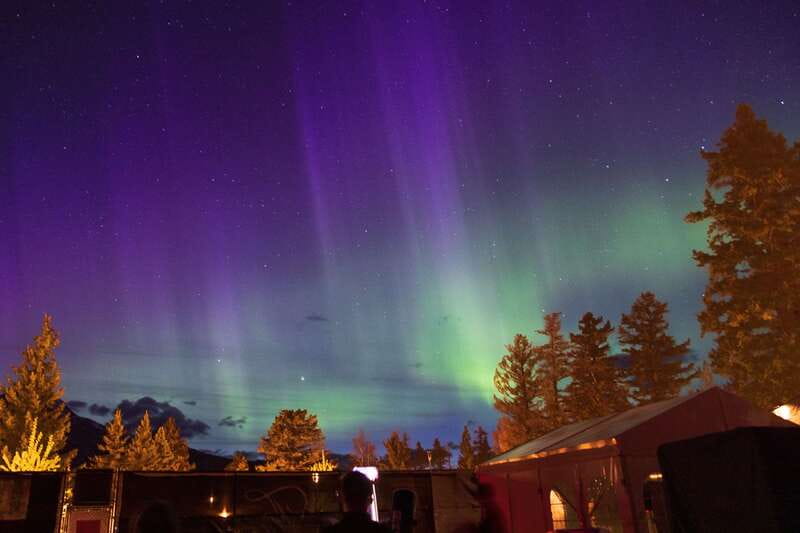
Your evening begins inside the Main Lodge at Jasper Park Lodge, not at a separate roadside observatory. Enter through the lodge and walk straight past the front desk. The Planetarium Retail Desk is in the southwest corner of the lobby, directly across from the Emerald Lounge.
This detail matters because the property is large enough to waste time if you start wandering. I would arrive early, find the desk first, and then deal with coats, parking, or a last bathroom stop. You must check in 15 minutes before departure, and latecomers are not admitted because they interrupt the program. If you miss the start, you may be moved to the next available tour, possibly on another day.
If you drive, you can park in P2, P3, or P4. P2 is closest to the Planetarium. Parking is free, which helps soften the total cost, though you still need to allow time to walk from your car into the Main Lodge.
The evening is conducted in English. Food and drinks are not allowed during the experience, and smoking, vaping, alcohol, drugs, and intoxication are prohibited. Bring layers. Mountain nights can feel cold even after a mild afternoon, and you will spend part of the evening outdoors.
More dark sky and stargazing nights in Jasper:
- Planetarium and Telescope Combo Tour
★ 4.0 · 144 reviews - Jasper: Jasper Planetarium and Telescope Combo Tour Tickets
★ 3.8 · 118 reviews - Jasper: Planetarium Indoor Dome Experience
★ 3.9 · 8 reviews
The dome theatre gives the sky a clear beginning
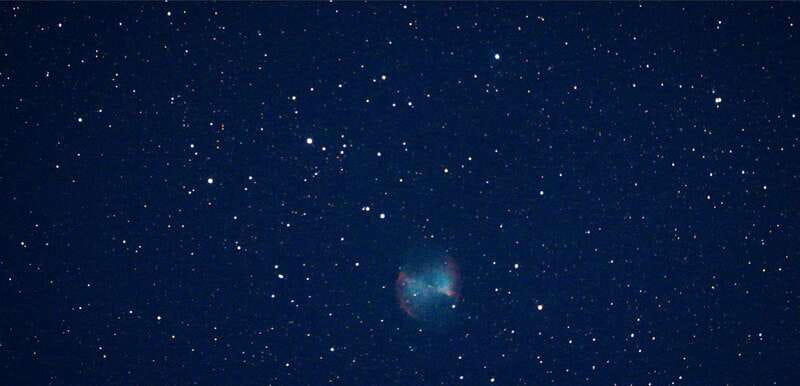
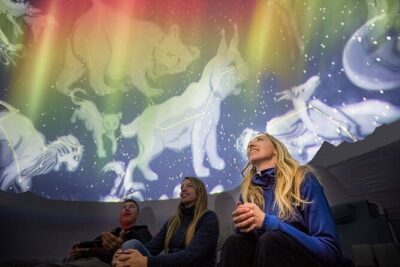
The first part takes place in the world-exclusive Planetarium dome theatre. This gives the guides a controlled way to explain planets, nebulas, constellations, and other objects before you step outside.
I see the dome as a useful orientation rather than the main reason to book the experience. It can show you what to look for and help you understand the scale of the universe before you face the actual night sky. For children and adults who do not know Orion from Andromeda, that preparation is valuable.
The show is educational and interactive, with time for questions. The guides have been praised for making the subject fun for families, including a small group with two children who received the same attention as a larger party. That suggests the tone is not stiff or overly academic.
At the same time, you should set your expectations. One adult participant found the planetarium portion basic, especially if you already know the common facts about planets and stars. If you have spent years reading astronomy books or watching science programs, the dome may feel more like a refresher than a revelation.
There is also an important age rule. Children under four are not permitted inside the dome theatre. The overall activity is open to all ages above that limit, but it is not designed as a drop-in event for toddlers.
Telescopes, from optical views to demonstrations
After the dome, the program shifts to telescopes. Admission includes access to optical telescopes, and the guides explain how the equipment is used. One evening included a range of optical and video telescopes, which made this portion more than a single look through one large instrument.
That variety matters. A telescope is only as useful as the object, weather, focus, and timing allow. You may see a bright object clearly, or you may get a modest view that looks less dramatic than the phrase dark sky experience suggests. The guides can explain what you are seeing, but they cannot control cloud, haze, or the limits of the equipment.
This is the section where expectations need the most care. One disappointed participant booked mainly to look through a large telescope but ended up using a smaller instrument that offered little definition on a cloudy night. That is a fair warning: the tour promises access to telescopes, not a guaranteed close-up of Saturn’s rings, a crisp nebula, or a spectacular galaxy.
The experience provider calls this a weather-proof telescope experience because the program can still operate when outdoor conditions are poor. That does not mean the sky will always be clear or that every telescope view will be sharp. It means the indoor and educational parts can still go ahead when the sky does not cooperate.
A 480-metre walk to a darker viewing site
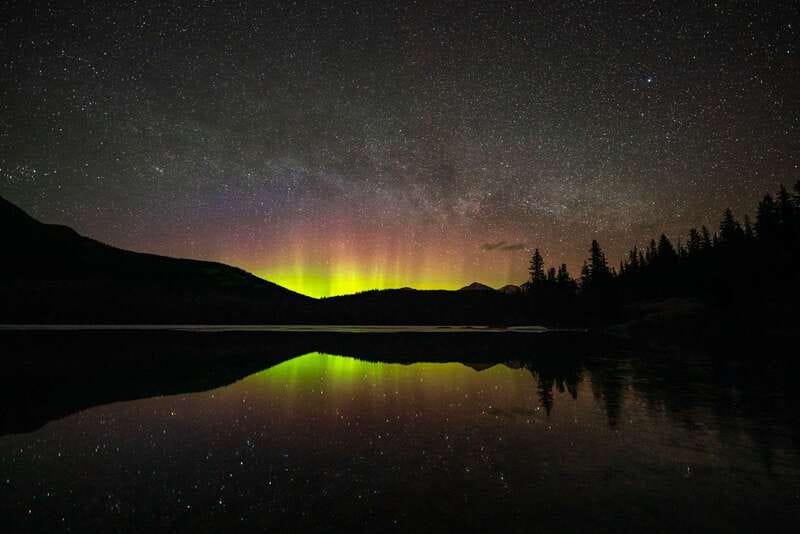
At some point, your dark sky guide announces the move to a specially selected site within walking distance. The distance is about 480 metres. That is not a long hike, but it is enough to matter if you have limited mobility, young children, or unsuitable shoes.
The activity is specifically listed as unsuitable for people with mobility impairments. The route details are limited, so I would not treat the walk as accessible by default. If you need a fully accessible route, contact the provider before booking rather than assuming the short distance makes it manageable.
This change of setting is one of the strongest parts of the evening. The lodge area has lights and buildings, while a selected darker site gives your eyes a better chance to adjust. The goal is not just to point at one bright star. It is to help you read the wider sky.
The outdoor segment depends heavily on conditions. Cloud cover can stop the telescope and constellation views, and even a thin layer can hide faint objects. The guides may still explain the sky and continue with indoor material, but you should not book this as a guaranteed clear-night viewing session.
A few more Jasper days worth comparing
- Jasper: Columbia Icefield Skywalk and Ice Explorer Ticket
★ 4.6 · 2,444 reviews - Columbia Icefield Tour with Glacier Skywalk
★ 4.5 · 1,860 reviews - Jasper: Columbia Icefield Skywalk
★ 4.3 · 916 reviews - Jasper National Park: Maligne Lake Cruise With Guide
★ 4.7 · 896 reviews
Laser-guided constellations and Indigenous sky stories
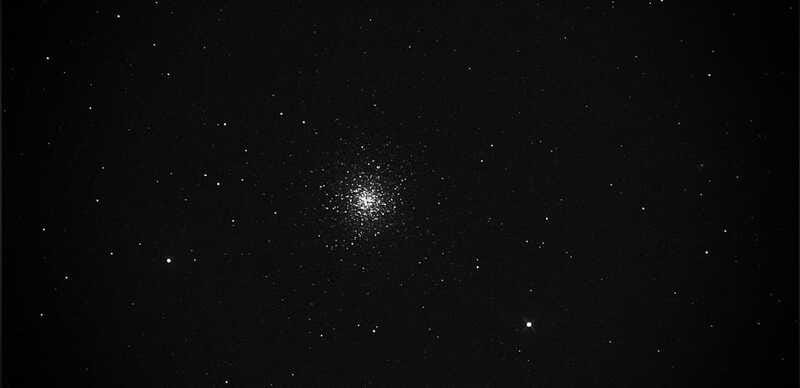
At the darker site, a guide uses a laser to trace naked-eye constellations. This is often the moment when the scattered points above you begin to make sense. Instead of trying to identify patterns alone, you get a clear line from one star to the next.
The program also includes local Indigenous constellations. That adds cultural context to the astronomy. The night sky is not interpreted through only one set of European names and stories, and this part helps show that different communities have long read meaning into the same stars.
I value this element because it makes the experience about more than equipment. A telescope can bring a distant object closer, but constellation stories help you understand how people have used the sky for orientation, seasons, teaching, and memory. The supplied details do not name the specific Indigenous nations or the guides, so you should ask during the introduction if that cultural background is important to you.
The laser portion works best when the group can see enough of the sky to follow the guide. Cloudy conditions can turn it into an explanation rather than a full visual tour. Still, the live question-and-answer format gives you a chance to ask about what is visible, what is hidden, and how to find it later.
Binoculars make the final section hands-on
The last part adds binoculars supplied by the Planetarium. You learn together by using them to examine the Milky Way and deep-space objects selected by the guide.
This is a smart addition. Many people assume binoculars are only for daytime sightseeing, but they can give you a broad view of star fields and help you understand where objects sit in relation to one another. They are also easier for a group to share than a single telescope.
You should not expect binoculars to produce the same magnification as a large optical telescope. Their strength is the wider field of view and the chance to participate directly. If the guide points out an object and you can locate it yourself, the sky becomes less passive and more familiar.
The timing of this section depends on weather and visibility. If conditions permit, you may follow the telescope viewing with the constellation and binocular tour. If clouds block the outdoor portion, the two-year rain check covers aspects that were not clear on the night you attended.
What the $102 price really buys you
At $102 per person, this is not a cheap add-on for a quick look at a telescope. You are paying for about three hours of instruction, a dome theatre presentation, guide-led telescope access, supplied binoculars, parking, and a live question period.
I think the price makes the most sense if you value the full program. Families can get a shared evening that mixes science, storytelling, and outdoor viewing without needing to bring equipment. It is also a practical choice if you know little about astronomy and want someone to explain what you are seeing rather than simply handing you a telescope.
The value drops if your only aim is a dramatic telescope image. Clouds, haze, and equipment limits can reduce that part of the night, and one cloudy evening left an adult participant feeling the tour did not match the expectation of a large telescope experience. If the stars are your only priority, check the forecast before booking and understand the rain-check terms.
The overall rating is 4.2 from 11 reviews, with the strongest praise aimed at the guides’ friendly teaching and astronomy knowledge. That pattern fits the structure of the evening: the human explanation and interactive format are more dependable than the weather.
How to handle cloudy skies
Cloud is the central risk, and the provider addresses it with a two-year rain check. If some aspects of the tour are not clear on the night you attend, you can return at no additional charge for those parts.
That is generous, but it is not the same as a guaranteed refund for a disappointing sky. One family received a generous refund arrangement and a chance to return after clouds blocked the outdoor viewing, while another participant felt the tour should have been canceled earlier when the forecast was poor. Those different reactions show why you should ask what will happen before the tour starts if the sky is already overcast.
I would book this experience on a night with the best forecast available, but I would not treat any forecast as certain in the Rockies. If you have several nights in Jasper, schedule the planetarium early enough to use the rain check during the same trip. If you are in town for one night only, the weather risk is much greater.
Who will enjoy this most
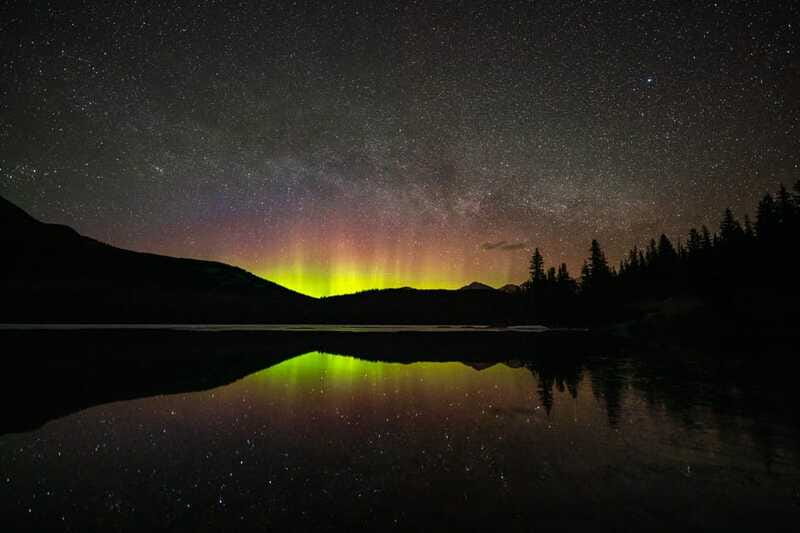
I would recommend the tour to families with children aged four and up, couples who enjoy guided learning, and anyone who wants an introduction to astronomy without buying or carrying equipment. The guides’ energy seems especially helpful for children, and the binocular section gives young participants something active to do.
It also suits people who like variety. You are not sitting in one room for three hours. You move from the dome to the telescope area and then to a darker site, with different teaching methods at each stage.
I would be more cautious if you have mobility limitations, dislike outdoor cold, or want a serious observing session aimed at advanced amateur astronomers. The walk, weather exposure, and introductory teaching style may not fit your needs. Photography is not permitted inside, and audio recording is also prohibited, so this is a listen-and-look experience rather than a documentation project.
Cancel at least 24 hours ahead for a full refund. Inside that period, a refund is not offered, though you can change to another time. Reserve-now, pay-later booking is available, which helps if you are still arranging your Jasper schedule.
Should you book the Jasper Planetarium Dark Sky Experience?
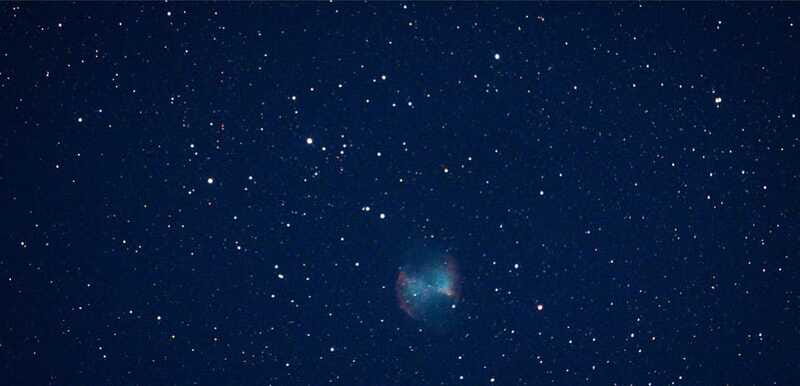
Book it if you want a friendly, guided introduction to the night sky with several formats in one evening. The combination of dome theatre, telescopes, laser constellations, Indigenous sky knowledge, and binoculars gives you plenty to do, even when the clouds interfere.
Do not book it expecting a guaranteed close-up telescope spectacle. The outdoor viewing is weather dependent, and the planetarium may feel basic if you already know astronomy well. My best advice is to choose the clearest forecast you can, arrive early, wear warm clothing, and use the rain check if the sky hides the stars. For families and curious first-time sky watchers, that makes the $102 price easier to justify.
FAQ
How long does the Jasper Planetarium Dark Sky Experience last?
The experience lasts three hours.
Where do I check in?
Check in at the Planetarium Retail Desk inside the Main Lodge at Jasper Park Lodge. Walk straight past the front desk, and the desk is in the southwest corner of the lobby, across from the Emerald Lounge.
How early should I arrive?
You must check in 15 minutes before the tour departure time. Latecomers are not admitted and may be rebooked for the next available tour, which could be on another day.
Is parking included?
Yes. Free parking is available in parking lots P2, P3, and P4 at Jasper Park Lodge. P2 is the closest to the Jasper Planetarium.
What does the tour include?
It includes admission to the Planetarium Dome Theatre, access to optical telescopes, binoculars for the constellation tour, free parking, and questions with the guides.
What happens if the sky is cloudy?
If parts of the tour are not clear, you receive a two-year rain check and may return at no additional charge for those parts.
Can children join the experience?
Children aged four and older can join. Children under four are not permitted in the Planetarium Dome Theatre, and minors may not attend without an accompanying adult.
What should I bring?
Bring weather-appropriate clothing. Food and drinks are not allowed, and photography inside, audio recording, smoking, vaping, alcohol, drugs, and intoxication are prohibited.
Just added around Jasper
- Wildfire Peak Nic★ 5.0 · 5 reviews
- Whitewater Rafting on Jasper’s Fraser River★ 5.0 · 59 reviews
- Ultimate Jasper Nature Walk★ 4.5 · 9 reviews
- Morning Jasper National Park Wildlife Tour★ 4.5 · 47 reviews
- Planetarium and Telescope Combo Tour★ 4.0 · 144 reviews
- Sunwapta Challenge Whitewater Rafting: Class III Rapids★ 5.0 · 139 reviews
- Winter Wildlife Discovery Tour★ 4.5 · 68 reviews
- Wild Current Canoe Adventure Join a small group★ 5.0 · 177 reviews
Stargazing & Dark Sky, compared.
Jasper Planetarium and Telescope Combo Tour Tickets
The full write-up →
Sunset at Moraine Lake & Stargazing Tour from Canmore/Banff
The full write-up →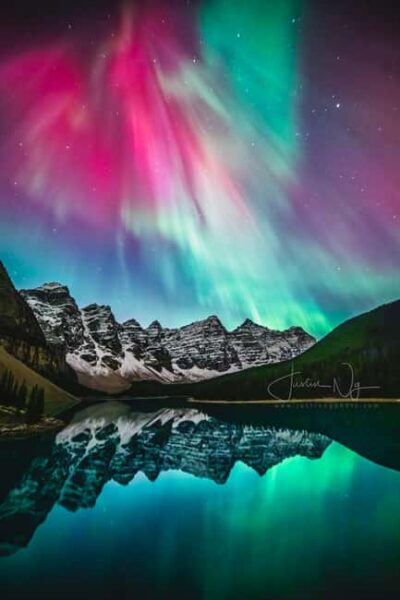
Banff OR Moraine Lake: Night Tour with possible Stargazing
The full write-up →
Sunrise or Sunset/Stargazing Tour at Moraine Lake from Banff
The full write-up →Browse the lists this tour appears in