
Reviewed · WALKING TOURS
Quebec City: Winter Walking Tour in Old Quebec
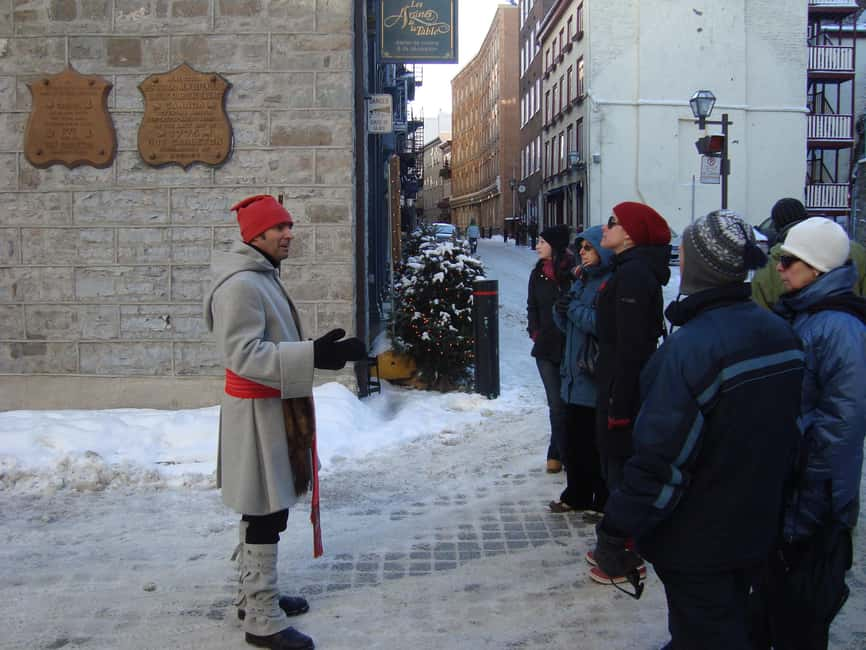
Quebec City makes the cold part of its story. On this 90-minute walk, you move through snowy Old Quebec with a period-costumed guide, passing the grand Château Frontenac, the stone walls, and the steep route down to Petit-Champlain. The focus is not just on buildings, but on how people lived through more than 400 years of Canadian winters.
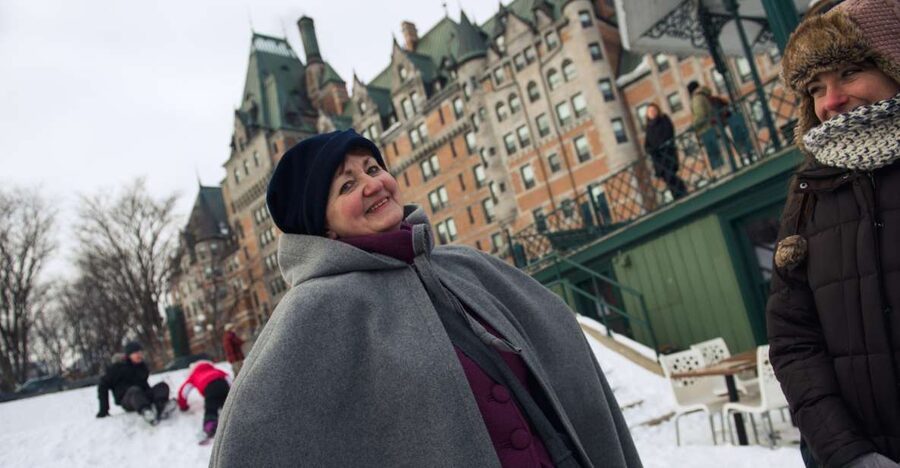
I like two things right away: the tour covers both Upper and Lower Town, so you get your bearings quickly, and the stop at Dufferin Terrace gives you a fine view over the St. Lawrence River. Guide Chantelle has also been praised for being jolly, engaging, and fun while staying informative.
The main drawback is the pace. Ninety minutes is enough for a helpful introduction, but not enough for a long exploration of every street. One person wished there had been more walking, while another found the historical material a little hard to follow as a beginner. Dress warmly and expect an overview, not a full history course.
Key points at a glance
- A winter-focused route: Learn how Quebec City’s residents and ancestors adapted to cold, snow, and long winters.
- Upper and Lower Town in one walk: See the walled city above, then reach the Petit-Champlain area near the St. Lawrence River.
- Major sights without museum time: Pass Château Frontenac, Dufferin Terrace, historic squares, monuments, and two important churches.
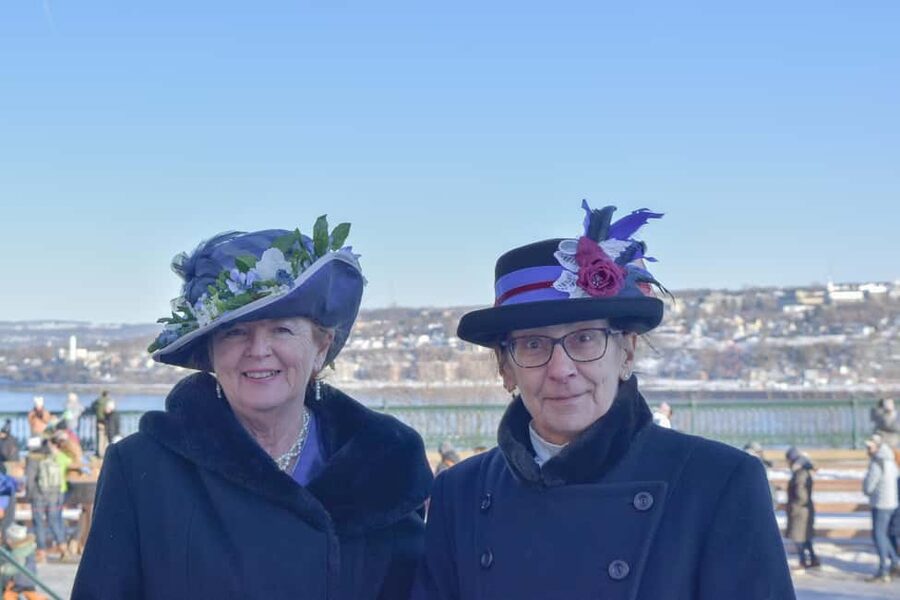
- A guide in period costume: The historical character adds a playful touch, with Chantelle singled out for her lively manner.
- Useful first-day orientation: The route can help you get your bearings before exploring Old Quebec on your own.
- Good value at $22: For 90 minutes with a live English or French guide, the price is modest, though the tour is brief.
Why winter gives this walk its purpose
Many city walks simply move from one landmark to the next. This one uses the season as part of the subject. Quebec City’s winter is not treated as an inconvenience to ignore. The cold, snow, and ways of coping with them are tied to local culture and daily life.
That idea gives the tour a clear point of view. You are not only looking at old stone buildings. You are hearing about how people managed life in a place shaped by severe weather. The tour presents winter as part of Quebec City’s identity, not just a backdrop for photographs.
That makes this especially useful if you are visiting during the colder months and want more context for what you see around you. You may notice the streets, walls, churches, and river views differently after hearing how earlier generations lived with the same conditions.
The walk takes place rain or shine. That matters more here than it would on a summer stroll. Snow, wind, and icy footing can change how comfortable the route feels, so wear warm layers and shoes suited to winter streets. The experience is built around walking outdoors, even though the exact meeting point can vary with the option you book.
More Walking Tours in Quebec City
- Quebec City Walking Tour
★ 5.0 · 4,716 reviews - Old Quebec City: Grand Walking Tour with Private Option
★ 4.8 · 2,609 reviews - Old Quebec Classique Walking Tour with Funicular
★ 5.0 · 1,317 reviews
Starting above the river in Old Quebec
The tour begins in the upper part of the historic city, with the snowy streets of Old Quebec as your setting. This is where the route introduces the older, fortified side of Quebec City and the main landmarks that define its skyline.
The Fairmont Le Château Frontenac is a natural early highlight. Its grand appearance gives you an immediate sense of the city’s historic importance, even if the tour does not spend time touring the inside. Your guide can place the building within the story of Old Quebec and point out how it fits with the surrounding streets and public spaces.
The fortifications are another key part of the opening section. You visit areas inside and outside Quebec’s defensive walls, which helps explain the difference between the protected old city and the areas beyond it. For a first visit, this is practical information. Old Quebec can feel like a maze of slopes and narrow streets, and a guide can help you understand how the sections fit together.
You also pass public squares, monuments, and churches. These stops give the walk variety. Instead of hearing one long talk in a single place, you move through the city and connect its public buildings with its social and religious past.
The historical material may be delivered by a character in period clothing. I like this choice because it keeps the experience from feeling like a dry lecture. At the same time, the costume is not a substitute for clear explanation. If you know little about Quebec City, listen closely and ask questions when you can. One person found the history somewhat difficult to follow as a beginner, so the tour may work best when you treat it as an introduction and follow up with your own sightseeing afterward.
Dufferin Terrace and the St. Lawrence view
Dufferin Terrace is one of the tour’s best natural pause points. From here, you look out over the St. Lawrence River, with Old Quebec behind you and the broad waterway opening in front of you.
In winter, the view has a particular character. Snow and cold change the color and mood of the city, and the riverfront helps you understand Quebec City’s setting. This is not just a place to stop for a photograph. It gives you a sense of why the city mattered as a settlement and how closely its story is tied to the river.
The terrace also offers a break from the tighter streets of the old city. You can take in the view while your guide continues the local story. Because the tour is only 90 minutes, this stop is likely to feel more like a focused viewpoint than a long rest.
Bring gloves that let you handle your phone or camera. It is a small practical detail, but cold hands can make a scenic stop less enjoyable. The tour takes place outdoors, so you should expect to keep moving rather than spend long periods standing still.
Churches, squares, and the city’s public face
The route passes Holy Trinity Cathedral and Notre-Dame-de-Québec Cathedral and Basilica. These churches add an important layer to the walk, showing how religious institutions shaped public life in Old Quebec.
You may not have time for a long interior visit, and the activity description emphasizes a walking tour rather than a church tour. Still, seeing these buildings from the street gives you useful context. Their presence among the squares, monuments, and old streets shows how much of the historic center’s identity is concentrated in a relatively small area.
The public squares offer a similar lesson. They are not isolated attractions. They help you see how Old Quebec functioned as a civic center, with religious, political, and social life meeting within the same compact district.
I find this kind of route more useful than a checklist of famous façades. You get a sense of how the parts relate to one another. The tradeoff is that the guide has to keep moving. If you want detailed architectural study, long photo stops, or inside visits, you will need extra time after the tour.
More winter days out in Quebec City:
- Jacques-Cartier National Park: Skiing Excursion
★ 5.0 · 22 reviews - Athabasca Glacier Snow Trip from Banff
★ 5.0 · 394 reviews - Medicine Trail Snowshoe Tour
★ 5.0 · 279 reviews - Victoria Bites and Sights Walking + Ferry (winter Sat, Sun)
★ 5.0 · 242 reviews
Walking down to Petit-Champlain
The route then leads into the Petit-Champlain District, described as a cradle of French culture in North America. This is the lower section of Old Quebec, closer to the St. Lawrence River and distinct from the upper fortified city.
The change in level matters. You are not seeing two labels on a map. You are moving between two parts of town with different settings and moods. The walk gives you a practical sense of the connection between Upper and Lower Town, which can help when you return to explore independently.
Petit-Champlain is also one of the most quaint parts of Old Quebec. Its streets and older buildings make a strong contrast with the broad terrace and larger landmarks above. In winter, snow adds to the atmosphere, though it can also make the walk feel more demanding.
The tour description does not promise extended free time in the district, so think of this as an introduction. You will see where Petit-Champlain is and hear why it matters. If you want to browse, photograph, or linger, plan to return later on your own.
One visitor said they would have liked to walk more through the city. That is a useful warning about the format. The route covers important areas, but the guide also needs to stop and explain what you are seeing. You get range and orientation, not hours of wandering.
Stories about winter life in Quebec City
The most distinctive part of this activity is its attention to everyday adaptation. The guide talks about how local people lived through Canadian winters, both now and in earlier times.
That subject helps connect the past with your own visit. You will feel the cold yourself, then hear how winter affected the routines and choices of people who lived here for generations. The city’s nordicity, meaning its strong northern character, becomes something you can understand through place and experience rather than through dates alone.
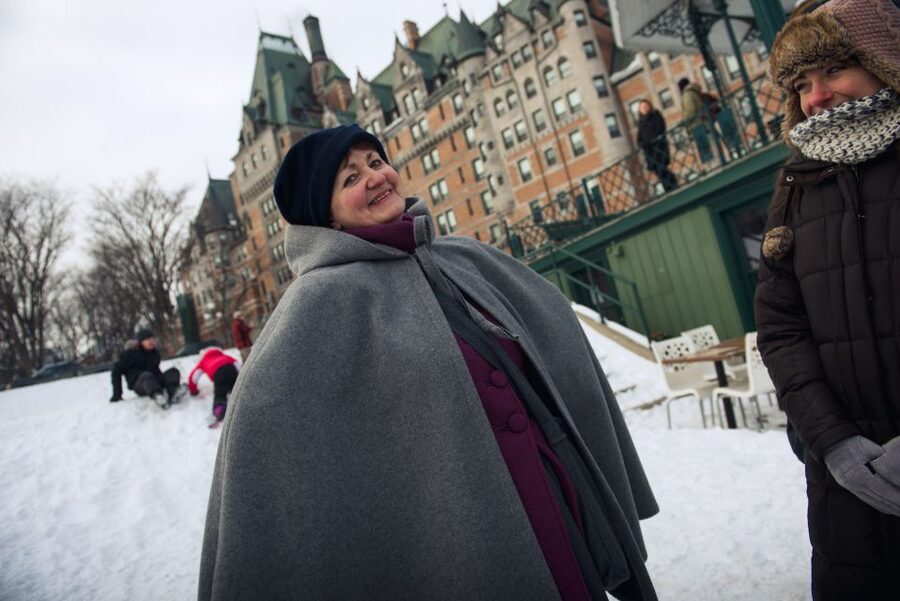
A period-costumed guide adds a theatrical touch. Chantelle, one of the guides, was especially praised for being engaging, cheerful, and easy to enjoy. That style should suit families and anyone who prefers stories and personality over a formal lecture.
The guide may speak English or French, depending on the tour arrangement. If you are new to Quebec City’s history, keep in mind that 400 years is a lot to cover in an hour and a half. You may hear names, events, and local terms in quick succession. The strongest approach is to focus on the broad story first, then use the tour to decide which places deserve a closer look.
How the $22 price compares with the experience
At $22 per person, this is a reasonably priced way to get a guided introduction to Old Quebec. You are paying for a 90-minute live walking tour in English or French, with a route that includes both major sections of the old city.
The value is strongest if this is your first visit. A guide can connect Château Frontenac, the fortifications, Dufferin Terrace, the churches, and Petit-Champlain in one outing. That saves you from seeing the city as a collection of unrelated sights.
The value is also good if you care about local stories and winter culture. The tour has a clear theme, and the period costume gives it a little character without requiring a costly attraction ticket.
The price is less compelling if you already know Old Quebec well or want a long, leisurely walk. One and a half hours goes quickly, especially with several stops. You may finish with a better map in your head, but you will still want free time to explore the lower streets, churches, squares, and viewpoints at your own pace.
The reserve-now, pay-later option and free cancellation up to 24 hours ahead make the booking less risky. Those terms are useful in winter, when weather and changing plans can affect your day. The tour itself still runs rain or shine, so cancellation flexibility does not mean the walk is weather-free.
Who will enjoy this Old Quebec walk
I would recommend this tour to first-time visitors who want a structured start. It gives you the main shape of Old Quebec, introduces its Upper and Lower Town sections, and points you toward places worth a second look.
It should also suit families and casual sightseers who enjoy a guide with some performance. A historical character in period costume can make the information easier to remember, and Chantelle’s lively style has been a particular strength.
It may be less suitable for someone seeking a deep architectural study or a long-distance walking outing. The route includes several notable places, but the time is limited and the walking is broken up by explanations. If your main goal is exercise or extended exploration, you may want a longer tour or an independent walk afterward.
The experience is listed as wheelchair accessible. Since the walk takes place outdoors in winter and includes both upper and lower sections of town, it is sensible to confirm the meeting point and route details for the option you choose.
Practical ways to get more from the 90 minutes
Arrive ready for cold rather than hoping to warm up along the way. The tour takes place outdoors and runs in all weather, so warm clothing, gloves, and sturdy winter footwear are important.
Try to book this near the start of your stay. The route can give you useful bearings, especially if the names Upper Town, Lower Town, the fortifications, and Petit-Champlain are new to you.
Listen for the large themes instead of trying to remember every date. The guide is covering more than 400 years in 90 minutes. Focus on how the city developed, how the river and fortifications mattered, and how winter shaped daily life.
Keep time afterward for your own exploration. Petit-Champlain, the churches, public squares, and Dufferin Terrace all deserve more attention if you enjoy taking photographs or reading architectural details.
Should you book the Quebec City winter walking tour?
Book it if you want an affordable, friendly introduction to Old Quebec with a clear winter theme. The combination of Upper and Lower Town, Château Frontenac, Dufferin Terrace, the churches, and Petit-Champlain gives you a solid first look at the city.
Skip it if you want a long walk with little narration, or if you already know the historic center well. The tour’s strength is its compact overview and engaging guide, not extended free time at each stop.
For most first-time visitors, $22 is a sensible price for getting oriented. Just dress for the weather, expect a brisk 90-minute introduction, and save time afterward to explore the streets you liked best.
FAQ
How long is the Quebec City winter walking tour?
The tour lasts 90 minutes.
How much does the tour cost?
The price is $22 per person.
Which languages are available?
The live tour guide speaks English or French.
What places does the tour visit?
The route includes Upper and Lower Old Quebec, areas inside and outside the fortifications, Château Frontenac, Dufferin Terrace, public squares, monuments, Holy Trinity Cathedral, Notre-Dame-de-Québec Cathedral and Basilica, and the Petit-Champlain District.
Does the tour operate in bad weather?
Yes. The tour takes place rain or shine.
Can I cancel the booking?
You can cancel up to 24 hours in advance for a full refund. A reserve-now, pay-later option is also available.
Just added around Quebec City
- From Montreal: Quebec City & Montmorency Falls Full Day Trip★ 4.5 · 145 reviews
- Stoneham: Nordic spa Thermal Experience★ 4.9 · 20 reviews
- Quebec : Old Town Walking Tour With A Local Guide★ 4.5 · 38 reviews
- Quebec City’s History in Virtual Reality★ 4.5 · 141 reviews
- Quebec Interactive Street Theatre: “Crimes in New France”★ 4.6 · 175 reviews
- Quebec: Christmas Interactive Walking Tour of New France★ 4.3 · 7 reviews
- Québec: Fortifications-of-Québec Guided Walking Tour★ 4.7 · 60 reviews
- Québec City: Saint-Louis-Forts-and-Châteaux visit★ 4.7 · 126 reviews
Walking Tours, compared.
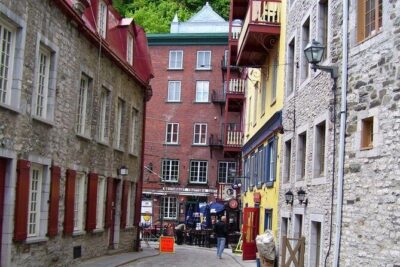

Old Quebec City: Grand Walking Tour with Private Option
The full write-up →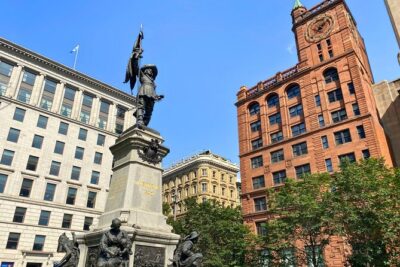
The Original Old Montréal Walking Tour by Guidatour
The full write-up →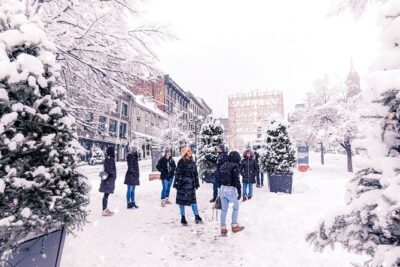
Old Montreal Small-Group Walking Tour | Max 10 | by MTL Detours
The full write-up →
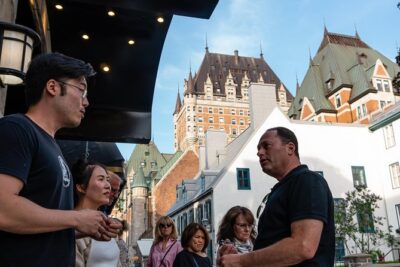
Old Quebec Classique Walking Tour with Funicular
The full write-up →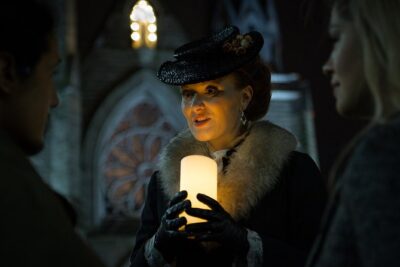
Vancouver Lost Souls of Gastown Walking Tour
The full write-up →
Quebec: Crimes of New France Animated Walking Tour
The full write-up →Browse the lists this tour appears in