
Reviewed · QUEBEC CITY TOURS
Québec City: Saint-Louis-Forts-and-Châteaux visit
The most revealing part of Old Québec may be under your feet. Beneath Dufferin Terrace sit the remains of Château Saint-Louis, the official residence and seat of power for French and British governors from 1620 to 1834. Archaeological remains and more than 120 artifacts turn a familiar sightseeing stop into a close look at how colonial decisions shaped North America.
I like two things especially: the site makes political history feel tied to ordinary life, and the exhibition includes a Huron-Wendat Nation perspective on diplomacy with colonial governors. The St. Lawrence views from the terrace are a useful bonus. The main drawback is access: stairs and uneven historic surfaces make this a poor choice for wheelchair users or anyone with mobility limits.
Key points at a glance
- A hidden site beneath Dufferin Terrace: Begin beside the famous boardwalk, then descend into the remains of Château Saint-Louis.
- Two ways to experience it: Join an on-site heritage guide or use the downloadable Parks Canada app and audio tour.
- More than 200 years of decisions: Follow the site from French rule through the British period, when governors lived and worked here.
- Artifacts with everyday stories: Look for objects that help explain food storage, servants’ work, household habits, and grand events.
- A Huron-Wendat diplomatic perspective: Learn how alliances with colonial governors affected the region.
- Strong value at $9: A one-hour visit gives you both an archaeological site and a museum style display in central Old Québec.
What sits beneath Dufferin Terrace
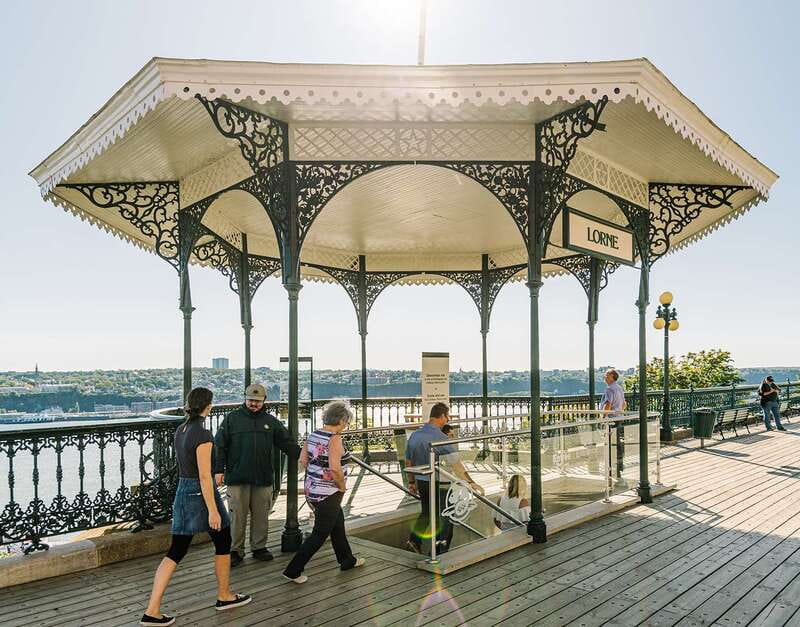
Dufferin Terrace is one of Old Québec’s easiest places to visit. You get broad views over the St. Lawrence, the riverfront, and the old city walls. Most people keep walking along the boardwalk. This experience asks you to stop and look down.
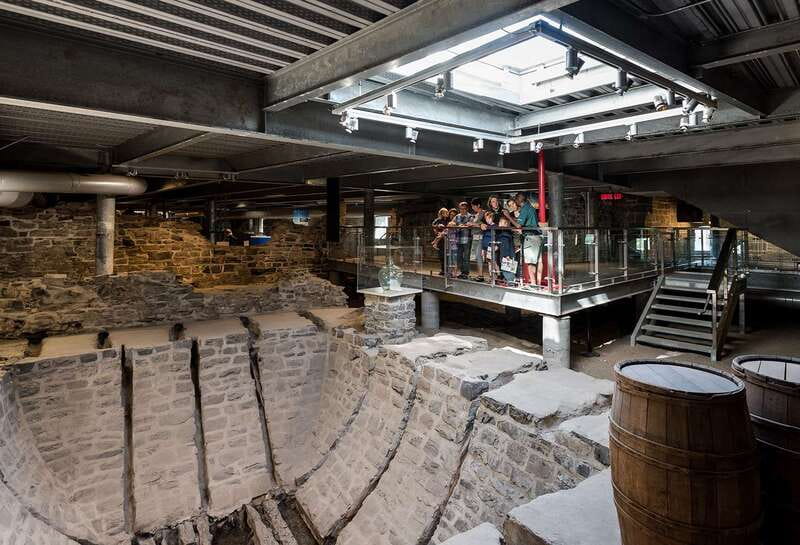
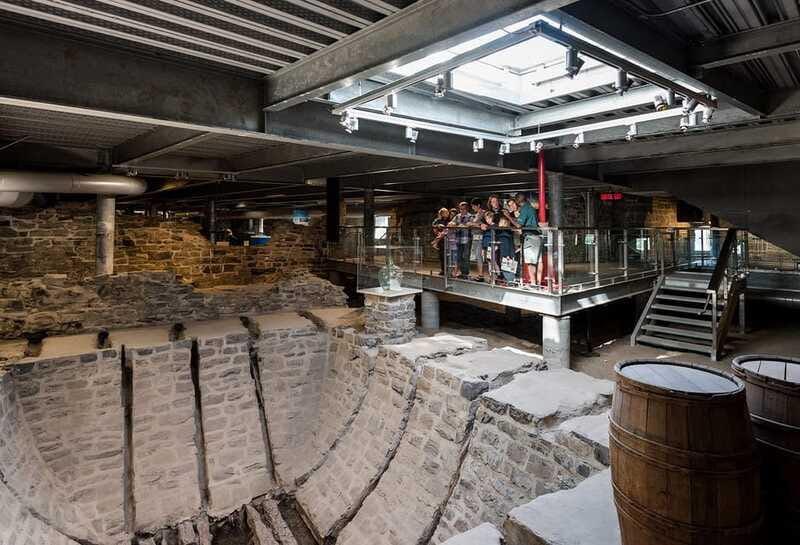
A stairway leads beneath the terrace to the Saint-Louis Forts and Châteaux National Historic Site. Here, the remains of Château Saint-Louis reveal the foundations of the place where French and British governors lived, received visitors, held lavish events, and made decisions affecting much of North America.
The site is unusual because it combines three kinds of history in a small area. You see the physical remains of the forts and château, examine objects recovered during archaeological work, and hear about the people who used the buildings. That combination helps you picture the site without pretending the original château is still intact.
The visit lasts about one hour. That is enough time to understand the site without giving up half a day of your Québec City schedule. At $9 per person, I consider it a good-value stop, especially if you already plan to walk Dufferin Terrace and want more than a view.
A few more Quebec City days worth comparing
- Quebec City Walking Tour
★ 5.0 · 4,716 reviews - Quebec City: Guided Tour of Fairmont Le Château Frontenac
★ 4.7 · 3,027 reviews - Québec City: Guided Sightseeing River Cruise
★ 4.4 · 3,000 reviews
Starting beside the Frontenac sign
The meeting point is at the beginning of Dufferin Terrace, near a green and white kiosk with a Canadian flag. Look for the Frontenac sign. A heritage guide wears a green and beige uniform, so the meeting point should be fairly easy to identify in this busy part of Old Québec.
You can choose between a live tour and a self-guided audio experience. The live option is available in English, French, Spanish, German, and Chinese. The self-guided route uses the downloadable Parks Canada app, which gives you an audio layer as you move through the site.
If you choose the guide, you can expect the human advantages of a live visit: explanations can be paced for the group, and you may be able to focus on details that would be easy to miss alone. Recent feedback gives the guided format particularly strong marks for being animated and entertaining, not just informative. No guide names are supplied for this experience, so you should not book it expecting a particular person.
The audio option suits you if you prefer to move at your own pace. It also gives you more control over how long you spend with each display. One caution: the audio presentation may use role-playing, with scenes that place you in the position of a governor or servant. That format will help some people picture the past, but it may feel theatrical if you want a direct museum style explanation.
Descending into Château Saint-Louis
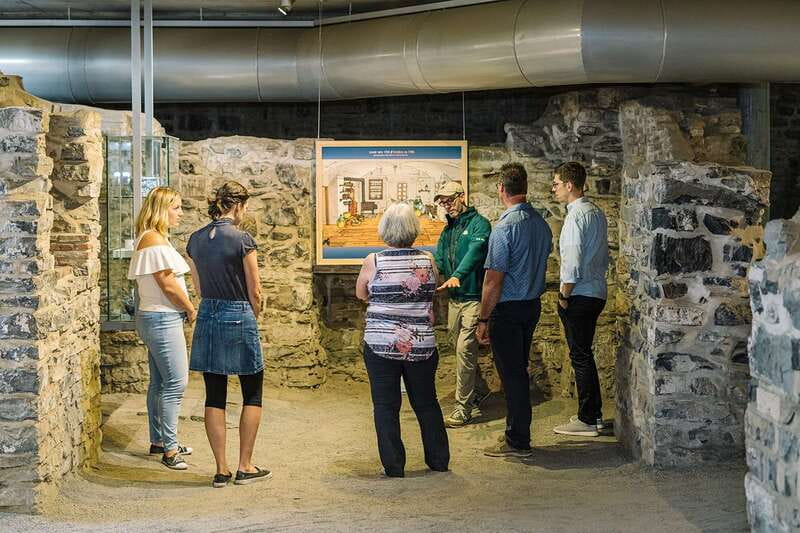
The first transition is the most important. From the open terrace, you descend below ground into a site that is not immediately visible from the street. The change in setting helps explain why archaeology matters here. You are not walking through a complete palace with furnished rooms. You are reading the surviving traces of a building that was altered, used, and eventually lost.
Château Saint-Louis was the one and only château erected in Québec City. It served as the official residence and working base of French and British governors for more than 200 years, from 1620 to 1834. That span covers major changes in political control, administration, and relations with Indigenous nations.
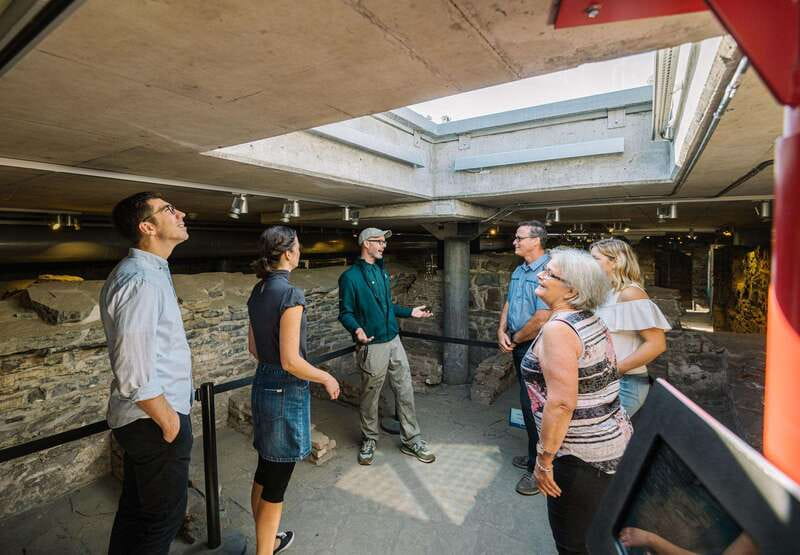
As you walk among the remains, pay attention to the layout and the way the interpretation explains its evolution. The site helps you visualize the architecture, planning, and governance of the château. Even without intact walls and ceilings, the foundations show that this was not simply a private home. It was a center for public business, ceremony, and authority.
The setting also gives the tour a useful sense of scale. Decisions made here were not abstract events in a textbook. They were made in a residence with kitchens, storage spaces, servants, visitors, receptions, and practical household problems. That is where the visit becomes more memorable.
The artifacts that make the rooms feel lived in
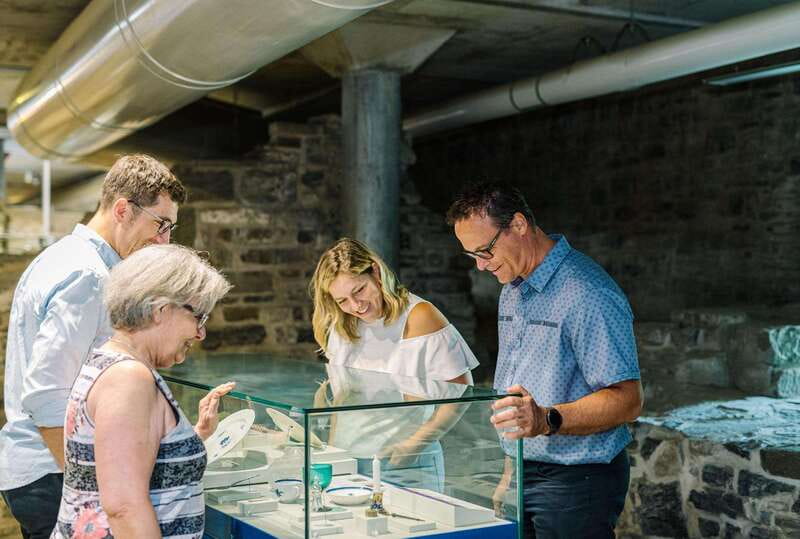
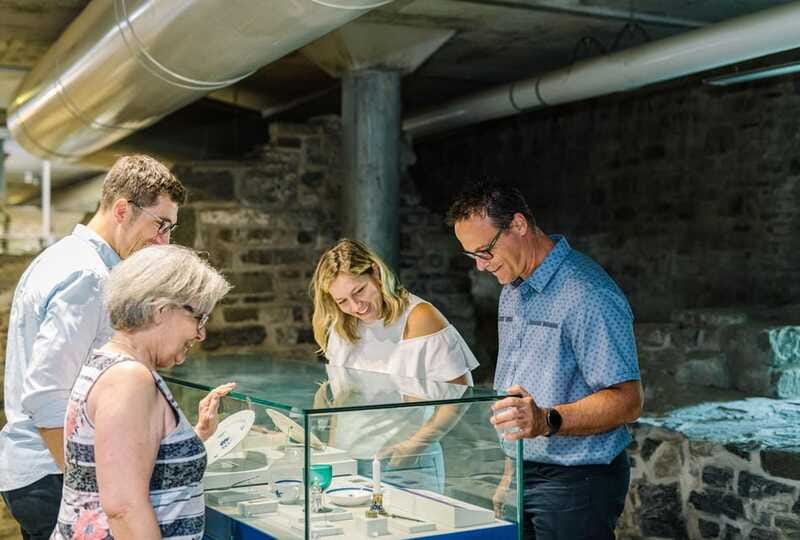
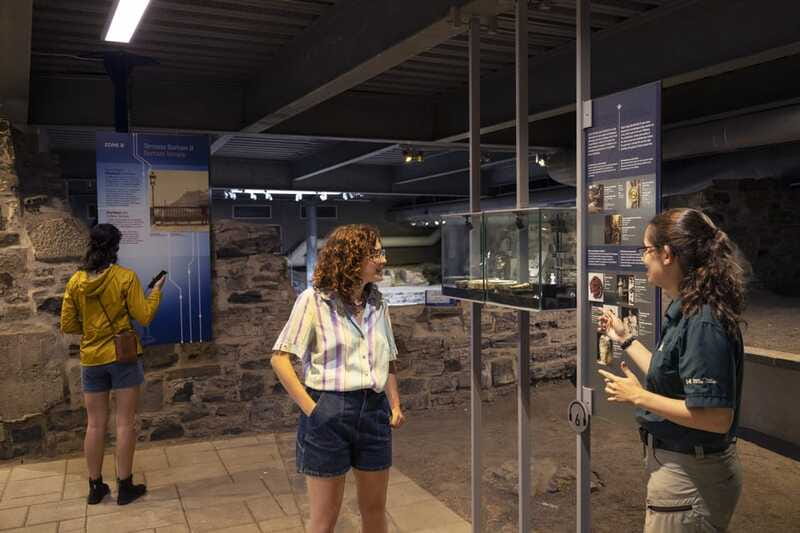
The displays contain more than 120 artifacts, with objects recovered through archaeological digs. These items are valuable because they connect large political stories with small physical clues.
You may learn how an icebox was used, what grooves in the bottom were for, and why women used bottles of ammonia. These details might sound minor next to imperial politics, but they are exactly the sort of information that makes an archaeological site readable. You begin to think about how food was stored, how cleaning was handled, and how work was divided inside the château.
The displays also help you picture the lifestyle of the people who lived and worked there. Governors occupied the public side of the residence, but servants and household staff made daily life possible. Lavish events required planning, supplies, storage, and labor. An artifact connected to one of those tasks can tell you as much about the building as a grand political decision.
I appreciate this balance. If you only hear about governors and diplomatic choices, the château can feel remote. If you only see household objects, you miss the reason the site mattered. Here, the two sides belong together.
The displays are also a practical help if you are not comfortable reading foundations. Objects give your eye something concrete to study. They make it easier to imagine the original rooms and routines, even though the building itself is no longer complete.
Same trip, a completely different kind of day out:
- Half-Day Trip to Montmorency Falls and Ste-Anne-de-Beaupré from Quebec city
★ 4.0 · 2,718 reviews - From Montreal: Quebec City and Montmorency Falls Day Trip
★ 4.5 · 2,669 reviews - Old Quebec City: Grand Walking Tour with Private Option
★ 4.8 · 2,609 reviews - Quebec City and Montmorency Falls Day Trip from Montreal
★ 4.0 · 2,437 reviews
More than 200 years of political decisions
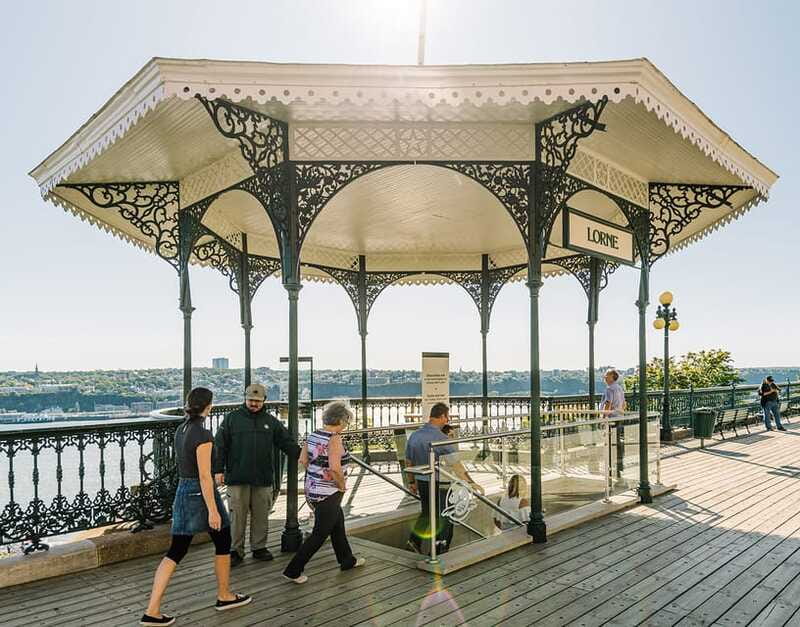
The Saint-Louis site was the North American seat of power for French and later British governors. That phrase has real weight here. The château was a place where leaders received visitors, managed colonial affairs, and made diplomatic choices that affected communities far beyond Québec City.
The tour retraces more than 200 years of diplomatic history. It does not treat the site as a single frozen period. Instead, you follow its use and development across changing governments. That long time span is one reason the visit works well for anyone trying to understand Old Québec beyond its streets and architecture.
The political story is best approached through place. A governor’s residence was also an administrative office, a reception space, and a symbol of authority. Formal events could reinforce alliances and status. Everyday arrangements inside the building supported that public role.
You will also hear about the alliances between colonial governors and the Huron-Wendat Nation. This part is presented in collaboration with the Nation, giving the exhibition a perspective that goes beyond a simple French and British account.
That matters because diplomacy was not a side issue. Relationships with First Nations were central to the colonial period, and alliances had practical and political consequences. The Huron-Wendat perspective helps you consider those relationships from another point of view, rather than seeing the château only through the people who governed from it.
Choosing the live guide or audio route
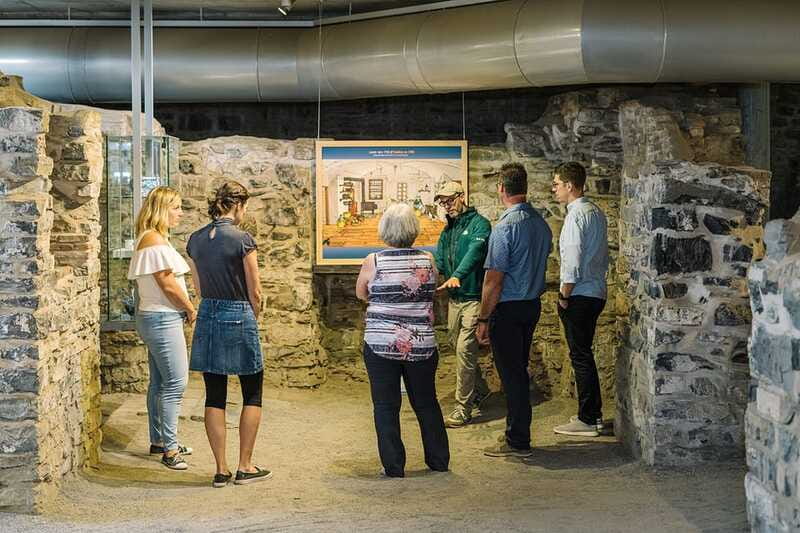
The live guided format is the better pick if you enjoy clear storytelling and the chance to hear a person bring the place to life. The strongest response to this option centers on guides who are animated, entertaining, and able to explain a large amount of information without making the hour feel like a lecture.
A guide can also help you connect the artifacts to the remains in front of you. If you are unsure what a wall line, groove, or foundation might mean, a live explanation can prevent you from passing over it.
The audio tour is better if you prefer privacy and control. The Parks Canada app is downloadable, and the audio route lets you take in the material without staying closely tied to a guide’s pace. It can be a good choice for visitors who want to pause over an object or move quickly through a section.
Know your taste before choosing. The self-guided circuit may include role-playing, such as taking the part of a governor or servant. If you prefer straightforward interpretation, that style may not suit you. If you enjoy sound and character-based storytelling, it may give the site more atmosphere.
Either format covers the same broad strengths: the remains, the artifacts, diplomatic history, the Huron-Wendat exhibition, and details about daily life. The difference is mainly how the story reaches you.
Practical limits beneath the terrace
The one-hour length makes this easy to fit between other Old Québec sights. It is especially convenient if you are already near the Fairmont Le Château Frontenac and Dufferin Terrace. You do not need to build a separate transportation plan around it, since the meeting point is at the terrace.
The site is not suitable for wheelchair users or people with mobility impairments. The descent and historic setting are the key concerns. If stairs or uneven surfaces are difficult for you, choose another way to explore Québec City’s history.
Food and drinks are not allowed inside. Leave luggage and large bags elsewhere, and pets are not permitted except for assistance dogs. Bare feet are also not allowed, an unusual rule but an easy one to follow.
The activity offers free cancellation up to 24 hours before the scheduled time, and you can reserve now and pay later. Those policies are useful if your Old Québec plans depend on weather, timing, or a changing cruise schedule. Canadian Armed Forces members, Canadian veterans, and their immediate families can receive daily free admission to Parks Canada sites with the specified service cards, though the guided tour itself is not included.
Is $9 a fair price?
At $9, the admission is modest compared with many guided attractions in a historic city. You are paying for access to an archaeological site, interpretation, artifacts, and a focused one-hour presentation in a central location.
The value is strongest if you care about context. A casual walk past the terrace tells you little about the governors who lived there or the decisions made inside. This visit gives you a compact explanation of how the site functioned and why it mattered.
It is less valuable if you expect a fully restored château with grand interiors. The remains are the point. You need to be willing to use foundations, objects, audio, and explanation to reconstruct the building in your mind.
I would also count the convenient location in the price. Since the tour begins on Dufferin Terrace, you can pair it with the boardwalk, views of the St. Lawrence, and other Old Québec sights. That makes it an efficient addition rather than a stand-alone trip across town.
Who should book this experience?
I recommend it for first time visitors who want historical context for the old city, especially those interested in government, diplomacy, Indigenous relations, or archaeology. Families with older children may also find the everyday objects easier to grasp than a long political lecture.
It is a good choice for history fans who enjoy seeing how evidence is assembled. The artifacts, building remains, and stories about household life all offer different ways into the past.
You should think twice if you dislike underground sites, stairs, or theatrical audio programs. The visit is short, but it is not a grand-room palace tour. Its reward comes from paying attention to fragments and explanations.
Should you book the Saint-Louis Forts and Châteaux visit?
Yes, if you want to understand why this small area beside Dufferin Terrace mattered so much. For $9, the visit adds political, domestic, archaeological, and Huron-Wendat perspectives to one of Québec City’s most scenic places.
Choose the live guide if you want an animated explanation and a steady story. Choose the Parks Canada audio route if you prefer to move independently, but be ready for some role-playing. If mobility is a concern, skip it because the site is not suitable for wheelchair users or people with mobility impairments.
Book it as a compact history stop, not as a reconstructed palace. That expectation will make all the difference.
FAQ
How long does the Saint-Louis Forts and Châteaux visit last?
The visit lasts one hour.
How much does admission cost?
The listed price is $9 per person.
Where is the meeting point?
Meet at the beginning of Dufferin Terrace, near a green and white kiosk with a Canadian flag. Look for a Frontenac sign. The guide wears a green and beige uniform.
Is the experience guided or self-guided?
You can choose a live guided tour or a self-guided audio tour using the downloadable Parks Canada app.
Which languages are available?
Live tours are available in English, French, Spanish, German, and Chinese.
Is the site accessible for wheelchair users?
No. The experience is not suitable for wheelchair users or people with mobility impairments.
Just added around Quebec City
- From Montreal: Quebec City & Montmorency Falls Full Day Trip★ 4.5 · 145 reviews
- Stoneham: Nordic spa Thermal Experience★ 4.9 · 20 reviews
- Quebec : Old Town Walking Tour With A Local Guide★ 4.5 · 38 reviews
- Quebec City’s History in Virtual Reality★ 4.5 · 141 reviews
- Quebec Interactive Street Theatre: “Crimes in New France”★ 4.6 · 175 reviews
- Quebec City: Winter Walking Tour in Old Quebec★ 4.9 · 30 reviews
- Québec: Fortifications-of-Québec Guided Walking Tour★ 4.7 · 60 reviews
- Quebec: Christmas Interactive Walking Tour of New France★ 4.3 · 7 reviews
Quebec City Tours, compared.
Quebec City: Guided Tour of Fairmont Le Château Frontenac
The full write-up →
Québec City: Guided Sightseeing River Cruise
The full write-up →
Half-Day Trip to Montmorency Falls and Ste-Anne-de-Beaupré from Quebec city
The full write-up →
From Montreal: Quebec City and Montmorency Falls Day Trip
The full write-up →
Old Quebec City: Grand Walking Tour with Private Option
The full write-up →
Quebec City and Montmorency Falls Day Trip from Montreal
The full write-up →
Quebec City: Montmorency Falls with Cable Car Ride
The full write-up →Browse the lists this tour appears in