
Reviewed · ZIP LINES
Small-Group Guided Via Ferrata Climbing with Banff’s Best Views
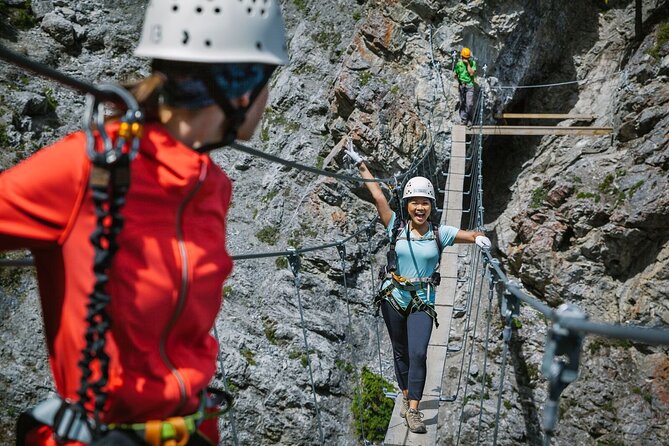
The best part of this Banff outing is that you do not just look at the mountains from below. You ride a chairlift up Mount Norquay, clip into a steel cable, climb several rock pitches, and cross a suspension bridge with Banff spread out below. It is real mountaineering, but you do not need prior climbing experience.
I like the included chairlift ride and the small group size, capped at eight people. I also like the practical extras: boots, rainwear, a backpack, harness, helmet, and climbing lanyards are available at no added cost. The main caution is simple: this is more physical and more exposed than a normal guided hike, especially on wet rock, so do not read Explorer as easy.
What matters most before booking
- The route includes several rock pitches and a suspension bridge, not just a scenic walk.
- An ACMG-certified guide leads the group, with guides such as Ben, Amanda, Zach, Eli, and Matt praised for calm coaching.
- The chairlift carries you to the start, saving a long approach hike and adding a fine scenic ride.
- The group is limited to eight people, which gives the guide more time to help nervous climbers.
- The physical demand can exceed moderate, particularly for people unused to steep, rocky ground.
- Rain can change the feel of the route quickly, so check the forecast and bring a rain jacket if you have one.
What the Explorer route is really like
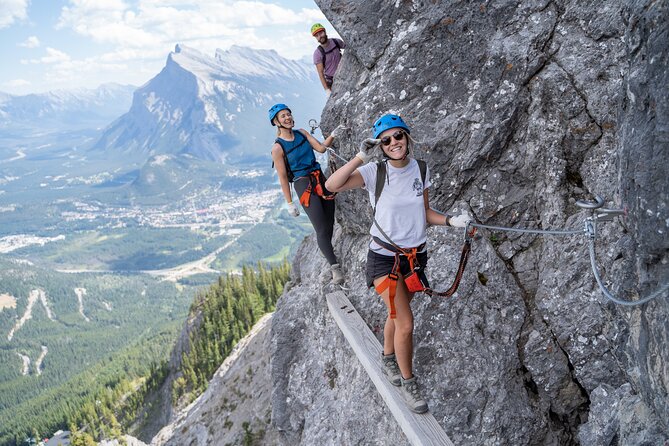
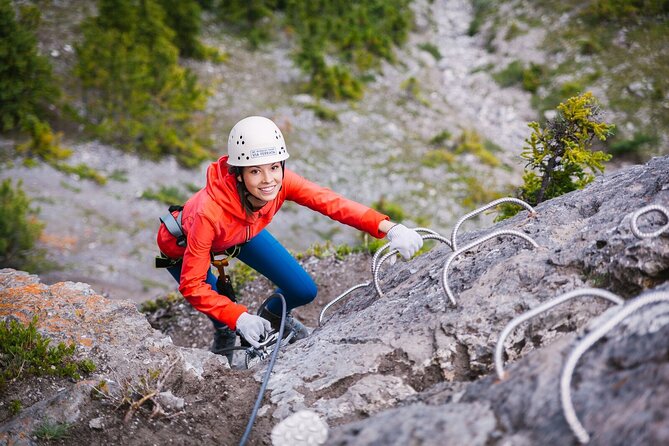
Via ferrata means iron way, a mountain route equipped with fixed cables, ladders, and other climbing aids. You wear a harness with lanyards that attach to the cable, then move from anchor point to anchor point as the guide shows you how.
The Explorer route is the short introduction to Mount Norquay’s larger via ferrata system. The scheduled outing lasts about two hours and 30 minutes, including preparation, the chairlift ride, instruction, and the climb itself.
You will climb a few pitches rather than spend the whole time on a trail. That distinction matters. Your hands and legs do real work, and parts of the route feel steep enough to produce a burst of nerves. The reward comes quickly: open views over Banff National Park, Banff town, and the valley.
The suspension bridge is one of the memorable set pieces. It gives the outing a clear adventure moment without requiring technical climbing experience. You may find the first section the hardest, as several people describe the opening as the point where nerves and effort are greatest.
More Zip Line Tours in Banff:
- Banff: Mount Norquay 2.5 or 4-Hour Guided Via Ferrata Climb
★ 4.9 · 305 reviews - Half-Day Guided Via Ferrata Climbing Tour in Banff
★ 5.0 · 30 reviews - Small Group Banff Skyline Via Ferrata 5-hour Tour
★ 5.0 · 15 reviews
From Mount Norquay to the cliff
You meet at Mount Norquay Scenic Drive, north of Banff. A free shuttle to and from Banff is included, but hotel pickup and drop-off are not. Plan to arrive at least 30 minutes before departure. That early check-in is required, and you will need to sign a liability waiver.
The exact meeting arrangement matters because Mount Norquay has more than one lodge or activity area. One participant arrived at a neighboring lodge after following a map and was glad to have extra time. I would not cut this close. Give yourself room to find the right place, check in, and sort out clothing before the group heads up.
Once checked in, you receive the safety equipment. That includes a climbing helmet, harness, and via ferrata lanyards. Rainwear, hiking boots, and a backpack are also available at no charge, although sizes are not guaranteed.
If you already have sturdy footwear and rain gear that fit well, bring them. Familiar boots can make the approach and rocky sections more comfortable. The supplied gear is a useful safety net, especially for visitors who did not plan a climbing day when packing for Banff.
The chairlift ride is part of the experience, not merely transport. You gain height without spending your energy on a long uphill approach, then start the route with Banff below and the mountain close at hand.
Meeting the guide and learning the equipment
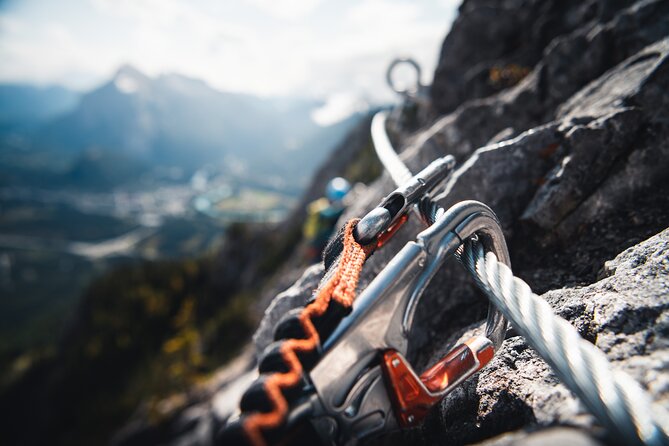
Your ACMG-certified guide begins with an introduction to the equipment and the basic movement system. This is where you learn how the lanyards attach and how to move along the fixed cable.
Pay attention here. The system is designed to protect you, but it only works when you follow the instructions. You will be moving at different speeds from other people in the group, so the guide also sets a rhythm and keeps the group together.
The guides receive especially strong praise for their manner with first-timers. Ben is noted for a calm approach and good humor. Amanda is described as reassuring with nervous climbers, while Zach is praised for clear instructions and patience. Eli, Matt, Lucy, Juan, Brandon, Kevin, and Alex are also singled out for encouragement, safety awareness, or good group management.
That pattern tells you something useful: the guide is not just there to point out the route. The guide is your coach, pace setter, and safety check. If you are anxious about heights, say so early. A calm guide can help, but the mountain still requires you to make each movement yourself.
Climbing the rock pitches
After the briefing, you head onto the route. Expect steep, rocky terrain and several sections where you use both hands and feet. This is not a technical rock-climbing course, but it is also not a flat trail with a cable for decoration.
You clip into the cable as directed, then work your way up the pitches. The fixed system gives you a sense of security, but you still need balance, leg strength, and enough stamina to keep moving. The route can feel more challenging than its two-hour label suggests because the effort is concentrated into climbing rather than spread across an easy walk.
I would rate the physical demand as more than moderate for many people. One useful rule from the experience is that you should be comfortable with a slow jog of about a mile, though that is only a rough guide, not an official fitness test.
You do not need previous climbing experience. Several first-timers find the route manageable once they settle into the equipment and follow the guide. Still, no experience does not mean no effort. You should be ready for steep steps, rocky footing, exposure, and a steady climb.
The first section may feel the most intimidating. Once you understand the clipping system and find your rhythm, the route often becomes less frightening. Some people arrive worried about heights and finish wishing the climb lasted longer.
A few more Banff days worth comparing
- Banff: Banff Gondola Admission Ticket
★ 4.7 · 3,698 reviews - Lake Louise, Moraine Lake, Banff Tour from Calgary/Canmore/Banff
★ 5.0 · 2,792 reviews - Banff Gondola Ride Admission
★ 4.5 · 2,688 reviews - Emerald Lake, Moraine, Louise, Johnston Canyon & Banff Town
★ 4.9 · 1,554 reviews
The suspension bridge and Banff views
The suspension bridge is a highlight because it changes the pace. Instead of climbing continuously, you cross a swaying bridge with the valley opening around you. It is a good place to notice how high you have come.
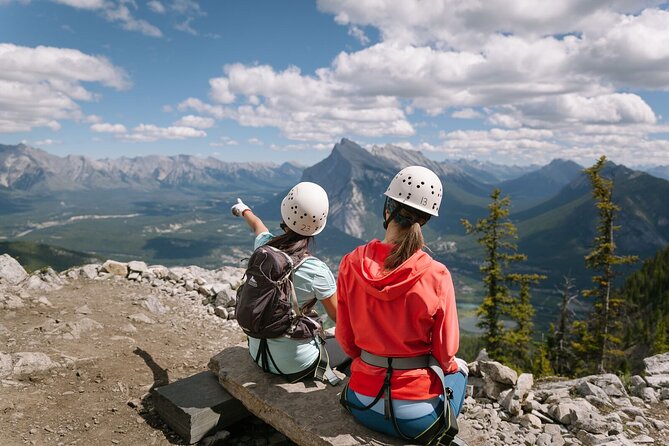
The views are the reason to choose this route over an indoor climbing wall or a standard mountain hike. You see Banff from an unusual angle, with the town and valley below rather than at eye level. Several people also report seeing mountain goats, bighorn sheep, or prairie dogs during their time around the mountain, though wildlife sightings are never guaranteed.
Bring a camera only if you can carry it safely. Guides may take action pictures during pauses, which is helpful because your hands are busy on the rock and cable. A small snack and water fit in the provided backpack, but food and drink are not included.
The scenery is not a quick backdrop between activities. It is woven into the climb. You pause, look across the valley, then continue upward with a better sense of where you are in Banff National Park.
Why the small group makes a difference
The maximum group size is eight. That is a practical advantage on a route where people can have very different comfort levels.
A small group gives the guide more room to explain a movement, wait for someone to gain confidence, or manage a nervous moment without making the rest of the outing feel rushed. Guides are repeatedly praised for keeping groups together and allowing people to move at a sensible pace.
It also means you share the experience with strangers rather than climbing alone. That social side can work well. The shared nerves at the start often turn into encouragement once everyone is clipped in and moving.
The tradeoff is that you cannot expect a private lesson. The group still has to progress together, and the pace may not match your own perfectly. If you are a strong climber, the Explorer route may feel introductory. If you are new to heights or steep ground, it may feel like a serious challenge.
Weather, exposure, and the important fine print
The experience runs only in suitable weather. If poor weather forces cancellation, you are offered another date or a full refund. That policy is reassuring, but you should still check the forecast before leaving Banff.
Rain changes the character of the rock. One family found that steep, rocky sections felt more difficult than expected, and heavy rain increased their concern on parts of the route. The guide helped them end the outing and return safely, but the experience is a useful warning: a beginner route can feel very different in dry weather and wet weather.
Bring a rain jacket if you have one, even though rainwear is available. Wear clothing that allows free movement and can handle changing mountain conditions. The supplied boots and outerwear are helpful, but correct sizing is not guaranteed.
The age limit is 12 years, and participants must weigh at least 40 kilograms, or 88 pounds. The maximum participant weight is 120 kilograms, or 265 pounds. You must have a moderate level of physical fitness, and every participant must sign the liability waiver.
These rules are not minor booking details. They tell you the operator expects genuine physical participation. Children and young teens may meet the age requirement yet still find the route too steep or exposed. Use judgment based on confidence, fitness, and comfort with heights, not just age.
Is $149.04 a fair price?
At $149.04 per person, this is not a cheap sightseeing ride. The price makes more sense when you count what is included: the chairlift, certified guide, climbing safety equipment, shuttle service to and from Banff, and access to a guided mountain route that would not be sensible to attempt independently.
You also avoid buying specialized gear for a single activity. Helmets, harnesses, lanyards, boots, rainwear, and a backpack are available at no extra cost. That makes the outing more practical for visitors who are traveling light.
The value depends on what you want from your Banff day. If you prefer a relaxed chairlift ride with scenic views, you can spend less effort elsewhere. If you want an active introduction to climbing without taking a full mountaineering course, this package gives you a focused two-and-a-half-hour experience.
The short duration is another advantage for a busy itinerary. You can fit it into a Banff visit without giving up an entire day. The drawback is that people who become hooked may find the Explorer route too brief and wish they had chosen a longer level.
Who should book this Banff climb?
I would recommend it to adults and older teens who want a first taste of climbing, enjoy a challenge, and are willing to follow instructions closely. It is particularly good for couples, friends, and solo visitors who want an active way to see the national park.
It can work for nervous beginners, provided you understand that the guide can coach you through the route but cannot remove the height, rock, or physical effort. The calm approach praised in guides such as Zach, Amanda, Ben, and Kevin is a major help, but you still need to commit to the climb.
I would think twice if you strongly dislike heights, have trouble on steep uneven ground, or want a gentle family outing. The minimum age of 12 does not guarantee that every young participant will feel ready. Wet weather is another reason to postpone if you have flexibility.
Book at least several weeks ahead if your schedule is fixed. The experience averages about 38 days of advance booking, and the high 4.9 rating from 195 reviews, with 96 percent recommending it, suggests that popular dates can fill.
Cancellation is free up to 24 hours before the start time. Changes or cancellations inside that window are not accepted for a refund, except when the operator cancels because of weather or insufficient participation.
The final call: a strong choice for active Banff days
I would book this if I wanted Banff views with a real sense of effort. The chairlift makes the route efficient, the small group keeps instruction personal, and the fixed cables make an introduction to mountain climbing possible without prior experience.
Just arrive early, prepare for more than a moderate hike, and take the weather seriously. Choose this Explorer route for a compact first step into via ferrata. If you already know you enjoy climbing, you may prefer a longer route next time.
FAQ
Where does the via ferrata experience begin and end?
It begins and ends at Mount Norquay Scenic Drive, Mount Norquay, Banff, Alberta. A free shuttle to and from Banff is included, but hotel pickup and drop-off are not.
How long does the activity last?
The experience lasts approximately two hours and 30 minutes. This includes preparation, the chairlift ride, instruction, and the Explorer route.
Do I need climbing experience?
No. Previous climbing or mountaineering experience is not required. You do need a moderate level of physical fitness and must be comfortable following safety instructions on steep, rocky ground.
What equipment is included?
Safety equipment includes a climbing helmet, harness, and via ferrata lanyards. Rainwear, a backpack, and suitable hiking boots are also available at no extra charge, but sizes are not guaranteed.
How old must participants be?
Participants must be at least 12 years old. They must also weigh at least 40 kilograms, or 88 pounds, and no more than 120 kilograms, or 265 pounds.
How large is the group?
The maximum group size is eight people. An ACMG-certified guide leads the group.
Do I need to arrive early?
Yes. All participants must check in 30 minutes before the departure time. You must also sign a liability waiver before taking part.
What happens if the weather is bad?
The experience requires good weather. If it is canceled because of poor weather, you can choose another date or receive a full refund. You can also cancel for a full refund if you cancel at least 24 hours before the start time.
Just added around Banff
- Jasper to Banff One-Way Tour★ 5.0 · 76 reviews
- Jasper to Lake Louise One-Way Tour★ 5.0 · 19 reviews
- Sunset at Moraine Lake & Stargazing Tour from Canmore/Banff★ 5.0 · 95 reviews
- 2 Day Banff Lake Louise Johnston Canyon Gondola Cave Basin tour★ 4.5 · 8 reviews
- Experience Golden Hour at Moraine and Lake Louise★ 5.0 · 18 reviews
- Sunrise Adventure: Alpenglow at Moraine Lake & Lake Louise★ 5.0 · 20 reviews
- Private Guided Tour to Banff Lake Louise|Moraine|Icefields &More!★ 5.0 · 5 reviews
- Moraine Lake & Louise – Morning or Sunset Tour from Banff/Canmore★ 5.0 · 194 reviews
Zip Lines, compared.
Niagara Falls, Canada: Zipline to The Falls
The full write-up →
Zipline To The Falls in Niagara Falls, Canada
The full write-up →
Superfly Ziplines on Cougar Mountain – includes 4 ziplines!
The full write-up →
Niagara Falls, Canada: Early Bird Zip Line to The Falls
The full write-up →
Browse the lists this tour appears in