
Reviewed · ZIP LINES
Banff: Mount Norquay 2.5 or 4-Hour Guided Via Ferrata Climb
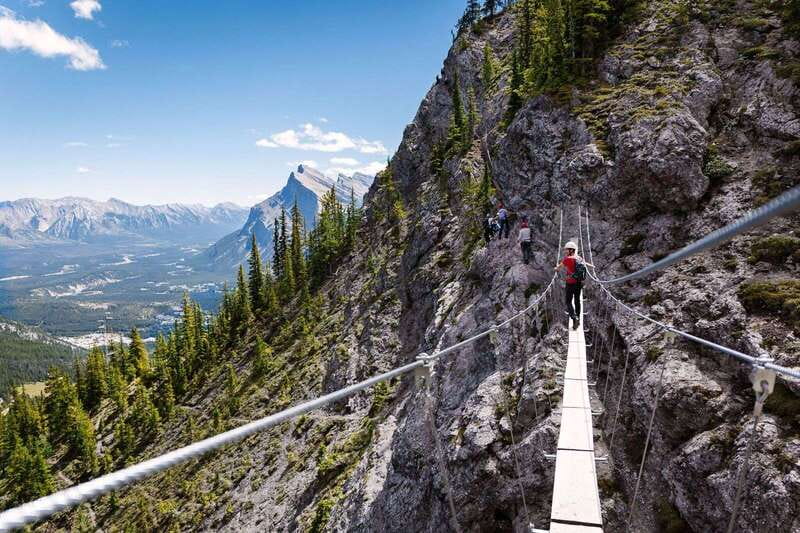
Mount Norquay’s via ferrata lets you climb a real mountain without needing previous climbing experience. You clip your harness to a fixed steel cable, pull yourself up metal holds, and cross a 30-meter suspension bridge high above Banff. It feels like a serious alpine adventure, but your guide handles the technical side.
I like the small groups of up to eight and the clear progression from practice wall to mountain buttresses. I also like the choice of routes: the Explorer works as a first taste, while the Ridgewalker gives you the full climb and summit views. The main consideration is simple: this is more physical and more exposed than a normal hike, and anyone uneasy with heights should think carefully before booking.
Key points to know before you climb
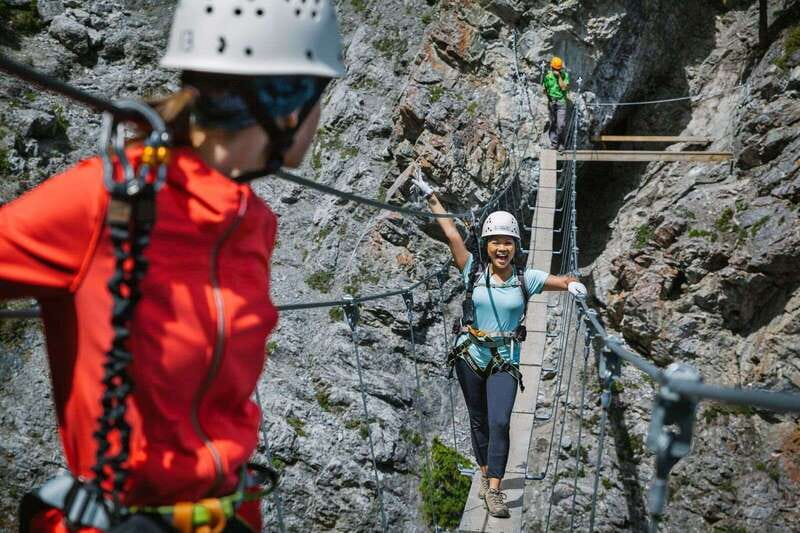
- A real climbing experience for beginners: No previous climbing experience is needed, but you will use your arms, legs, and balance on steep rock.
- Two routes suit different time and fitness levels: The Explorer covers 1 kilometer and gains 145 meters. The Ridgewalker covers 1.4 kilometers and gains 260 meters.
- The 30-meter suspension bridge is part of the fun: You stay clipped to the cable as you cross it.
- The Ridgewalker reaches 2,300 meters: The summit ridge gives you the broadest views and the strongest sense of achievement.
- Guides set the tone: Guides including Katsu, Amanda, Ben, Lucy, Jordan, and Alex have been praised for patient instruction and calm help with heights.
- Come prepared for mountain weather: Wear approved hiking shoes, carry water and snacks, and bring rain gear.
What Mount Norquay’s via ferrata really feels like
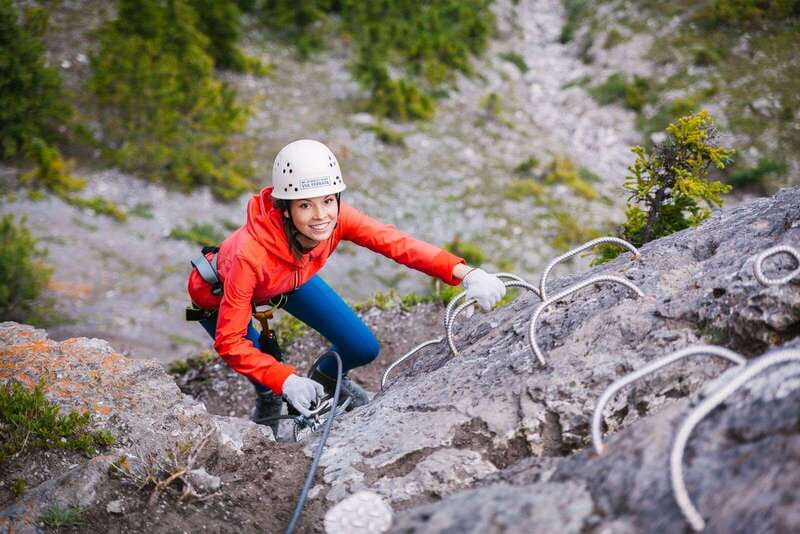
Via ferrata means iron way, a mountain route fitted with steel cables, ladders, rungs, and footholds. You do not rope up in the same way as a traditional rock climber. Instead, two lanyards connect your harness to the fixed cable, allowing you to move along the route while remaining attached.
That setup makes the activity accessible, but it does not make it effortless. You still need to climb steep rock, step onto narrow footholds, and manage your body at altitude. One part may feel easy, while the next asks for a longer reach or a steady move around a buttress.
I would describe the difficulty as moderate. Several people with no climbing background found the route manageable after the safety briefing, but some participants were surprised by how much actual climbing was involved. If you are comfortable with a demanding mountain hike and can use your hands for balance and pulling, you have a reasonable starting point.
The fixed cable gives you security, but it does not remove the sensation of height. That is important. You may feel safe and still feel nervous. Guides are there to show you where to place your feet, explain how to move the lanyards, and help you keep going when a section looks steeper than expected.
More Zip Line Tours in Banff:
- Small-Group Guided Via Ferrata Climbing with Banff’s Best Views
★ 5.0 · 195 reviews - Half-Day Guided Via Ferrata Climbing Tour in Banff
★ 5.0 · 30 reviews - Small Group Banff Skyline Via Ferrata 5-hour Tour
★ 5.0 · 15 reviews
Arriving at Mount Norquay and getting ready
Mount Norquay is about 10 minutes from Banff. A free shuttle bus from downtown Banff is included, which is useful if you do not have a car or would rather not deal with parking and transport.
Arrive at least 30 minutes before your departure. Check-in includes signing a liability waiver, receiving your equipment, and meeting your guide. You will be fitted with a helmet, harness, and lanyards. Complimentary hiking boots and rainwear are available, but sizes are not guaranteed, so bring suitable hiking shoes if you can.
The staff then explain the system and check your equipment. This early instruction matters more than it may seem. Once you reach the rock, you want the basic movements to feel automatic: clip, move, check, and continue.
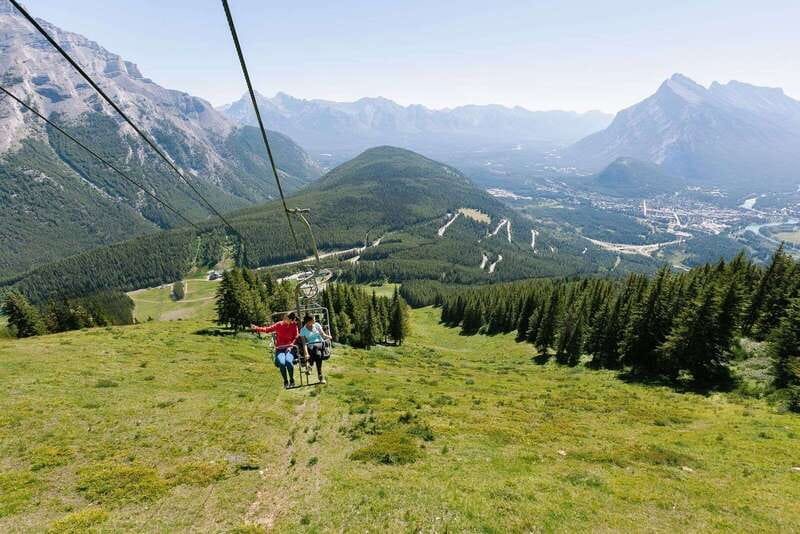
The chairlift ride takes you to the starting area. It is not just transport. You get an open view over Banff and the surrounding mountains before you begin climbing, and the ride back provides a welcome rest after the route.
From the chairlift, you walk about five minutes to the first via ferrata buttress. The route begins close enough to the lift that you do not spend the first hour slogging uphill before the activity starts.
The Explorer Route: 2.5 hours of climbing
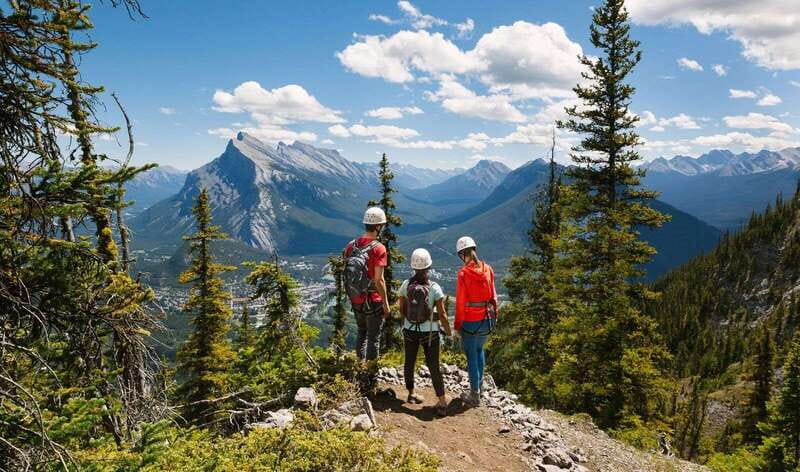
The Explorer Route is the sensible choice if you have limited time or want an introduction without committing to the longer mountain day. The tour lasts about 2 to 2.5 hours, covers 1 kilometer, and gains 145 meters.
You begin with a practice section and a short equipment lesson. Your guide shows you how to use the lanyards as you move along the steel cable. This is where you learn the rhythm of the route and get a first feel for the rock.
The climbing then continues over several pitches and buttresses. You will use strategically placed steel ladder holds and rock footholds, with your guide nearby. The route includes the suspension bridge, a highlight that adds a clear jolt of exposure without requiring complicated technique.
The Explorer reaches 2,235 meters, or 7,332 feet. That is high enough for wide mountain views and a proper sense of being above Banff, even though you do not continue to the highest point used by the Ridgewalker Route.
I would choose this option if you are testing your reaction to heights, fitting the activity between other Banff plans, or traveling with a mixed group that may not want a four-hour climb. It gives you the central ingredients: instruction, steel cable climbing, buttresses, bridge, chairlift, and mountain views.
The tradeoff is that the climb ends just as you are getting comfortable. If you enjoy physical challenges and have room in your schedule, the longer route offers more variety and a better finish.
The Ridgewalker Route: the fuller mountain experience
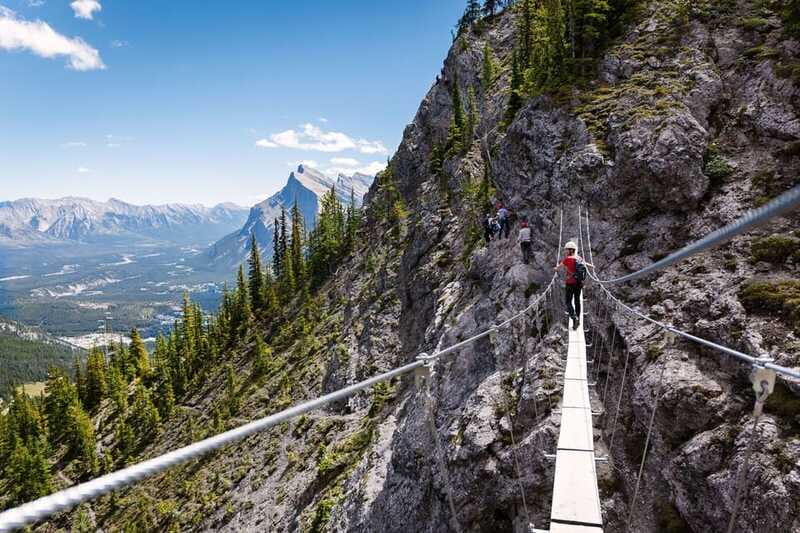
The 4-hour Ridgewalker Route is the better pick if this is one of the main activities in your Banff visit. It lasts about 3.5 to 4 hours, covers 1.4 kilometers, and gains 260 meters.
The route starts with a practice wall, then continues across the Norquay cliffs. You climb the Memorial, Sunrise, and Vista buttresses before crossing the suspension bridge. Each section gives you a slightly different problem to solve, so the experience feels more varied than a single steep wall.
The route finishes at the Ridgewalker Summit, 2,300 meters, or 7,545 feet, above sea level. At the top, you have time to take in the views and photograph the group before descending to the starting point.
That summit finish changes the character of the day. You are not simply completing a series of climbing exercises. You can look back at the route and see the height you have gained. The achievement comes from the combination of physical work, exposure, and scenery.
The Ridgewalker is not necessarily difficult because of distance. The total route is only 1.4 kilometers. The challenge comes from steep climbing, repeated movements, altitude, and the need to stay focused. One participant in their 70s completed it and described it as moderately difficult, while another older climber took close to five hours rather than the stated four.
That variation is useful to understand. The advertised duration is a guide, not a promise that every group will move at the same speed. A slower group may take longer, and a fast group may finish sooner. Your guide will set the pace and manage the route.
A few more Banff days worth comparing
- Banff: Banff Gondola Admission Ticket
★ 4.7 · 3,698 reviews - Lake Louise, Moraine Lake, Banff Tour from Calgary/Canmore/Banff
★ 5.0 · 2,792 reviews - Banff Gondola Ride Admission
★ 4.5 · 2,688 reviews - Emerald Lake, Moraine, Louise, Johnston Canyon & Banff Town
★ 4.9 · 1,554 reviews
The suspension bridge and the feeling of exposure
The 30-meter suspension bridge is the most obvious moment of height. You cross while connected to the steel cable, with open space around you and mountain views beyond. The bridge is short in distance but memorable because it makes the exposure easy to understand.
The climbing itself can feel more intense than the bridge. On a steep buttress, you are concentrating on your hands, feet, and lanyards while looking down between holds. Some people find that active task easier than standing still on a bridge. Others find the rock sections more intimidating.
If you are nervous, tell your guide at the start. Guides such as Lucy, Alex, Amanda, Katsu, and Jordan have been praised for patient coaching, steady encouragement, and noticing when someone needs help. They can suggest foot placements, explain the next move, and give you a moment to reset.
You should not expect the guide to remove every uncomfortable feeling. That is part of the experience. The useful distinction is that the activity gives you a controlled way to face the height, with a fixed safety system and professional supervision.
Guides, group size, and the human side of the climb
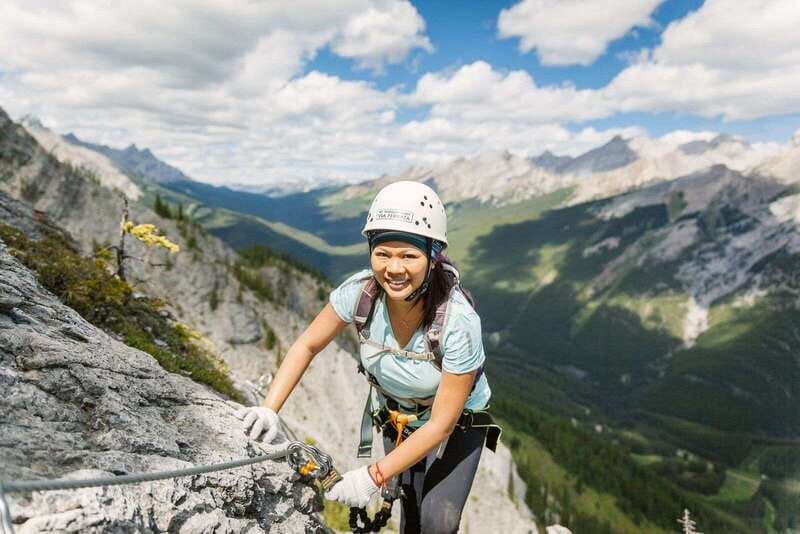
One guide leads a maximum of eight participants. That ratio is a major reason the activity works for first-timers. The guide can keep an eye on the group, check that everyone is using the equipment properly, and offer individual help without turning the climb into a crowded procession.
The guides also bring different strengths. Katsu has been singled out for combining technical skill with humor. Amanda has helped nervous climbers stay calm while also taking photographs. Ben has been praised for clear safety instruction and good energy. Lucy has worked patiently with people afraid of heights, and Alex has been noted for a reassuring manner.
You cannot assume you will get a particular guide, but the guide team is clearly a central part of the experience. A good guide makes the difference between staring at a steep section and understanding how to climb it.
Small groups also make it easier to meet the other people on your route. You will spend several hours moving together, waiting at some sections, and encouraging one another. The pace depends partly on the group, so expect a shared outing rather than a private climb.
Views, photos, and changing mountain weather
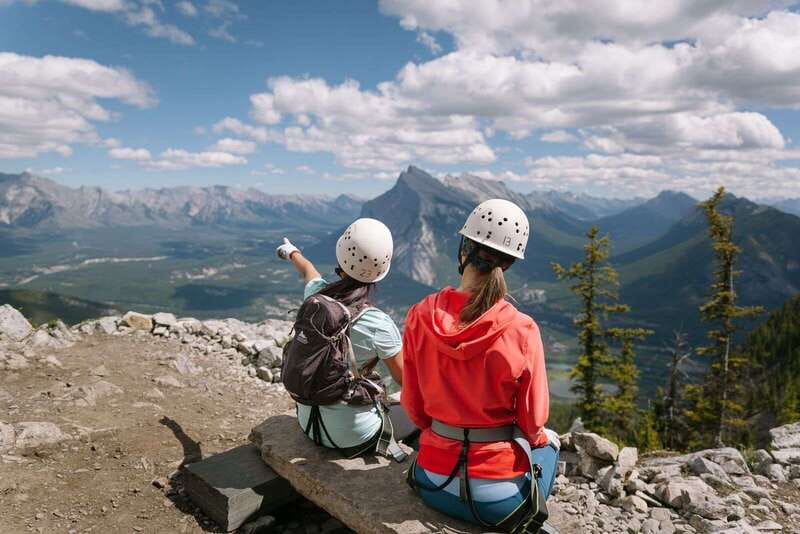
The route gives you a different view of Banff from the one you get on a road, gondola, or ordinary trail. You see the valley from above while also watching the rock directly in front of you. The chairlift adds another view before and after the climb.
On the Ridgewalker, the summit ridge provides the broadest payoff. Bring a phone or camera if you want your own photos, but keep it secure and do not let photography distract you from the route. Guides sometimes take photos for the group, which is helpful because your hands are busy during most of the climb.
Weather can change the mood and the visibility. Clear conditions give you the strongest views, while haze from wildfire smoke can reduce the distant scenery. Rain does not necessarily end the experience, but it can affect comfort, pace, and the condition of the rock.
Bring water, snacks, and rain gear. Food and drinks are not included, though the Cliffhouse Bistro offers them for purchase after the tour. That stop can be useful after the Ridgewalker, when you may want something warm or substantial.
Is $145 a fair price?
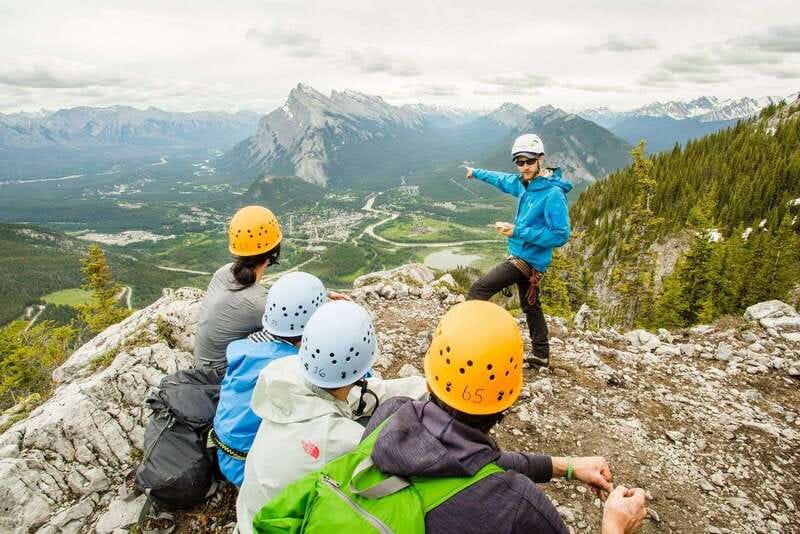
At $145 per person, the price includes the guide, safety equipment, chairlift access, and free shuttle transportation from downtown Banff. Hiking boots and rainwear are available at no extra charge, subject to sizing.
I consider the price fair for the amount of support involved. You are paying for a small-group guide, equipment, route access, instruction, and the chairlift, rather than simply paying to walk into the mountains. The professional setup also lets a beginner try an activity that would otherwise require much more training and gear.
Value depends on which route you choose. The Explorer gives you a shorter introduction and may be the better buy if your schedule is tight. The Ridgewalker gives you more climbing, more elevation, and a summit finish for the same listed price, so it offers stronger value if you are fit enough and have the time.
Remember that food and drinks are extra. You should also allow time before the start for check-in and after the route for the return chairlift and any café stop.
Who should book this activity?
This is a strong choice for you if you want an active Banff experience but have never climbed. It also suits experienced hikers who want something more technical than a standard trail.
The Explorer fits:
- First-time climbers who want a shorter introduction
- Visitors with limited time
- People unsure how they will handle exposure
- Families with participants aged 12 and above who meet the physical requirements
The Ridgewalker fits:
- People who want the full via ferrata experience
- Hikers comfortable with a moderate physical challenge
- Visitors who want a summit and longer time on the cliffs
- Anyone looking for a memorable main activity rather than a quick add-on
This is not suitable for children under 12, people with mobility impairments, anyone under 40 kilograms or over 140 kilograms, or people who are not comfortable with steep exposed climbing. The minimum age, weight limits, and footwear rules are firm practical details, not minor paperwork.
Practical ways to make the day better
Arrive early. The 30-minute check-in buffer gives you time to find the meeting point, handle the waiver, use the available equipment, and meet your guide without rushing.
Wear hiking shoes that staff can approve. Complimentary boots are available, but you cannot count on getting the right size. Bring layers and rain gear because mountain conditions can change during a single outing.
Eat something beforehand, but pack a snack and water for the route. You will not have food or drinks included during the climb. The Cliffhouse Bistro is available after the tour, which gives you a place to recover once you return.
Tell the guide about a fear of heights or any concern at the start. You do not need to pretend to be confident. Clear communication lets the guide offer better coaching and helps the group move at a comfortable pace.
If your schedule allows, choose the Ridgewalker. The Explorer is a good test, but the longer route gives you more climbing, a higher summit, and a stronger sense of having crossed a mountain route rather than sampled one.
Should you book the Mount Norquay via ferrata?
Yes, if you want a guided adventure that feels more dramatic than a hike but does not require previous climbing experience. The combination of chairlift, steel cable, ladders, rock buttresses, bridge, and mountain views gives you a lot in one outing.
Choose the Explorer if you are short on time or uncertain about heights. Choose the Ridgewalker if you want the better overall value and are ready for several hours of moderate climbing.
I would not book it as a casual sightseeing stop. You need approved hiking footwear, water, snacks, rain protection, and a willingness to work. But if you are ready for that, Mount Norquay gives you a safe, well-supported way to reach places you would not see from an ordinary trail.
FAQ
Do I need previous climbing experience?
No. The activity is designed for all abilities, including people who have never climbed. Your guide provides equipment instruction and training before you reach the first buttress.
How long does the activity last?
The Explorer Route lasts about 2 to 2.5 hours. The Ridgewalker Route lasts about 3.5 to 4 hours. The activity options are listed as 150 minutes to 4 hours.
What is the difference between the two routes?
The Explorer covers 1 kilometer, gains 145 meters, and reaches 2,235 meters. The Ridgewalker covers 1.4 kilometers, gains 260 meters, and reaches the Ridgewalker Summit at 2,300 meters.
How high is the suspension bridge?
The route includes a 30-meter suspension bridge. You remain connected to the fixed steel cable while crossing.
What equipment is included?
The tour includes a helmet, harness, lanyards, and the safety equipment needed for the route. A sightseeing chairlift ride is also included.
Is transportation from Banff included?
Free shuttle bus transportation from downtown Banff is included. The exact meeting point can vary depending on the option booked.
What should I bring?
Bring water, snacks, hiking shoes, and rain gear. Suitable hiking footwear must be approved by staff. Complimentary hiking boots and rainwear are available, but sizes cannot be guaranteed.
What are the age and weight limits?
The minimum age is 12. Participants must weigh at least 40 kilograms, or 88 pounds, and no more than 140 kilograms, or 308 pounds.
Just added around Banff
- Jasper to Banff One-Way Tour★ 5.0 · 76 reviews
- Jasper to Lake Louise One-Way Tour★ 5.0 · 19 reviews
- Sunset at Moraine Lake & Stargazing Tour from Canmore/Banff★ 5.0 · 95 reviews
- 2 Day Banff Lake Louise Johnston Canyon Gondola Cave Basin tour★ 4.5 · 8 reviews
- Sunrise Adventure: Alpenglow at Moraine Lake & Lake Louise★ 5.0 · 20 reviews
- Private Guided Tour to Banff Lake Louise|Moraine|Icefields &More!★ 5.0 · 5 reviews
- Experience Golden Hour at Moraine and Lake Louise★ 5.0 · 18 reviews
- Moraine Lake & Louise – Morning or Sunset Tour from Banff/Canmore★ 5.0 · 194 reviews
Zip Lines, compared.
Niagara Falls, Canada: Zipline to The Falls
The full write-up →
Zipline To The Falls in Niagara Falls, Canada
The full write-up →
Superfly Ziplines on Cougar Mountain – includes 4 ziplines!
The full write-up →
Niagara Falls, Canada: Early Bird Zip Line to The Falls
The full write-up →
Browse the lists this tour appears in