
Reviewed · WALKING TOURS
Ancient Trees of Vancouver Walking Tour
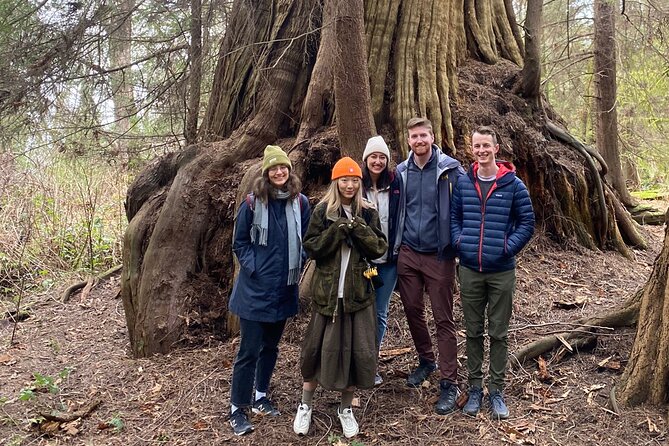
Some of Stanley Park’s most remarkable sights are not on the seawall or beside the famous totem poles. They are tucked along forest trails, where giant western red cedars and Douglas firs have survived for centuries. On this three-hour walk, tree expert Colin Spratt leads you to trees described as 600, 800, and even 1,000 years old, including a giant maple identified as the largest known in Canada.
I like two things right away. The group is limited to 10 people, so you should be able to hear the guide and examine the trees without a crowd. I also like the way the tour joins botany with Vancouver history, old maps, 120-year-old postcards, photographs, and the story of the Coast Salish people who lived here long before Stanley Park became an urban park.
The main consideration is the subject itself. This is a slow, three-hour forest walk, not a highlights tour by vehicle or a quick photo stop. If you want constant scenery changes or a brisk urban itinerary, the price and time may feel like a lot. If you enjoy trees, conservation, and careful storytelling, the pace is the point.
Key points to know before booking
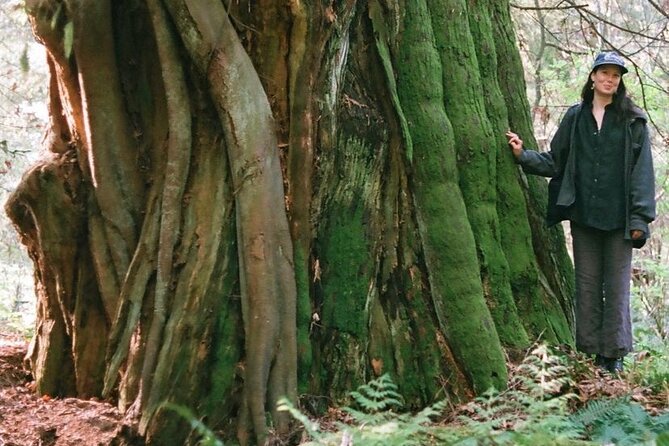
- See ancient western red cedars: The walk includes giant cedars, some described as roughly 1,000 years old, with hollow trunks, unusual crowns, and important roles in forest renewal.
- Look for towering Douglas firs: Some of Stanley Park’s surviving firs are described as 600 to 800 years old.
- Follow Colin Spratt: Colin is a big-tree expert and member of the BC Big Tree Committee, with a strong focus on tree identification, forest ecology, and conservation.
- Use historic visual aids: Maps, postcards, and photographs help show how the park and city changed around these old trees.
- Keep the group small: A maximum of 10 participants makes it easier to ask questions and stay involved.
- Choose morning or afternoon: The two departure periods offer useful flexibility during a Vancouver stay.
Why Stanley Park’s old trees matter
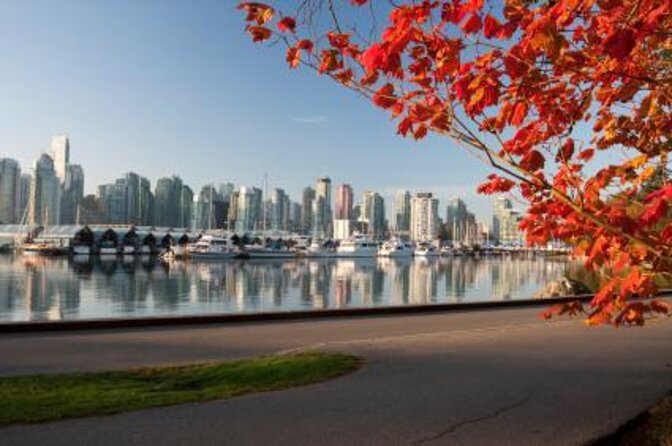
Stanley Park is often treated as Vancouver’s big green playground, a place for cycling, seawall walks, and skyline views. This tour takes you into a quieter part of the park and asks you to look upward, downward, and sometimes inside the trees themselves.
The surviving old-growth trees are valuable because they connect the present city with a much older forest. You are not simply seeing tall trees. You are seeing living structures that have endured fire, rot, storms, logging pressure, and the growth of a major city around them.
The tour also gives useful context about the original Coast Salish inhabitants of the area. Their relationship with western red cedar was practical, cultural, and deeply connected to daily life. Cedar supplied material for longhouses, canoes, clothing, rope, and other necessities. The tree was treated as a source of life, not merely as timber.
That context changes the way you look at the forest. A cedar is no longer just a large trunk with rough bark. It becomes part of a long human and ecological story.
More Walking Tours in Vancouver
- Gastown Historic Walking Food Tour
★ 5.0 · 1,863 reviews - Vancouver Lost Souls of Gastown Walking Tour
★ 5.0 · 1,273 reviews - A Wok Around Chinatown: Culinary and Cultural Walking Tour Led by a Chef
★ 5.0 · 610 reviews
Meeting Colin Spratt at Ferguson Point
The tour begins at Ferguson Point, at 7501 Stanley Park Drive, and ends back at the same meeting point. Pickup and drop-off are not included, so you need to make your own way there.
Colin Spratt is the central reason this experience feels different from a standard park walk. He is presented as an expert big-tree seeker and a member of the BC Big Tree Committee. His work focuses on finding, identifying, and drawing attention to notable trees, and that enthusiasm shapes the walk.
The strongest feature of Colin’s guiding is the mix of facts and stories. He explains how tree age can be estimated, how different species grow, and why an old tree may be more fragile than its massive size suggests. He also brings in local history, Indigenous uses of cedar, logging, conservation, and the changing shape of Vancouver.
You can expect plenty of questions and discussion. That is easier in a group of 10 than in a large tour. Parents should also note that Colin has been described as patient and engaging with children aged 7 to 11, especially when they ask repeated questions about how trees grow and survive.
The forest walk and its ancient cedars
The main activity is a guided walk along park trails. The exact route can vary with forest conditions and the trees being featured, but the focus remains on Stanley Park’s remaining old-growth areas.
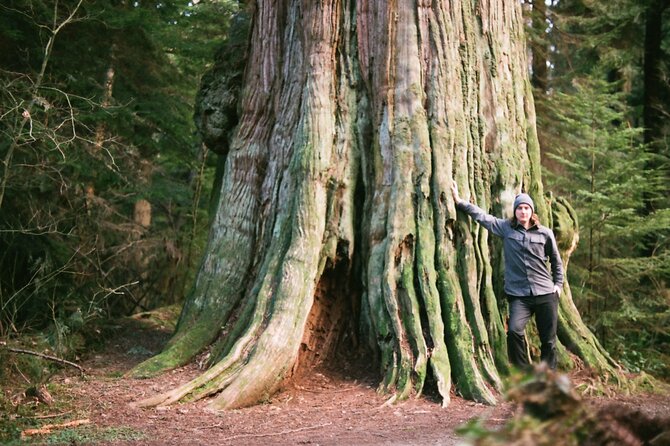
The western red cedars are the emotional center of the walk. Some are described as around 1,000 years old, while other tree accounts place individual specimens at different ages. You may see enormous trunks, hollow sections, and broad, irregular crowns that reveal a tree’s long struggle to keep growing.
One useful lesson concerns hollow cedars. A hollow trunk does not automatically mean a dead or useless tree. Older trees can contain large open spaces while remaining alive around the outer wood. These cavities may provide shelter for wildlife, and the decaying interior becomes part of the forest’s next stage.
You will also hear about nurse logs. When an old tree falls, it does not simply leave a gap. The fallen trunk can hold moisture, feed fungi, and support seedlings. New trees may take root on the body of an older one, creating several generations of forest life in the same small area.
A particularly interesting point is that much of a tree’s material is dead wood. That sounds alarming until you understand its role. Dead wood can protect living tissue, store nutrients, and provide homes for insects and animals. The old and the new depend on each other.
Look up at the oldest cedars and you may notice distinctive candelabra-like crowns. These shapes can suggest great age, as the tree’s upper branches slowly change over centuries. Colin’s explanations help you read those forms rather than simply photograph them.
Douglas firs and Stanley Park’s surviving giants
The Douglas firs provide a different kind of spectacle. They are known for height and reach, with some trees on the route described as 600 to 800 years old.
The walk includes trees selected for size, age, cultural meaning, or ecological importance. You may see a fir whose main impression is height, then a cedar whose trunk is so broad that age feels more visible in its girth and hollow spaces.
The tour also points to the largest known maple tree in Canada. That claim alone makes this an appealing experience for anyone who likes unusual natural records. The value is not just in seeing a large maple, but in understanding how species differ and why a tree’s shape tells a story about its surroundings.
Colin’s role is important here. Without a guide, many of these trees could be easy to miss. A casual walk through the park may show you a large trunk. A careful walk can show you a living archive of fire, decay, regeneration, human use, and climate.
Same trip, a completely different kind of day out:
- Vancouver Half-Day Whale Watching Adventure with Free Photos
★ 5.0 · 5,000 reviews - Big Bus Vancouver Hop-On Hop-Off Sightseeing Tour
★ 3.5 · 3,028 reviews - Vancouver: Covered Whale Watching Adventure with Free Photos
★ 4.8 · 2,260 reviews - Vancouver: Capilano Suspension Bridge Park Ticket
★ 4.7 · 2,181 reviews
Maps, postcards, and photographs that make the past visible
The old maps, postcards, and photographs are more than decorative props. They help you connect a living forest with the city that grew around it.
A photograph from 120 years ago can show how a trail, shoreline, or section of Stanley Park looked before modern Vancouver took shape. Old maps can reveal changes in access, development, and park use. These visual aids also give the guide a way to explain the forest without turning the walk into a lecture filled only with scientific terms.
I especially like this balance. You learn about trees as organisms, but also about the political and social choices that helped determine which trees survived. The result is a more complete picture of Stanley Park.
The Coast Salish story is another important part of the context. Learning how cedar bark and wood were used for clothing, rope, canoes, and longhouses makes the tree feel connected to human life in a direct way. The tour treats this knowledge as part of the forest’s identity, not as a brief footnote.
Conservation, logging, and the fragile side of old growth
Large trees can give a false impression of strength. A cedar may look immovable, yet an ancient tree has little room for error. It took centuries to reach its size, and a single major loss cannot be replaced within a human lifetime.
The walk explains the ecological importance of old-growth forests and the threats they face. That conservation message is handled through specific examples, such as decaying trunks, hollow cedars, seedlings growing from fallen wood, and the way old trees support many other forms of life.
You should expect the discussion to be thoughtful rather than light entertainment. Colin’s passion is clear, and the subject can become serious when the conversation turns to logging and forest protection. That is a strength for anyone who wants more than a pretty stroll, but it may feel weighty if you are seeking only a relaxed nature outing.
The best part is that conservation is tied to what you can see. You do not have to imagine an abstract forest ecosystem. You can touch bark, look at a hollow trunk, and see young growth rooted in older wood.
How much time and money should you allow?
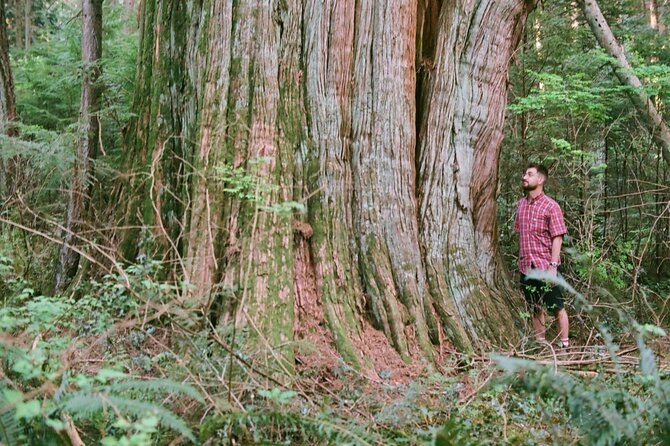
The tour costs $56.33 per person and lasts about three hours. At first glance, that is more than paying for a self-guided walk through a public park, where admission is free.
The comparison is not quite fair, though. You are paying for Colin’s time, preparation, tree expertise, historical material, route selection, and the chance to find trees that you might otherwise walk past. A self-guided outing gives you freedom, but it will not necessarily explain why a cedar is hollow, how tree ages are estimated, or how old photographs connect the forest to Vancouver’s past.
For me, the price makes the most sense if you are especially interested in nature, conservation, local history, photography, or Indigenous uses of cedar. It is also a good choice if you have already seen the main city sights and want something more focused.
The value is weaker if you are only looking for a short break between attractions. Three hours is a real block of your day, and the experience is centered on interpretation rather than a long list of stops.
Morning and afternoon departures make planning easier. Since the tour ends where it begins, you can combine it with other Stanley Park plans, but you should leave room for the full three hours rather than trying to squeeze it into a narrow gap.
Walking conditions and who will enjoy it most
The tour uses park trails and is described as suitable for most participants. Service animals are allowed. No special fitness requirement is stated, but you should be prepared for a three-hour walk in a forest setting.
Wear shoes suited to park trails and dress for Vancouver’s changeable conditions. Bring water, and consider a camera if you enjoy details such as bark, tree crowns, nurse logs, and old photographs. These are practical suggestions for any extended outdoor walk, not added tour requirements.
Families can do well here, especially if children enjoy asking questions. The small group makes it easier for younger participants to stay involved, and the subject offers plenty of hands-on ideas: how a tree grows, why wood rots, how seeds begin, and why a living tree can contain dead material.
Couples and solo visitors should also find the format comfortable. You are not dependent on a partner to make the experience worthwhile because Colin’s explanations and the forest itself supply the focus.
This is less suited to anyone who dislikes walking, prefers a fast pace, or wants a broad overview of all Stanley Park attractions. You will not be stopping at every major landmark. The tour has one clear subject and stays with it.
Booking, cancellation, and group size
Confirmation is provided when you book. The tour is offered in English, and the maximum group size is 10 people.
The experience is often reserved well ahead, with an average booking time of 46 days in advance. That is useful to know if your Vancouver dates are fixed, especially if you want a particular morning or afternoon departure.
Free cancellation is available up to 24 hours before the start time for a full refund. Changes or cancellations made less than 24 hours before the start time are not accepted for a refund, and the cut-off uses local time.
The group discount option may help if you are booking with family or friends. Since the public details do not specify the exact discount, check the price shown for your group before completing the booking.
Should you book the Ancient Trees of Vancouver tour?
I would book this tour if I wanted to see a side of Vancouver that is easy to miss. The combination of ancient cedars, giant Douglas firs, old maps, Coast Salish history, and conservation gives Stanley Park a stronger sense of place.
The most highly praised part is Colin Spratt’s guiding. His enthusiasm, patience, humor, and command of both trees and local history turn the walk into more than species identification. You leave with a better sense of how forests work and why old trees deserve protection.
Skip it if you want a quick attraction, a vehicle tour, or a flexible wander with no fixed pace. Choose it if you have three hours, enjoy asking questions, and want Vancouver’s famous park to feel less familiar and more surprising.
FAQ
Where does the Ancient Trees of Vancouver tour begin?
The tour begins at Ferguson Point, 7501 Stanley Park Drive, Vancouver, British Columbia V6G 3E2.
Where does the tour end?
The walk ends back at the Ferguson Point meeting point.
How long does the tour last?
The tour lasts approximately three hours.
How much does the tour cost?
The listed price is $56.33 per person.
How many people can join the tour?
The tour has a maximum of 10 participants.
Is the tour offered in English?
Yes. The tour is offered in English.
Are morning and afternoon departures available?
Yes. Morning and afternoon tour times are offered.
What is the cancellation policy?
You can cancel at least 24 hours before the start time for a full refund. Cancellations or changes made less than 24 hours before the start time are not accepted for a refund.
Just added around Vancouver
- Daily SUP Paddleboard Rentals Package in Metro Vancouver★ 5.0 · 18 reviews
- Daily RTT Rooftop Tent Rental in Metro Vancouver★ 5.0 · 13 reviews
- The Ultimate Stanley Park E-Bike Tour★ 4.9 · 33 reviews
- Vancouver: The Supernatural TV Show Locations Tour★ 4.9 · 32 reviews
- The Haunting of Vancouver Film Tour★ 4.9 · 9 reviews
- Sunset Bus Tour: Stanley Park & English Bay Photostops★ 4.5 · 181 reviews
- Stanley Park EUC & E-scooters loop tour★ 5.0 · 4 reviews
- Stanley Park CarTour:SmallGroup/Comfort&CheaperThan BikeTour★ 4.9 · 46 reviews
Walking Tours, compared.
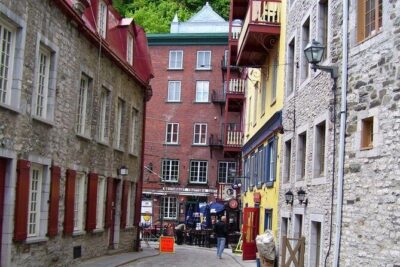
Old Quebec City: Grand Walking Tour with Private Option
The full write-up →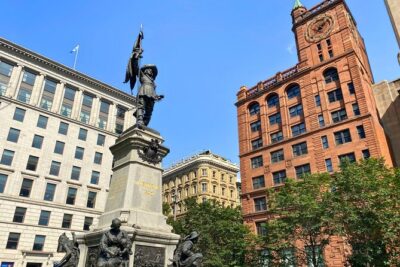
The Original Old Montréal Walking Tour by Guidatour
The full write-up →
Old Montreal Small-Group Walking Tour | Max 10 | by MTL Detours
The full write-up →
Old Quebec Classique Walking Tour with Funicular
The full write-up →
Vancouver Lost Souls of Gastown Walking Tour
The full write-up →
Quebec: Crimes of New France Animated Walking Tour
The full write-up →Browse the lists this tour appears in