
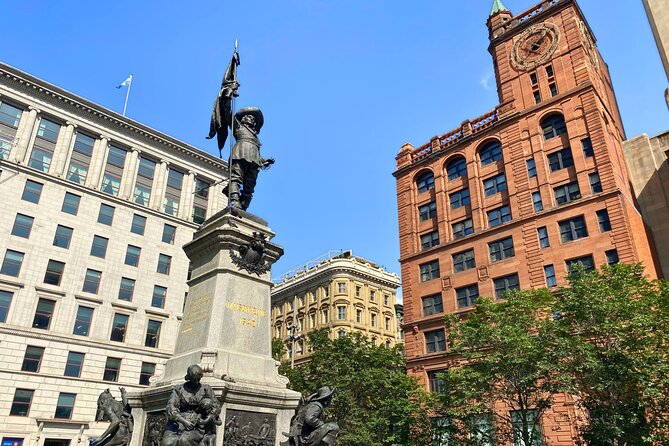
Reviewed · WALKING TOURS
The Original Old Montréal Walking Tour by Guidatour
The best thing about Guidatour’s Original Old Montréal Walking Tour is its sense of place. You move through the old district with a certified local guide, linking grand façades, French heritage, language politics, public squares, and everyday city life instead of simply ticking off monuments.
I like the small group size, capped at 16 people, and the useful route from Place d’Youville to Bonsecours Market. I also like that guides such as Pierre, Sarah, Thomas, Frederic, and Angelina bring humor, personal stories, and practical advice about what to see next. The main limitation is simple: the tour lasts only two hours, and Notre-Dame Basilica is viewed from outside.
Key points to know before you book
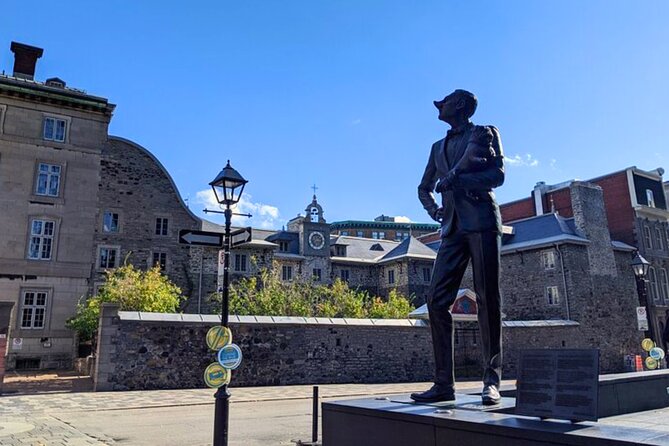
- A compact Old Montréal route: Walk from Place d’Youville through Place Royale, Place d’Armes, City Hall, Place Jacques-Cartier, Bonsecours Market, and St. Paul Street.
- A strong first-day choice: The tour gives you landmarks, orientation, and suggestions for places to revisit later.
- Small groups help: The maximum is 16 people, with about 15 usually expected, so questions are easier than on a large coach-style outing.
- History comes with local color: Guides cover architecture, French heritage, language, political change, and Montreal’s development.
- Good value at $26.34: For roughly two hours with an official city-certified guide, the price is modest, especially if the walk helps shape the rest of your visit.
- Plan for the weather: The walk runs year-round, rain or shine, and finishes at Bonsecours Market rather than returning to the starting point.
Why this walk works best at the start of your stay
Old Montréal is easy to wander, but not always easy to understand. Streets, squares, banks, churches, markets, and government buildings sit close together, yet the reasons they matter are not always obvious from a photo.
This walk gives you a framework. You see the main sights while learning how Montréal developed, how French heritage shaped the city, and how language and cultural shifts remain part of its identity. I like this kind of introduction because it leaves you with useful reference points. Afterward, you can return to the buildings or streets that caught your attention.
The two-hour length is another advantage. It is long enough to cover the core of Old Montréal without taking over your day. Several people found that the time passed quickly, which makes sense: the route keeps moving, and the guide mixes historical facts with stories, architecture, and questions from the group.
Book it early in your visit if you can. You will be able to ask about places to eat, shop, visit, or explore later, then use those suggestions during the rest of your stay.
More Walking Tours in Montreal
- Old Montreal Small-Group Walking Tour | Max 10 | by MTL Detours
★ 5.0 · 2,088 reviews - Montréal: The Original Old Montréal Walking Tour
★ 4.8 · 911 reviews - Old Montreal: Traditional Ghost Walk of the Haunted City
★ 4.7 · 746 reviews
Starting at Place d’Youville
The meeting point is 206 Place d’Youville, in a useful spot at the western edge of Old Montréal. You begin in an area that helps set up the district’s story, then continue on foot through the historic core.
There is no hotel pickup or drop-off, so you need to make your own way to the starting point. The mobile ticket makes entry simple, but arrive ready to walk. Comfortable shoes matter more than anything fancy, and you should dress for the forecast since the experience operates in all seasons.
The walk is designed for most people to join, and service animals are allowed. Still, this is an outdoor walking tour, not a seated sightseeing trip. Cold, rain, or strong sun can affect your comfort, so bring the right layers and footwear.
Place Royale and Montréal’s earliest stories
Place Royale is one of the more rewarding early stops because it gives the city’s past a physical setting. Here, you are not just hearing dates. You are standing in a historic square where commerce, government, and public life developed over many generations.
The guide uses the square to explain how Montréal changed over time and how different chapters of the city’s past overlap. This is also where the storytelling can make the biggest difference. A plaque or old building may give you a name and date, but a local guide can connect it to the larger story of the city.
Expect the explanation to be broad rather than academic. The tour covers major milestones and offers a clear introduction to Montréal, Quebec, and Canada. If you want a detailed study of one period, this will feel too short. If you want to understand what you are seeing, it is a useful beginning.
Notre-Dame Basilica from the outside
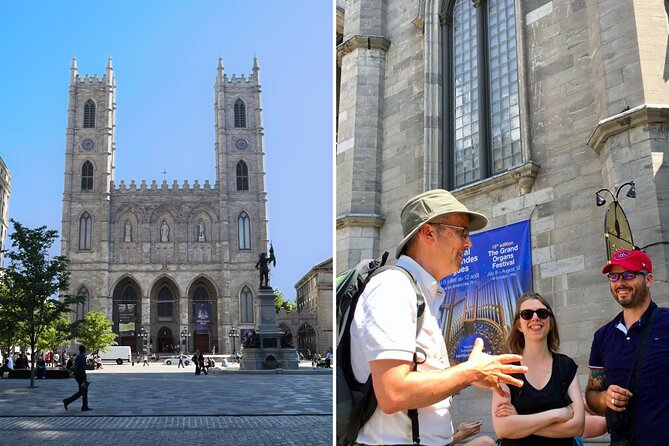
Notre-Dame Basilica supplies one of the walk’s most dramatic architectural views. The tour points out its Gothic Revival design and explains why the building matters, but admission inside is not included.
That distinction is important. If you want to see the interior, you will need to arrange a separate visit. The outside stop still earns its place on the route because the façade is one of Old Montréal’s major visual markers, and the guide can help you notice details you might otherwise pass without a second look.
This is a good example of the tour’s value. You get context without spending the time and money required for an interior visit. At the same time, you should not book this walk expecting a church tour.
Same trip, a completely different kind of day out:
- Montreal: Guided Bus Tour
★ 4.4 · 3,064 reviews - Montreal: Hop-On Hop-Off Double-Decker Bus Tour
★ 4.1 · 2,760 reviews - Montreal Mile End Authentic Food Tour with 7 Delicacies Tastings
★ 5.0 · 2,598 reviews - Montreal City Sightseeing Tour with Live Commentary
★ 4.0 · 1,953 reviews
Place d’Armes, the Royal Bank, and city architecture
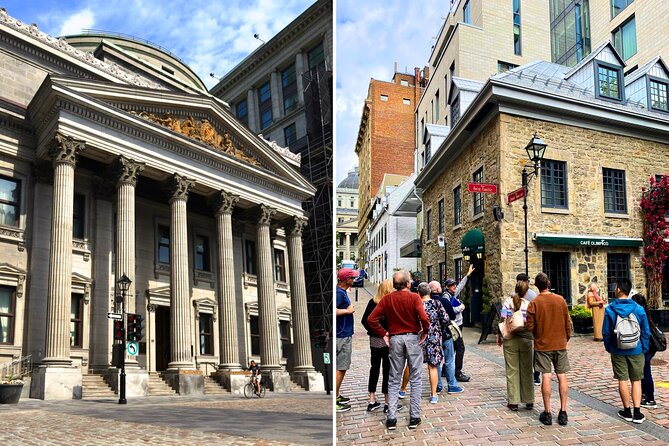
At Place d’Armes, the focus turns toward the buildings that helped shape Montréal’s public and commercial life. You will see the Royal Bank and learn how architecture, business, and the city’s growth connect.
The route is particularly useful for anyone who enjoys buildings but does not always know what to look for. Guides discuss architectural styles and explain how the city’s streets reflect cultural and economic shifts. One guide also offered a brief look toward subterranean passages, giving the group a glimpse of the less visible side of Montréal.
Do not expect access to every building. The tour is primarily an outdoor walk, with occasional indoor moments or discussions depending on the route and conditions. Its strength is interpretation, not private entry.
Montréal City Hall and the political side of the city
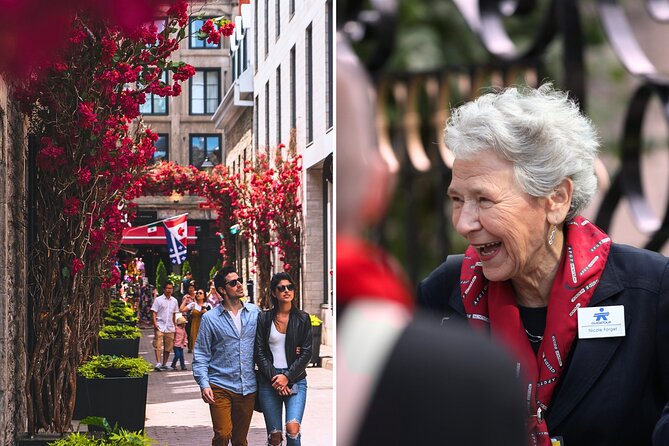
The walk continues to Montréal City Hall, where the story broadens beyond architecture. This stop helps connect Old Montréal to the city’s civic life and political changes.
The guides are especially useful here because the tour does not treat Montréal as a frozen historic district. The discussion includes French heritage, language, and cultural change. Those subjects can be difficult to explain quickly, but the guide-led format allows you to ask questions and get a clearer sense of how the city developed.
If you are interested in Canadian politics or Quebec identity, pay close attention during this part of the walk. You may not receive every detail, but you will come away with a better set of reference points for understanding Montréal.
Bonsecours Market and the finish near the Old Port
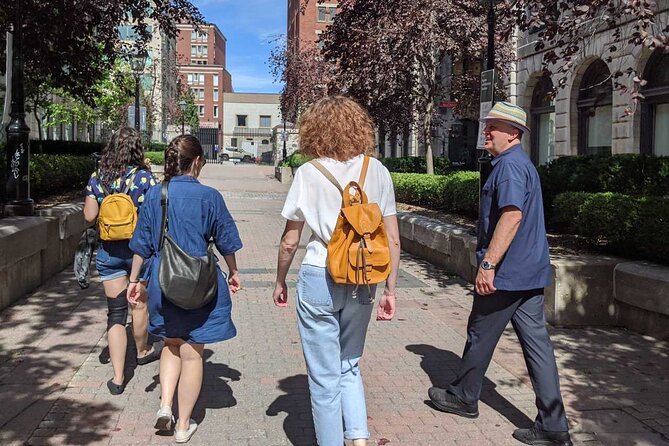
Bonsecours Market is both a historic building and the end point of the tour. It served as Montréal’s main public market for more than a century, so it offers a natural way to discuss trade, public life, and the city’s changing needs.
The finish is at Bonsecours Market Street, not back at Place d’Youville. I consider that a practical advantage. You end near one of the district’s major sights, with more of Old Montréal still in front of you. You can continue toward the Old Port, return to a building you want to inspect, or use the guide’s suggestions for the rest of the day.
The exact experience may vary with weather and the guide leading your group. In cold conditions, guides have sometimes included timely indoor stops and discussions, which can make a winter walk more comfortable. Still, the tour remains an outdoor experience, so do not rely on indoor shelter for the entire route.
Place Jacques-Cartier and St. Paul Street
Place Jacques-Cartier brings a more social feel to the route. The square is known for terraces, street performers, views toward the Old Port, and its sightline to City Hall.
It is a good place to pause for photographs and observe how Old Montréal functions beyond its historic labels. The square can feel lively, especially in warmer weather, though the atmosphere will change with the season.
St. Paul Street provides one of the walk’s most photogenic stretches. Its historic façades and compact layout make it a natural place for photos, but the guide adds more than a list of pretty buildings. You learn how the street fits into the old district and which details are worth noticing.
This is also where the tour’s orientation value becomes clear. After walking the route, you should have a better idea of which streets to revisit slowly and which attractions deserve more time.
The guides make the difference
Guidatour promises official city-certified guides, and the guide is the main reason to choose this experience over exploring with a map. The strongest feedback points to guides who are clear, warm, funny, and willing to answer questions.
Names praised by past participants include Pierre, Sarah, Thomas, Frederic, Angelina, David, JoAnne, François, Eduardo, and Pierre G. You are not guaranteed a particular person, but the range of names suggests a broad guide team rather than one star personality carrying the entire product.
Several guides are described as passionate about Montréal and its heritage. Others are praised for making everyone feel included, explaining difficult subjects clearly, or tailoring the walk to questions from the group. François was also praised for speaking English, French, and Spanish, though language ability can vary by guide and booking information here lists the experience in English.
The best approach is to ask questions. Guides can point you toward follow-up sights, activities, shopping, and local places that fit your interests. That personal exchange is something a self-guided walk cannot provide.
What $26.34 gets you
At $26.34 per person, this is a reasonably priced introduction to Old Montréal. You receive about two hours of guided walking, a certified city guide, a route through the district’s main landmarks, and a group capped at 16 people.
The value is strongest if you are visiting for the first time or have limited time in the city. A good guide can save you from wandering past important buildings without understanding them, and the practical tips may help you spend the rest of your trip more wisely.
The price is less compelling if you already know Old Montréal well or want a specialized tour focused on one subject. It also does not include entry to Notre-Dame Basilica or other paid attractions, and there is no transportation service.
Tips are not required, but they are welcomed as a way to thank the guide. Since the experience depends heavily on clear storytelling and helpful answers, a tip makes sense when your guide adds real value to the walk.
Group size, timing, and weather
The group maximum is 16 people, with about 15 expected on a typical departure. That is small enough for a guide to hear questions and keep the group together, while still allowing the tour to operate at a moderate price.
The tour lasts approximately two hours. That makes it easy to fit into a morning or afternoon, but you should allow extra time before or after if you want to take photos, visit the basilica, browse Bonsecours Market, or continue through the Old Port.
The tour runs rain or shine and year-round. Winter can be especially rewarding if you enjoy seasonal scenery and do not mind cold streets, but dress seriously for it. One cold-weather outing remained enjoyable because the guide kept the pace engaging and included a couple of indoor moments. Even so, gloves, warm layers, and shoes suited to walking are sensible choices.
Who should book this Montréal walk
I would choose this tour for a first visit, a short stay, or the first full day in Montréal. It gives you a useful map of Old Montréal while explaining the city’s architecture, language, politics, and cultural shifts.
Families can also make good use of it. The route is suitable for all ages, and guides are praised for humor and clear explanations. Couples who want more than independent sightseeing should find the pace manageable, while history fans will appreciate the dates, milestones, and discussion of the city’s development.
You may want another option if you need step-free access throughout, want to spend substantial time inside attractions, or prefer a highly specialized historical lecture. The tour is a general introduction, not a museum visit or a deep study of one building.
Should you book the Original Old Montréal Walking Tour?
Yes, if you want a friendly, efficient introduction to Old Montréal at a fair price. The route covers the district’s essential sights, and the small group makes it easier to ask for restaurant, museum, shopping, and sightseeing advice.
Book it near the start of your visit so you can use the orientation later. Just remember that the basilica is an exterior stop, the walk ends at Bonsecours Market, and the weather is part of the deal. For a first look at Montréal’s old quarter, this is a sensible way to begin.
FAQ
How long is the Original Old Montréal Walking Tour?
The tour lasts approximately two hours.
How much does the tour cost?
The listed price is $26.34 per person.
Where does the tour start?
The meeting point is 206 Place d’Youville, Montréal, Quebec H2Y 2B4, Canada.
Where does the tour end?
The tour ends at Bonsecours Market Street, Montréal, Quebec H2Y 1J3, Canada.
Does the tour enter Notre-Dame Basilica?
No. The tour includes an exterior view and discussion of the basilica, but it does not go inside.
How large is the tour group?
The experience has a maximum of 16 travelers, with a group of about 15 people expected.
Does the tour operate in bad weather?
Yes. It operates year-round, rain or shine, so dress appropriately for the day.
Just added around Montreal
- Full Day Family Bike Rental★ 5.0 · 17 reviews
- Winter Express: Old Montreal Highlights Walking Tour★ 5.0 · 119 reviews
- In the Shadow of the Mountain: Montreal Jewish History Walking Tour★ 4.5 · 33 reviews
- Under the Surface of Montreal’s Chinatown: Guided Food Walking Tour★ 5.0 · 23 reviews
- The Ultimate Montreal Boat Tour – Fall Colors Apéro Edition★ 4.5 · 31 reviews
- Montreal Premium Driving Tour with River Cruise and Notre Dame★ 4.5 · 164 reviews
- Old Montreal: Self-Guided Tour from Place D‘Armes to Old Port★ 5.0 · 5 reviews
- Immersive Virtual Reality Game Activity★ 5.0 · 19 reviews
Walking Tours, compared.

Old Quebec City: Grand Walking Tour with Private Option
The full write-up →
Old Montreal Small-Group Walking Tour | Max 10 | by MTL Detours
The full write-up →
Old Quebec Classique Walking Tour with Funicular
The full write-up →
Vancouver Lost Souls of Gastown Walking Tour
The full write-up →
Quebec: Crimes of New France Animated Walking Tour
The full write-up →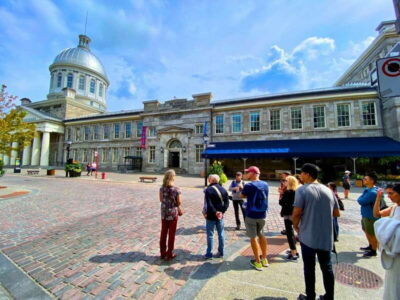
Montréal: The Original Old Montréal Walking Tour
The full write-up →Browse the lists this tour appears in