
Reviewed · STARGAZING & DARK SKY
Sunset at Moraine Lake & Stargazing Tour from Canmore/Banff
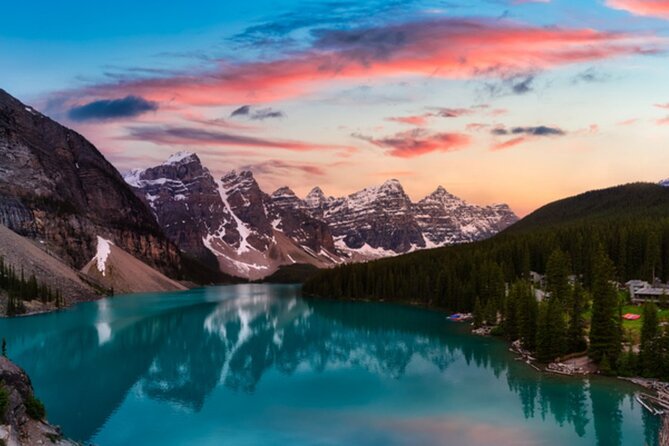
Moraine Lake is famous for its blue water and mountain wall, but the best surprise comes after the day crowds leave. This evening tour brings you to the lake for sunset, then keeps you there for stargazing, hot chocolate, and the rare pleasure of hearing the Rockies go quiet. The lake after dark feels like a different place.
I like the small groups, capped at 13 people, and the care put into simple comforts such as headlamps, walking sticks, ponchos, seat pads, and warm drinks. Guides including Laura, Tobias, and Sebastian also help with camera settings and share useful ideas for the rest of your Banff trip. The tradeoff is weather: clouds can erase the stars, and the rocky climb and chilly wait require proper clothing.
Key points to know before you book
- Moraine Lake after the crowds: Arrive in the evening, when daytime visitors have largely gone and the rockpile can feel remarkably quiet.
- Sunset followed by stargazing: You get time for the lake, golden light, twilight, and night sky rather than a quick photo stop.
- A small group of up to 13: The size makes it easier to ask questions, get photo help, and stay near your guide.
- Useful outdoor equipment included: Headlamps, binoculars, monoculars, walking sticks, ponchos, umbrellas, and hot drinks are provided.
- Weather shapes the experience: Clear skies may bring the Milky Way or northern lights, but clouds and rain can turn the evening into a scenic lake visit.
- A late, chilly outing: Bring food, warm layers, and patience. The stars may not appear until late, and the return can approach midnight.
Why evening is the smart time to see Moraine Lake
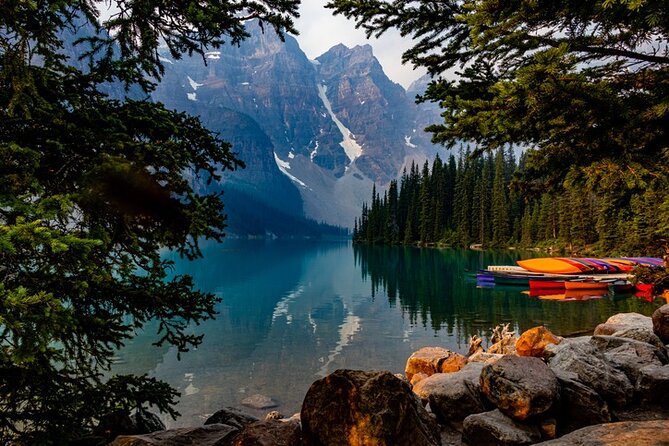
Moraine Lake is one of those places that can feel almost too popular during daylight. The familiar mountain-and-lake view is still beautiful, but crowds can make it hard to find a calm place to look, take photographs, or simply listen.
This tour uses the quieter hours to change the mood. You reach the lake with time to walk along the shore, watch the water change color, and photograph the Valley of the Ten Peaks before heading to the rockpile for sunset. Later, the attention shifts from the mountains to the sky.
That timing is the main reason I see value here. You are not paying simply for transport to a famous viewpoint. You are paying for access at a better hour, guided time at the lake, and an evening plan that would be difficult to arrange on your own.
The tour lasts about eight hours, though the exact length depends on pickup location, sunset time, road conditions, and how late the stars appear. Canmore pickups begin first, with Banff pickups roughly 30 minutes later. One evening described in the available information ended around midnight in Canmore, so do not plan an early dinner reservation afterward.
More dark sky and stargazing nights in Banff:
- Banff: Guided Sunset and Stargazing Tour
★ 4.9 · 262 reviews - The Banff Stargazing Tour – 2hr Walking Tour
★ 5.0 · 189 reviews - Banff OR Moraine Lake: Night Tour with possible Stargazing
★ 4.6 · 83 reviews
The Bow Valley Parkway and Morant’s Curve
The drive begins along the Bow Valley Parkway, a route known here as a wildlife corridor. Evening is a sensible time to travel it, since elk, deer, and bears may be more active as the air cools.
Wildlife is never guaranteed, and you should not treat the drive as a safari. Still, the route adds a useful sense of place before the main stop. Your guide may point out animals, explain local geography, or share stories about Banff and the surrounding area.
Morant’s Curve provides the first planned photo stop. The railway bends through the foreground while the mountains rise behind it, making this a strong composition in late light. The stop lasts about 15 minutes, which is enough for photographs and a quick look, but not enough for a long walk or extended exploration.
If a train appears at the right moment, you may get the classic railway photograph. If not, the curve and peaks still make a worthwhile pause. The short stop also keeps the evening moving toward Moraine Lake, where most of your time is spent.
Three hours at Moraine Lake, from blue hour to darkness
The main lake visit lasts about three hours and combines a guided walk, free time, sunset viewing, and stargazing. That is a generous amount of time for one place, but it is necessary because the experience changes slowly.
First, you have time at the lakeshore while there is still daylight. The guide leads a short walk and helps you notice the changing light, the mountain wall, and the famous color of the water. You can take photographs, look across the lake, or simply get settled before sunset.
The walk itself is not described as long, but the route to the rockpile involves steps and uneven, rocky ground. One person in their seventies found the climb manageable with walking sticks and support from the guide, but you should still be honest about your balance, knees, and comfort on rough surfaces.
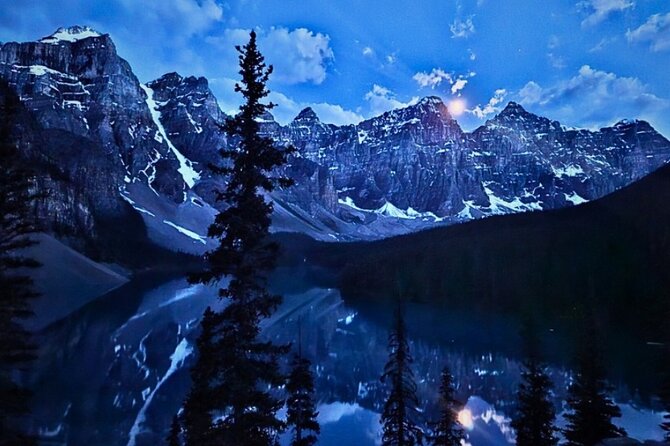
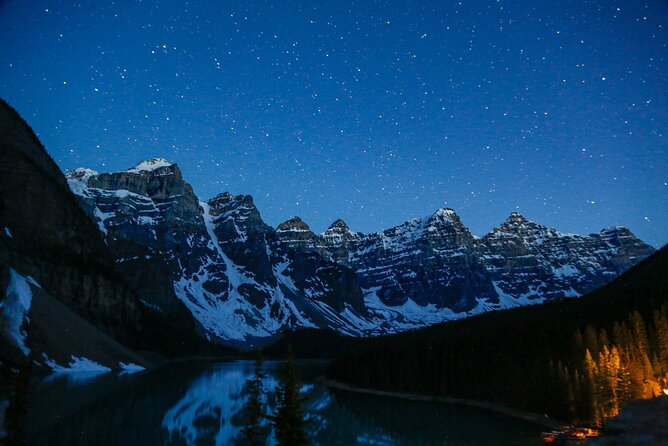
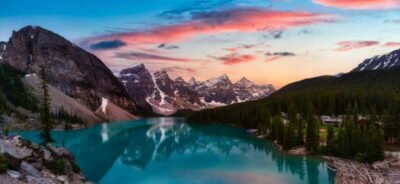
At the rockpile, you watch the sun lower behind the Valley of the Ten Peaks. The lake shifts from its daytime blue toward darker twilight tones, and the surrounding peaks lose their sharp daylight contrast. This is the part of the outing that rewards patience. You are not rushed through a ten-minute viewpoint stop.
The supplied equipment helps. Seat pads make the wait easier, and guides have also provided hand warmers, blankets, or walking sticks when needed. A small cushion or blanket of your own could still be useful, especially if you want to lie back for the stars rather than crane your neck from a seated position.
Stargazing, cameras, and the northern lights
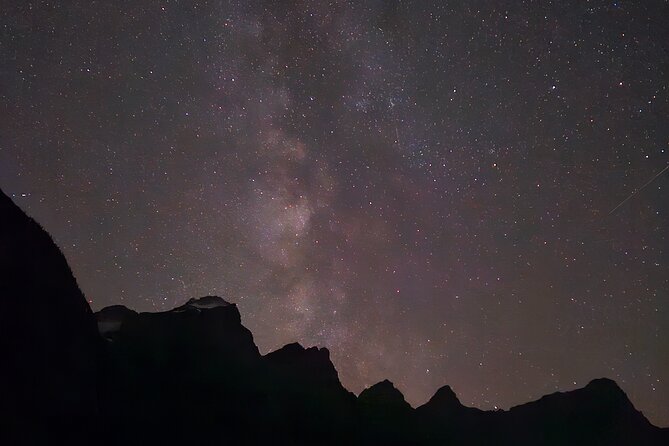
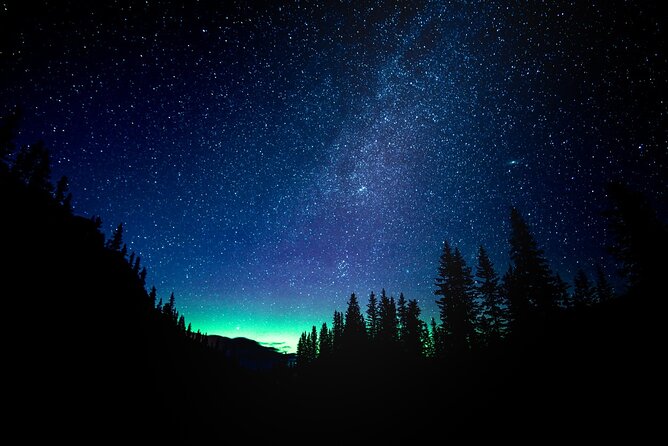
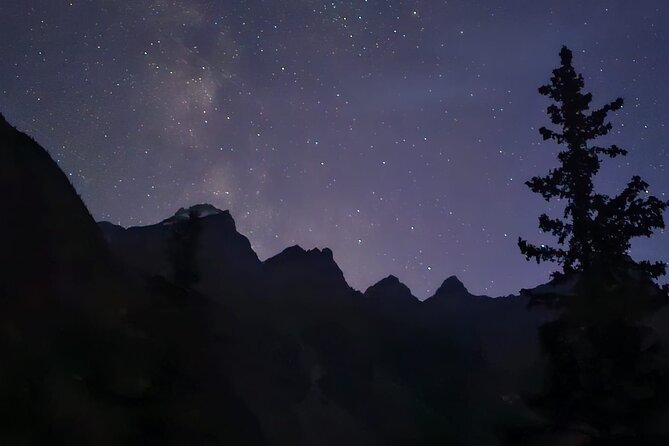
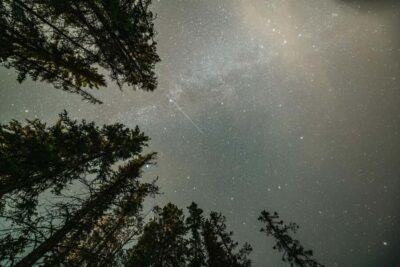
After sunset, the tour becomes less about the scenery in front of you and more about the sky above. The area has little artificial light, giving you a good chance to see many more stars than you would from Banff or Canmore.
Telescopes and binoculars are included, along with monoculars for closer views of constellations and bright objects. The guide can point out major stars and constellations, and some guides help you set up a phone or camera for night photography. Tripods have been available on some outings, which is useful because star photographs need a steady camera and a long exposure.
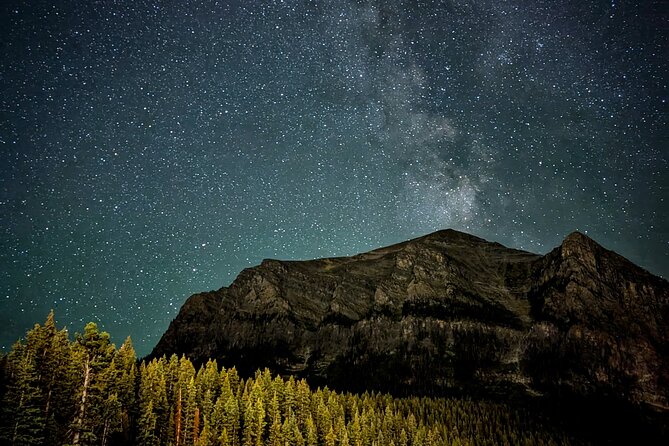
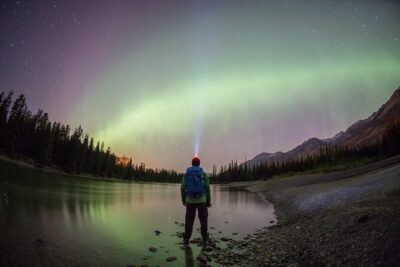
The Milky Way is possible on a clear night, and the northern lights may appear if conditions are right. Neither is promised. Cloud cover can block the stars, and rain can reduce visibility completely.
This is where the tour’s flexible approach matters. If the sky does not open, the evening does not simply become a failure. You can spend more time enjoying the lake, talking with the guide, or appreciating the silence after the crowds have gone. On one cloudy night, the guide adjusted the plan and continued the star search at Lake Louise. That kind of change depends on the evening and the guide, so do not treat it as a guaranteed part of the route.
Keep your expectations realistic. Stargazing often involves waiting. In late summer and early autumn, the sky may not become properly dark until around 9 p.m. or later. You might spend a good stretch sitting, staying warm, and watching the light fade before the stars become clear.
The quiet is part of the attraction. One guide has used a few minutes of silence to let the group hear the natural sounds around the lake. That can be more memorable than another photograph, especially if you make a point of looking up instead of watching your camera screen.
More things to do after dark in Banff:
- Banff: Evening Wildlife Safari Guided Tour
★ 3.9 · 465 reviews - Moraine Lake & Louise – Morning or Sunset Tour from Banff/Canmore
★ 5.0 · 194 reviews - Moraine Lake & Lake Louise Sunset & Wildlife Adventure
★ 5.0 · 97 reviews - Johnston Canyon Evening Icewalk
★ 5.0 · 94 reviews
Guides make the difference
The route is attractive on its own, but the guide shapes the evening. Laura, Tobias, and Sebastian are named in the tour information and have each been praised for different strengths.
Laura is described as attentive and practical, helping with phone photographs, camera settings, wildlife information, and ideas for other places to visit. Her approach appears especially useful if this is your first Banff trip and you want suggestions for Kananaskis, Lake Louise, hikes, shops, or later sightseeing.
Tobias is known for local stories, history, astronomy help, and a good sense of humor. He has helped with time-lapse photographs, star positions, and camera setup. He has also been especially attentive to older participants and people who felt unsure about the rockpile.
Sebastian has been praised for looking after the group and keeping the mood upbeat, even when the weather refused to cooperate. A guide cannot clear the clouds, but a well-run evening can still feel worthwhile when the plan is adjusted sensibly.
Guides may also add small touches such as animal calls, phone charging, tripods, hand warmers, or a Polaroid photograph. These extras are not all listed as standard equipment, so consider them possible guide-dependent bonuses rather than promised inclusions.
What the $97.64 price really covers
At $97.64 per person, this is a fair price if you want Moraine Lake at a special time and prefer not to manage the evening yourself. The fee includes pickup, transportation, a small group, guiding, access to equipment, and about three hours at the lake.
The practical value is strongest for visitors who do not have a suitable vehicle or who cannot use the restricted Moraine Lake access arrangements on their own. You also avoid arranging separate transportation, finding the right sunset viewpoint, carrying every piece of evening equipment, and working out how to photograph the stars.
The price is less compelling if you only want a quick sunset photograph or if you dislike waiting outdoors. A self-planned visit would give you more freedom, but it would not necessarily give you the same combination of evening timing, guide support, equipment, and astronomy help.
Food is not included. Bring a sandwich or substantial snack, plus water in a refillable bottle. Hot tea and hot chocolate are provided, but they do not replace dinner on a long evening.
Dress for the wait, not the forecast
Mountain weather can change quickly, and this tour operates in rain, snow, or sunshine unless conditions become unsafe. Ponchos and umbrellas are supplied, but rain protection is only part of the problem.
The larger issue is cold after sunset. Wear several layers, bring a warm jacket, and protect your head, neck, and hands. Hand warmers have been available on some outings, but you should not depend on them. Mosquito repellent is also worth carrying near the lake.
Footwear matters because the rockpile includes steps and uneven ground. You do not need a major hike, but comfortable shoes with reliable grip will make the climb and descent easier.
If you plan to lie down for stargazing, bring a small blanket or towel. The ground may be dusty and uneven, with roots and rocks. A seat pad is useful, but it is not the same as a yoga mat.
Who will enjoy this evening most
I would choose this tour if your Banff plans include one special evening and you want more than a standard viewpoint stop. It suits couples, families with children aged six and older, solo visitors, and anyone who wants help with night photography.
It is particularly good for first-time visitors. The guide can fill the drive with local facts and practical suggestions, then help you make the most of a famous place without wasting time on transport details.
Families should remember that the outing is long and ends late. Children who can manage a chilly wait and rocky steps may enjoy the telescopes, hot drinks, and chance of wildlife. Younger children under six cannot join.
The tour may be less suitable if you need a completely flat route, dislike unpredictable weather, or want a guaranteed northern lights display. Most people can participate, and service animals are allowed, but the steps and rough ground still deserve consideration.
Pickup is offered in Canmore and Banff. Be ready 10 minutes early at your selected location, and check your email two or three days before departure for the exact pickup time. Adults and a parent or guardian for anyone under 18 must complete the required waiver.
Should you book the Moraine Lake sunset and stargazing tour?
Book it if you value quiet access to Moraine Lake, local guiding, and a full evening rather than a quick photo stop. The strongest reasons are the timing, small group, well-prepared guides, and the chance to see the lake change from daylight to stars.
Do not book it expecting guaranteed stars or auroras. Book it knowing that clouds may take away the astronomy, the evening may run late, and the cold will be part of the deal.
For most people, the tour’s best payoff is simply being at Moraine Lake after the day crowd has gone. Clear skies are a bonus. The quiet, sunset, and careful guiding are the more dependable reasons to go.
FAQ
How much does the Moraine Lake sunset and stargazing tour cost?
The listed price is $97.64 per person. It includes pickup, transportation, guiding, the Moraine Lake visit, hot drinks, and use of listed outdoor and stargazing equipment.
How long does the tour last?
The tour takes approximately eight hours. The evening can run late, especially when waiting for darkness and stars, so plan for a possible return around midnight.
Where does pickup take place?
The tour begins in Canmore and also offers pickups in Banff. Banff pickups take place about 30 minutes after the Canmore departure, and exact times vary by location.
How early should I arrive for pickup?
Be ready at your chosen pickup point 10 minutes before the stated pickup time. The specific time is sent by email two to three days before the tour.
What happens if the stars cannot be seen?
The tour continues, but the schedule may change. More time can be spent enjoying Moraine Lake, with less time devoted to stargazing. Poor visibility can result from clouds, rain, or other conditions.
Are the northern lights guaranteed?
No. The northern lights are only visible if conditions allow, so they should be treated as a possible bonus rather than a promised part of the tour.
Is food included?
No. Bring food and snacks for the evening. Tea, hot chocolate, and water refills are provided, but meals are not.
What equipment is provided?
The tour provides binoculars and monoculars, headlamps, and weather protection such as ponchos and umbrellas. Walking sticks, seat pads, blankets, tripods, and other helpful items may also be available.
Can children join the tour?
Children must be at least six years old. A parent or guardian must complete the waiver for anyone under 18, and all adults must also complete a waiver before the tour.
Just added around Banff
- Jasper to Banff One-Way Tour★ 5.0 · 76 reviews
- Jasper to Lake Louise One-Way Tour★ 5.0 · 19 reviews
- 2 Day Banff Lake Louise Johnston Canyon Gondola Cave Basin tour★ 4.5 · 8 reviews
- Sunrise Adventure: Alpenglow at Moraine Lake & Lake Louise★ 5.0 · 20 reviews
- Private Guided Tour to Banff Lake Louise|Moraine|Icefields &More!★ 5.0 · 5 reviews
- Experience Golden Hour at Moraine and Lake Louise★ 5.0 · 18 reviews
- Moraine Lake & Louise – Morning or Sunset Tour from Banff/Canmore★ 5.0 · 194 reviews
- Shared Tour: Lake Louise & Emerald Lake from Canmore/Banff★ 4.5 · 5 reviews
Stargazing & Dark Sky, compared.
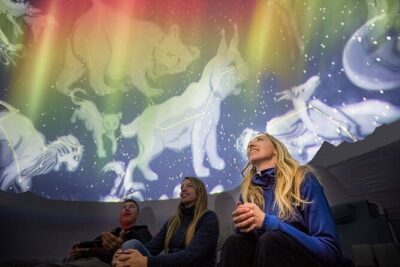
Jasper Planetarium and Telescope Combo Tour Tickets
The full write-up →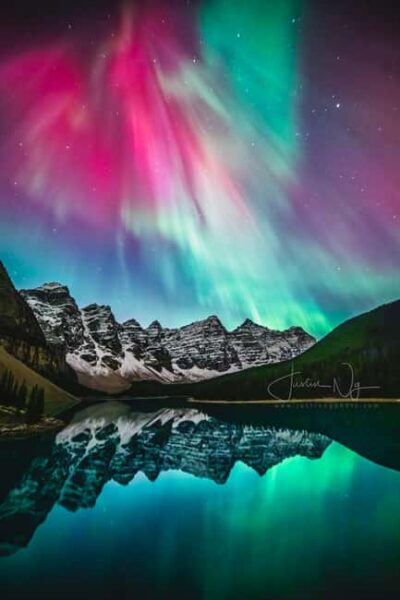
Banff OR Moraine Lake: Night Tour with possible Stargazing
The full write-up →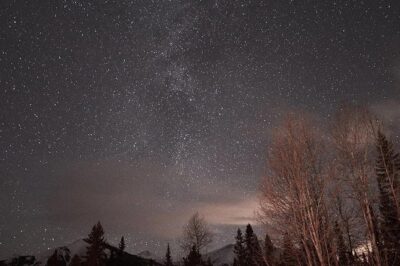
Sunrise or Sunset/Stargazing Tour at Moraine Lake from Banff
The full write-up →
Stargazing and Nature by Nightfall Walking Tour – 2hr
The full write-up →Browse the lists this tour appears in