
Reviewed · HIKING & TREKKING
Canmore: Lost Towns and Untold Stories Hiking Tour – 3hrs
The most interesting part of this Canmore hike is not a famous viewpoint. It is the chance to follow overgrown wagon roads toward mining towns that disappeared from the map. Along the way, you may find old objects left behind, signs of animal activity, and clues to life in the early 1900s.
I like the small hiking groups, advertised at no more than six, and the way the certified guides connect local plants, wildlife, and human stories. The included park pass is another welcome saving. The main caution is the terrain: some short sections are steep, so this is not a gentle stroll.
Key points to know before you go
- Old mining routes: Walk former wagon roads toward lost settlements in Kananaskis Country.
- Guides with local expertise: Jacob and Ben have led guests through stories about early mountain life, trees, animals, and abandoned objects.
- Wildlife awareness: You may see game animals, animal tracks, or fresh bear scat, so stay alert and follow your guide’s advice.
- Three hours on foot: The route includes uphill sections and enough walking to require decent fitness.
- Small-group feel: The hiking group is advertised at no more than six, though the overall activity limit is 12 people.
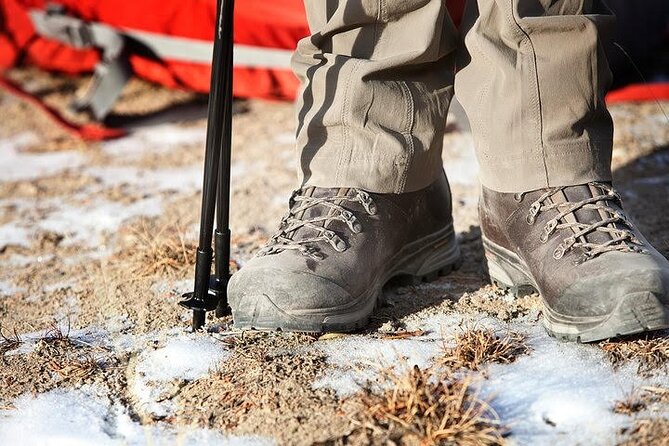
- Useful gear included: Hiking poles are available on request, and ice cleats are supplied when conditions require them.
Following wagon roads into Kananaskis Country
This is a history walk with real footing beneath you. From the Canmore Recreation Centre, at 1900 8 Ave, you set out for Kananaskis Country and spend about three hours exploring old routes connected with mining communities.
The roads are overgrown, which is part of the appeal. You are not walking through a polished historic site with neat signs at every turn. Instead, the guide helps you read the place. A discarded object, a faint route through the trees, or a change in the ground can become part of the story.
That makes the outing a good fit if you like history that feels discovered rather than displayed. You will not simply hear dates and names. You will look at the land and try to picture the people who once moved through it, worked there, and eventually left.
The route is not described as a technical mountain hike, but it does have short steep sections. One guide regularly paused to let the group catch its breath and take in the views. That tells you what to expect: manageable for a reasonably fit person, but not effortless.
More Hiking Tours in Canmore:
- Wilderness and Wildlife Hiking Tour – 3hr Hike
★ 5.0 · 18 reviews - Discover Ancient Pictographs – Guided Canyon Hiking Tour 3H
★ 5.0 · 18 reviews - Canmore: Canyons & Cave Paintings – 2.5hr Hiking Tour
★ 5.0 · 11 reviews
What the lost towns add to the walk
The former mining towns are the heart of the experience. Their remains are not presented as a grand collection of buildings. The attraction lies in the traces left behind after the settlements faded away.
You might see objects abandoned when residents moved on, while your guide explains what they reveal about daily life. The details can be small, but they help turn a wooded route into a place with a human past.
Stories about life in the early 1900s give the walk its shape. You learn how people used the area, what kinds of work brought them there, and why a settlement could vanish while wagon roads and scattered remains endured.
I like this approach because it gives you something to look for during the entire hike. The scenery matters, but it is not the only subject. You are watching the ground, the trees, and the route itself for evidence of both people and nature.
The tour description uses the idea of buried treasure, but do not expect a treasure hunt with guaranteed finds. Think of it as a search for fragments: old objects, forgotten routes, local stories, and the feeling of a place that once had a working community.
Guides who make the details matter
The guide can make or break a history hike, and this experience puts real weight on that role. Jacob and Ben are named guides associated with the outing. Both have been praised for making the walk friendly, informative, and fun.
Jacob’s approach includes the history of the area, unusual trees, and traces left by animals. He has also taken the tour out with only one person booked, which suggests the activity may still operate as planned in a quiet season when conditions and minimum numbers allow.
Ben brings attention to local vegetation, early twentieth-century life, and the objects left when townspeople departed. His style, as reflected in the experience details, includes allowing people to stop on steeper sections rather than pushing ahead at a fixed pace.
You should still ask questions. This kind of tour becomes more rewarding when you point to a feature and ask what it means. A good guide can connect a plant, an old route, and an animal sign in a way that you would likely miss on your own.
The outing is offered in English. Service animals are welcome, and the activity is near public transportation, which helps if you are staying in Canmore without a car.
Wildlife, plants, and the need to stay alert
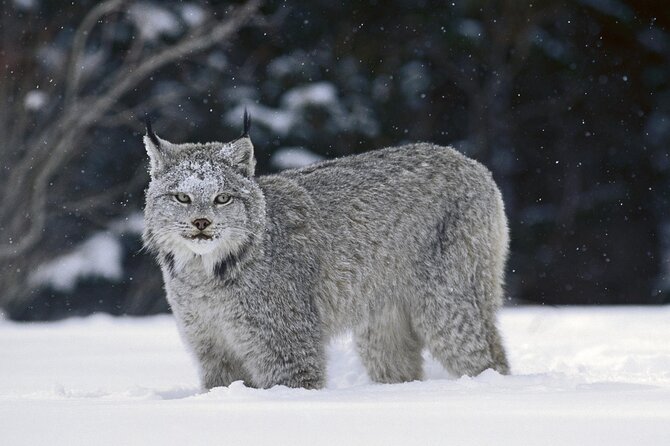
The natural side of the walk is not decoration. The route can bring you close to signs of active wildlife, including bears and other local animals.
People on the hike have seen game animals and very recent bear scat. That does not mean you are promised a bear sighting. It means the area is active, and you should keep your eyes open and follow the guide’s instructions.
Bear awareness is an important part of the experience. You are walking through a natural setting, not a controlled park exhibit. Stay with the group, listen carefully, and do not treat animal signs as something to approach casually.
The guides also point out local mountain vegetation and distinctive trees. This adds variety to the history talk. When the route becomes steep or the old town remains less obvious, plants and animal traces give you another reason to pay attention.
I would bring your own water and snacks. They are not included, and a three-hour walk with uphill sections is long enough for both to matter. Comfortable hiking shoes are also a sensible choice, since the route follows old roads rather than a smooth urban path.
A few more Canmore days worth comparing
- Canmore Caving Adventure Tour
★ 5.0 · 356 reviews - Canmore Caving Explorer Tour
★ 5.0 · 277 reviews - Canmore: Bow River Scenic Float Tour
★ 4.9 · 257 reviews - Ridge Ride 2-Hour Horseback Trail Ride in Kananaskis
★ 5.0 · 194 reviews
A three-hour outing with some work in it
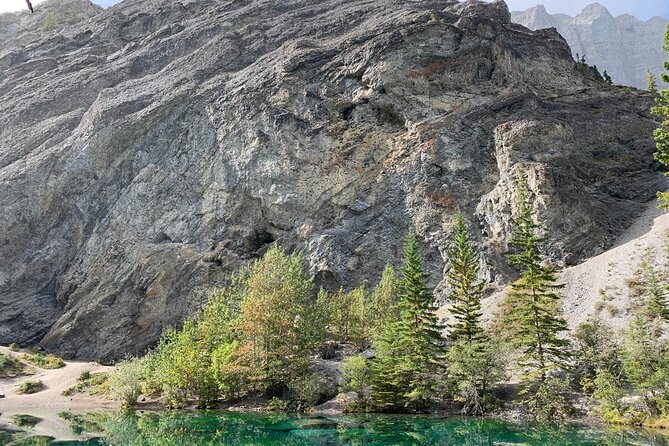
The tour lasts about three hours, including the return to the meeting point. That is long enough to feel like a proper excursion without taking up an entire day in the Canmore area.
The return matters. You do not simply reach the old mining area and arrange your own way back. Your guide leads the group back to the starting point while reflecting on the history and discoveries from the route.
The walk has short steep climbs rather than a completely level surface. One person described stopping several times for views and breathing room, and another noted that the steep areas were brief. I would read that as a moderate outing for someone with normal hiking ability, not a casual walk for every fitness level.
The tour is not suitable for people with mobility issues, back problems, recent surgery, or serious medical conditions. Pregnant people are advised not to participate, and children under eight are not suited to this activity.
That guidance is useful rather than overly cautious. The route has physical demands, and the group may need to move over uneven or sloped ground. If you are unsure about your fitness, contact the provider before booking.
Small groups and the social side
The advertised hiking group has no more than six people, while the overall activity limit is 12. That difference is worth clarifying when you book, but the format is still designed to feel personal rather than like a large coach excursion.
A small group gives you more chances to ask about a mining remnant or animal sign. It also lets the guide adjust the pace more easily. If you are traveling alone, this can be an easy way to meet a few people without committing to a full-day group tour.
One outing operated with just a single booked participant during a quieter time of year. That is not a guarantee, since the experience requires a minimum number of participants, but it shows the guide may keep the outing personal when the schedule permits.
The social setting can be part of the value. You share a real walk, stop for the same views, and have natural conversation instead of sitting beside strangers on a bus. If you prefer complete solitude, a private self-guided route may suit you better.
Is $66.60 a fair price?
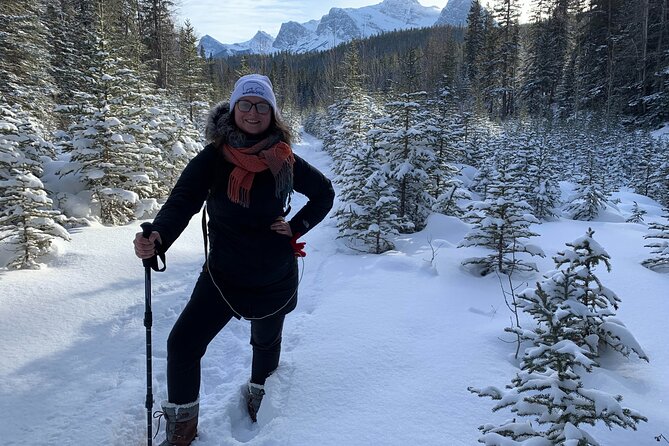
At $66.60 per person, the value rests on three things: the certified guide, access to a story-filled route, and the convenience of included park fees.
You are not paying only for a marked trail. The guide interprets the old roads, explains the mining settlements, points out plants and animal signs, and manages the pace. That matters in an area where much of the story is easy to miss without local help.
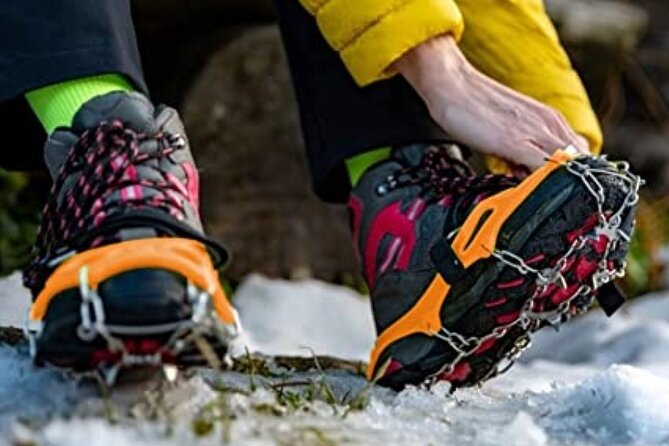
The included park pass improves the price. Hiking poles are available on request, and ice cleats are provided when required, so you may not need to bring every piece of specialty equipment.
Water and snacks are extra, but those are simple items to carry yourself. The bigger question is fitness. If you want a flat walk with guaranteed historic buildings, $66.60 may not feel like good value. If you want a guided outdoor activity with local history and wildlife awareness, the cost is reasonable for a three-hour outing.
The tour is often booked about 37 days ahead. That suggests you should not leave it until the last day of a short Canmore visit, especially if you want a particular date.
Weather, timing, and practical planning

The experience depends on suitable weather. If poor weather forces cancellation, you are offered another date or a full refund. The same applies if the minimum number of participants is not met.
You can cancel for a full refund up to 24 hours before the start time. Changes or cancellations made inside that period are not accepted for a refund, so keep your plans flexible until the weather forecast is clear.
The starting point is the Canmore Recreation Centre at 1900 8 Ave. The activity ends at the same meeting point, which makes planning easier if you have other plans afterward.
Bring water and snacks, since neither is supplied. Ask for hiking poles if you would find them useful, and expect ice cleats when conditions call for them. The tour is offered in English and uses a mobile ticket.
Who should book this Canmore hike?
I would choose this tour if you enjoy combining walking with local stories. It suits people who want more than a scenic path but do not need a full-day wilderness trip.
It is especially good for:
- Hikers with enough fitness for short steep sections
- Solo visitors who want a small social activity
- People interested in mining history and early mountain communities
- Anyone who enjoys looking for old objects and animal signs
- Visitors who want a three-hour outing rather than a full-day commitment
I would think twice if you need a smooth, level route, dislike uneven ground, or want a guaranteed wildlife encounter. The history is found in scattered traces, not a preserved town with complete buildings.
Should you book the Lost Towns and Untold Stories hike?
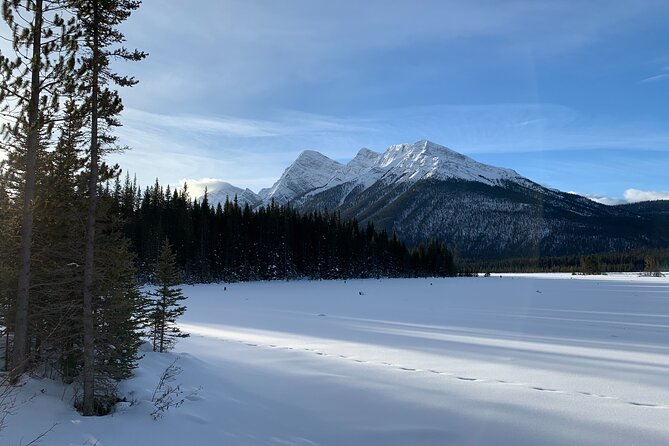
Book it if the idea of walking an old wagon road while piecing together a vanished mining community sounds better than ticking off another viewpoint. The best parts are the guide-led stories, small-group feel, mountain scenery, and chance to notice wildlife signs that you might otherwise walk past.
The main decision is your comfort with the terrain. This is a real hike with short climbs, not an easy promenade. If you can handle three hours on foot and arrive with water, snacks, and sensible shoes, the $66.60 price offers a worthwhile mix of history, nature, and exercise close to Canmore.
FAQ
Where does the Canmore Lost Towns and Untold Stories hike start?
The tour starts at the Canmore Recreation Centre, 1900 8 Ave, Canmore, Alberta, T1W 1Y2.
Where does the activity end?
The hike returns to the Canmore Recreation Centre, the same place where it begins.
How long does the tour last?
The experience lasts approximately three hours.
Are park fees included?
Yes. Park pass fees are included in the tour price.
What equipment is provided?
Hiking poles are available upon request, and ice cleats are provided when required.
Is the hike suitable for everyone?
No. It is not suitable for people with mobility issues, back problems, recent surgery, or serious medical conditions. Pregnant people are advised not to participate, and children under eight are not suited to the tour.
Just added around Canmore
- Rocky mountain – VIP Experience – Private Boat★ 5.0 · 6 reviews
- Canmore Cowboys and Coal Miners History Tour – 2H Walk★ 4.5 · 15 reviews
- Wilderness and Wildlife Hiking Tour – 3hr Hike★ 5.0 · 18 reviews
- Canmore: Canyons & Cave Paintings – 2.5hr Hiking Tour★ 5.0 · 11 reviews
- Canmore Ghost Walks★ 5.0 · 17 reviews
- Canmore Walking Tours: Discover Local History and Scenery★ 5.0 · 8 reviews
- Smugglers Blues – Canmore Outdoor Escape Game★ 4.5 · 5 reviews
- Bites and Sites of Canmore Walking Food Tour★ 5.0 · 26 reviews
Hiking & Trekking, compared.
Guided Glacier Hike on The Athabasca with IceWalks
The full write-up →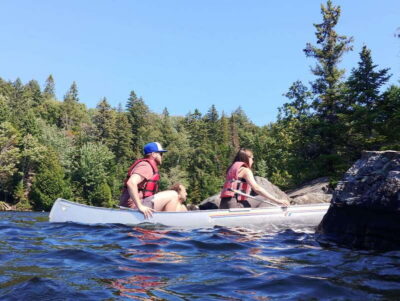
From Toronto: Algonquin Park Canoeing & Hiking Adventure
The full write-up →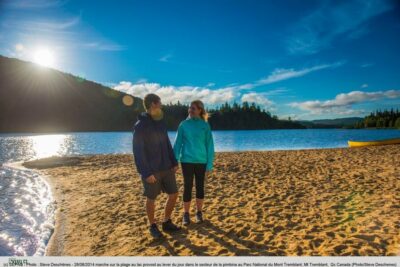
From Montreal: Mont-Tremblant National Park Hiking Day Trip
The full write-up →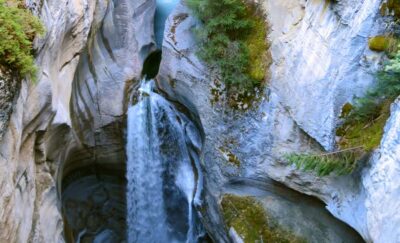
Wildlife and Waterfalls Tour with Lakeshore Hike
The full write-up →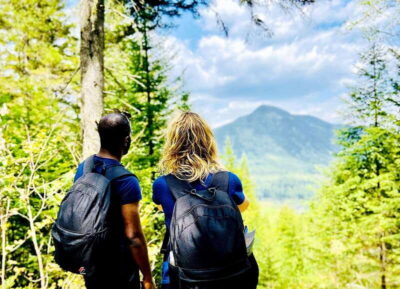
Quebec City: Guided Hike in Jacques-Cartier National Park
The full write-up →
Jasper Wildlife and Sightseeing Tour with Maligne Lake Hike
The full write-up →
eBike and Hike Banff to Johnston Canyon small group guided program
The full write-up →Browse the lists this tour appears in