
Reviewed · MONTREAL TOURS
Pen Making With The Woodworker Himself
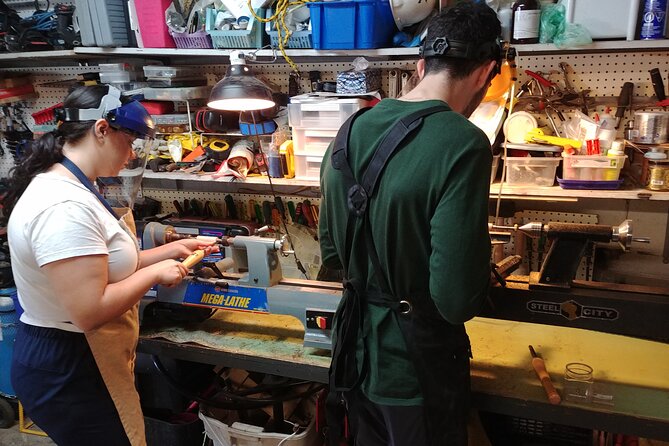
The best part of this Montreal workshop is that you do not simply watch a craft demonstration. You learn to shape a wooden pen on a lathe, with Jonathan guiding your hands through turning, sanding, polishing, and assembly. I like the hands-on format and the chance to choose wood that gives your pen its own look. I also like that the finished object is useful, not just decorative.
The main consideration is the price: $161.10 per person is a serious spend for a three-hour activity. You are paying for instruction, workshop time, tools, and a personal keepsake, but this makes more sense for people who enjoy making things than for anyone seeking a cheap souvenir or a broad sightseeing tour.
Key points at a glance
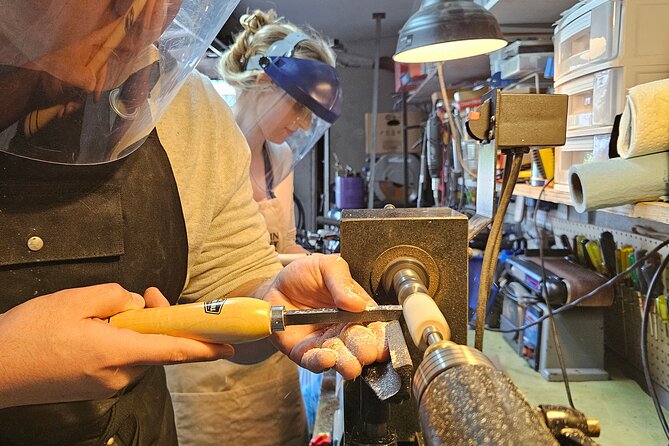
- You operate the lathe yourself, with guidance rather than watching from the sidelines.
- Choose from exotic and local woods before shaping your own pen.
- Learn the full process, including turning, profiling, sanding, polishing, and assembly.
- Jonathan keeps the lesson relaxed and fun, with plenty of guidance for first-time makers.
- The small group is capped at nine people, which gives the workshop a more personal feel.
- The three-hour session begins and ends at 4710 Rue Saint-Ambroise in Montreal.
Why a wooden pen makes a better souvenir
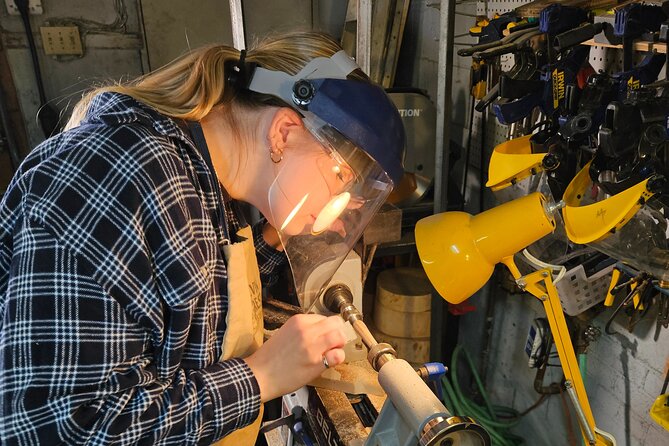
Montreal offers plenty of things to buy, but a pen you make yourself carries a different kind of memory. You remember the feel of the wood, the sound of the lathe, and the moment the rough block begins to take shape. It is a small object, yet the process gives it meaning.
I especially like the balance between craft and practicality here. You are not making a large project that needs special space at home. You leave with something compact and usable, one that can sit on a desk or travel in a bag without much fuss.
This workshop also gives you a short look at how wood turning works. The session begins with an introduction to the lathe and its parts, so you are not expected to arrive knowing the names of the tools or how the machine operates. That matters if you have never worked with a lathe before.
The activity is offered in English. If you want a creative break from museums, food stops, and city walking, it gives you three focused hours in a workshop setting.
A few more Montreal days worth comparing
- Montreal: Guided Bus Tour
★ 4.4 · 3,064 reviews - Montreal: Hop-On Hop-Off Double-Decker Bus Tour
★ 4.1 · 2,760 reviews - Montreal Mile End Authentic Food Tour with 7 Delicacies Tastings
★ 5.0 · 2,598 reviews
Arriving at 4710 Rue Saint-Ambroise
Your meeting point is 4710 Rue Saint-Ambroise, Montréal, QC H4C 2C7. The activity ends at the same location, so you do not need to arrange a second pickup point or figure out where the lesson finishes.
The location is near public transportation, which is useful if you are staying elsewhere in Montreal and do not have a car. The exact transit route is not provided, so check your map and allow enough time to arrive before the scheduled start.
This is a small-group experience, with a maximum of nine people. That limit is important in a workshop. A lathe lesson needs room for people to work safely, ask questions, and receive individual help. A group of nine is still large enough for a social atmosphere, but it should feel less crowded than a large class.
The meeting point is also the practical center of the activity. You arrive, learn, make the pen, and leave with it. There is no extra sightseeing stop built into the session, so book this for the making experience itself.
The opening lesson: lathe parts and workshop safety
Before you begin shaping wood, you receive a short introduction to the lathe and its parts. This gives the machine some context and helps you understand what each part does before you stand in front of it.
The safety briefing is not a formality to rush through. A lathe spins wood at speed, so learning where to stand, how to handle the tools, and how to follow instructions is central to the activity. I appreciate that safety comes before the creative work. It lets you concentrate on the pen instead of wondering if you are using the equipment correctly.
You do not need to arrive as a woodworker. The format is built around instruction, demonstration, and guided practice. Still, you should be ready to pay attention and follow directions closely. This is an active workshop, not a casual craft table.
The introductory section also helps set expectations. A wooden pen begins as a simple piece of stock, and the finished form comes from careful shaping. The lesson shows you how much work is involved in producing a small, polished object.
Watching the pen take shape
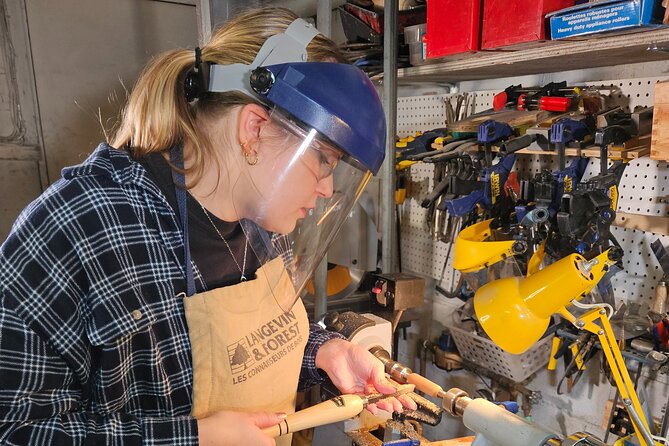
The instructor demonstrates the pen-making process from beginning to end. You see how the wood is turned and profiled, then how the surface is sanded, polished, and assembled.
This order makes sense because each stage affects the next. Turning gives the blank its basic shape. Profiling refines the outline. Sanding smooths the surface, and polishing brings out the appearance of the wood. Assembly is the final step that turns the shaped material into a functioning pen.
The demonstration gives you a model to follow before you take over. That is useful for beginners, since the most difficult part of a workshop can be knowing what good progress looks like. You get to watch the process in full rather than receiving scattered instructions one step at a time.
I would pay close attention during this portion, especially to the way the instructor handles the tools and checks the shape. The pen is small, so changes in its profile can be subtle. A little patience here is more useful than trying to work quickly.
Same trip, a completely different kind of day out:
- The Original Old Montréal Walking Tour by Guidatour
★ 4.5 · 2,217 reviews - Old Montreal Small-Group Walking Tour | Max 10 | by MTL Detours
★ 5.0 · 2,088 reviews - Montreal City Sightseeing Tour with Live Commentary
★ 4.0 · 1,953 reviews - Montréal: Guided Sightseeing River Cruise
★ 4.2 · 1,889 reviews
Choosing between local and exotic woods
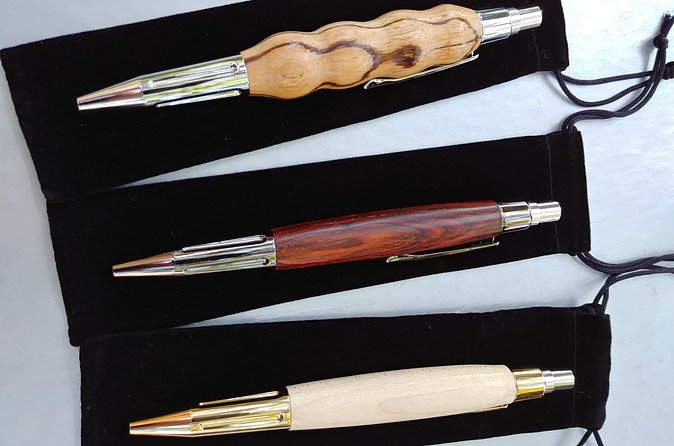
One of the most personal parts of the workshop is selecting your wood. You can choose from local and exotic varieties, giving you a say in the color, grain, and general character of the finished pen.
The information provided does not name the specific species available, so you should not arrive expecting one particular wood. Instead, treat the selection as part of the creative decision. You might find a local wood appealing because it connects the object to Montreal and the region. An exotic wood may catch your eye because of a more unusual grain or color.
Your choice also helps make the pen feel like yours. Two people can follow the same process and still leave with different-looking objects because the material changes the result.
If you are unsure what to pick, ask Jonathan for guidance. He can help you think about the appearance of the finished pen, though the final selection remains yours. This is a small detail, but it is where the workshop shifts from a standard lesson to a personal project.
Taking control of the lathe
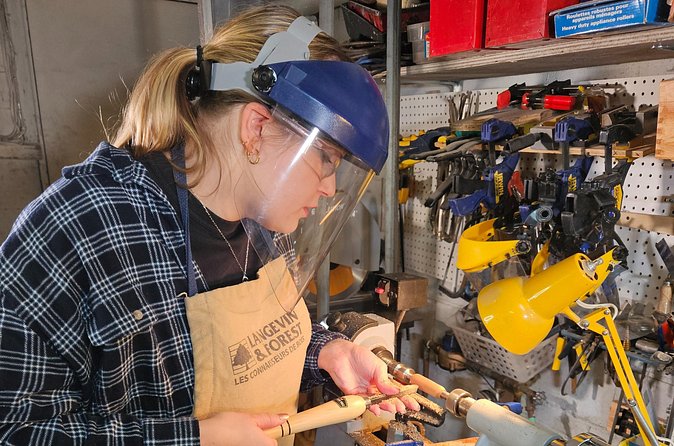
After the demonstration, you operate the lathe yourself. This is the point where the activity becomes more than a craft presentation. You have to respond to the wood, the tool, and the shape developing in front of you.
The instructions describe the work as guided, so you are not left to solve the process alone. Jonathan helps you as you turn and profile the wood, then move through sanding and polishing. The posted experience describes him as a relaxed, funny teacher who keeps the atmosphere easy while helping participants build a one-of-a-kind souvenir.
That teaching style matters. Wood turning can look simple when an experienced person does it, but the first attempt requires focus. A calm instructor can help you correct small mistakes before they become larger ones.
You should expect to work at a measured pace. The goal is not to finish first. It is to learn how the tools shape the wood and to produce a pen you are happy to take home. The process rewards attention more than speed.
Sanding, polishing, and assembling the finished pen
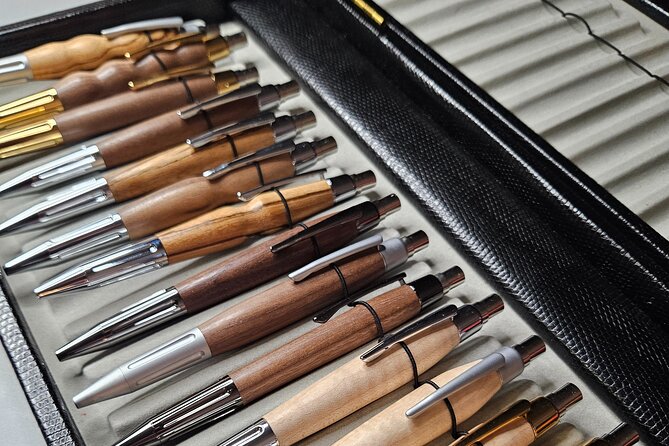
The final stages often determine how finished the pen feels in your hand. Sanding removes roughness and smooths the profile. Polishing gives the surface a cleaner appearance and helps show the character of the wood.
These steps may sound less dramatic than using the lathe, but they are important. A good shape still needs a smooth surface, and a polished finish helps the pen look like a finished object rather than a workshop experiment.
You then assemble the pen. This is where the separate components come together and the purpose of the project becomes clear. After several stages of shaping and finishing, you have something you can use and display.
The activity description says you take the pen home. That makes the workshop a practical choice for a memento, a gift, or a personal desk item. You are not just paying for time in a class. You are also leaving with the result of your own work.
What the three-hour schedule means
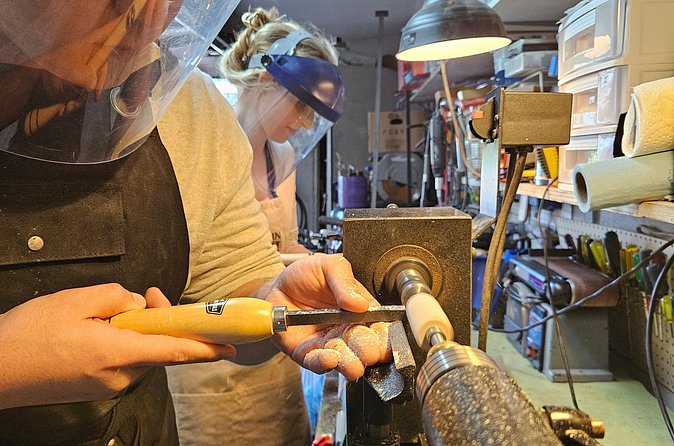
The activity lasts about three hours. That is long enough to cover the machine, safety, demonstration, wood selection, guided turning, finishing, and assembly without making the session feel like a quick novelty.
You should plan this as a dedicated half-day activity. The experience ends back at the meeting point, but no additional stops are included. If you are building a full day around it, leave some breathing room before or after rather than scheduling another fixed appointment too tightly.
The small group helps make the three-hour format worthwhile. With no more than nine people, the instructor has a better chance to provide direct assistance while each person works. The exact amount of individual time will depend on the group, but the design clearly centers on participation.
The workshop is also offered with flexible scheduling. If the listed date or time does not fit your plans, you can contact the host to ask about another option. That request is not guaranteed, but it is worth making if your Montreal schedule is tight.
Is $161.10 a fair price?
At $161.10 per person, this is not a budget activity. You should compare it with the cost of a standard attraction, a guided food experience, or a typical souvenir before booking.
The value comes from several pieces working together: about three hours of instruction, access to a lathe and workshop tools, a choice of wood, personal guidance, and a finished pen to take home. If you have wanted to try wood turning but do not have access to the equipment, the price may feel more reasonable.
The value is weaker if you mainly want a quick keepsake. Montreal has less expensive souvenirs, and this workshop asks for your attention and effort. You are paying for the process as much as the object.
I would see it as a good splurge for someone who likes crafts, tools, design, or hands-on learning. It is also a thoughtful choice for two people who want to make something together rather than simply buy another item.
The perfect 5 rating from 17 posted assessments and a 100 percent recommendation rate suggest strong satisfaction with the teaching and overall format. The most specific praise focuses on Jonathan, the relaxed atmosphere, the laughs, and the sense of making a one-of-a-kind souvenir. Those points match the real reason to book: the guided experience, not just the pen.
Who will enjoy this Montreal workshop?
This activity suits adults and families with an interest in making things, provided everyone can follow safety instructions. The information says most people can participate, but it does not give a specific minimum age or detailed physical requirements.
It is a good fit for:
- First-time woodworkers who want a guided introduction
- People who prefer active experiences to passive sightseeing
- Couples or friends looking for a shared project
- Visitors who value a personal souvenir
- Anyone curious about how a lathe works
It may not suit you if you dislike machinery, prefer a very relaxed activity with little instruction, or want a tour focused on Montreal landmarks. The workshop is centered on one craft and one finished object.
Service animals are allowed, and the site is near public transportation. Those details make the activity easier to consider when planning your day, though the provided information does not describe the workshop layout or other accessibility features.
Booking timing and cancellation
This experience is booked an average of 61 days in advance, so planning ahead is sensible, especially if your Montreal dates are fixed. The host may be able to accommodate another time if you ask, but you should not depend on last-minute availability.
You receive confirmation when you book, and the ticket is mobile, so you can keep the booking on your phone.
Free cancellation is available if you cancel at least 24 hours before the local start time. If you cancel or request changes less than 24 hours before the activity, the amount paid is not refunded and changes are not accepted.
Should you book Pen Making With The Woodworker Himself?
Book it if you want to learn a real craft, use a lathe under supervision, and leave Montreal with a pen shaped by your own hands. Jonathan’s relaxed teaching style, the small group limit, and the choice of local or exotic woods give the workshop a personal feel.
Skip it if $161.10 feels too high for a three-hour activity or if your priority is sightseeing rather than making. For the right person, the pen is only part of the value. The better souvenir is knowing how a rough piece of wood became something useful.
FAQ
Where does the pen-making activity begin?
It begins at 4710 Rue Saint-Ambroise, Montréal, QC H4C 2C7, Canada.
Where does the activity end?
The activity ends back at the meeting point on Rue Saint-Ambroise.
How long does the workshop last?
The workshop lasts approximately three hours.
What language is the experience offered in?
The experience is offered in English.
How many people can join the workshop?
The activity has a maximum group size of nine people.
Can I cancel for a full refund?
Yes. You can cancel for a full refund if you cancel at least 24 hours before the experience start time. Cancellations made less than 24 hours in advance are not refunded.
Is the location near public transportation and are service animals allowed?
Yes. The location is near public transportation, and service animals are allowed.
Just added around Montreal
- Full Day Family Bike Rental★ 5.0 · 17 reviews
- Winter Express: Old Montreal Highlights Walking Tour★ 5.0 · 119 reviews
- In the Shadow of the Mountain: Montreal Jewish History Walking Tour★ 4.5 · 33 reviews
- Under the Surface of Montreal’s Chinatown: Guided Food Walking Tour★ 5.0 · 23 reviews
- Montreal Premium Driving Tour with River Cruise and Notre Dame★ 4.5 · 164 reviews
- The Ultimate Montreal Boat Tour – Fall Colors Apéro Edition★ 4.5 · 31 reviews
- Old Montreal: Self-Guided Tour from Place D‘Armes to Old Port★ 5.0 · 5 reviews
- Immersive Virtual Reality Game Activity★ 5.0 · 19 reviews
Montreal Tours, compared.

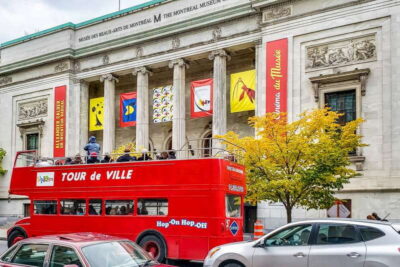
Montreal: Hop-On Hop-Off Double-Decker Bus Tour
The full write-up →
Montreal Mile End Authentic Food Tour with 7 Delicacies Tastings
The full write-up →
The Original Old Montréal Walking Tour by Guidatour
The full write-up →
Old Montreal Small-Group Walking Tour | Max 10 | by MTL Detours
The full write-up →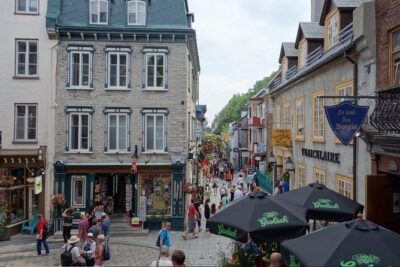
Montreal City Sightseeing Tour with Live Commentary
The full write-up →

Montreal: Le Bateau-Mouche St. Lawrence Sightseeing Cruise
The full write-up →Browse the lists this tour appears in