
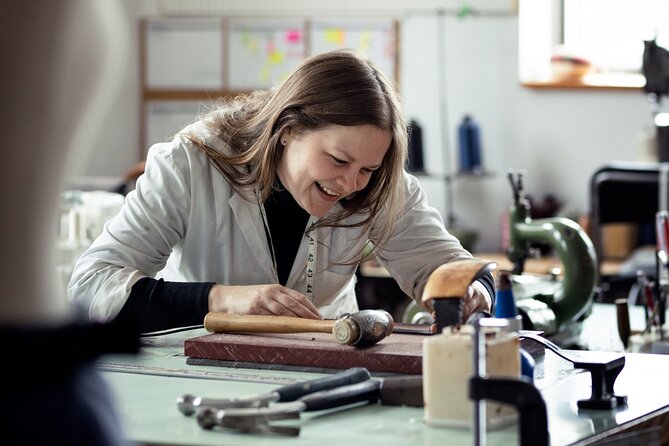
Reviewed · WORKSHOPS
Leather belt making workshop
Making a belt by hand gives you more than a souvenir. At Flechr studio, Kimberly Fletcher teaches you how to choose leather, cut and shape it, assemble the pieces, and finish a wearable belt of your own. The small class keeps the work personal, with no prior leathercraft experience needed.
I like the maximum group size of four, which should give you room to ask questions and get help when your cut or assembly needs a second look. I also like that the finished item is useful rather than merely decorative. You leave with a belt made during a focused Montreal workshop, not something pulled from a gift shop shelf.
The main consideration is noise. A few hammer blows are required, so this is not a quiet craft session. The class is offered in English, lasts about 2 hours 30 minutes, and is recommended for ages 13 and up.
Key points at a glance
- Make a wearable leather belt: You work toward a practical accessory you can use after the class.
- Learn with Kimberly Fletcher: The Flechr designer leads beginners through the core leatherworking steps.
- Small class, maximum four people: The format allows for direct help and a more personal pace.
- Hands-on from start to finish: You learn leather selection, cutting, shaping, assembly, and finishing.
- Plan for a little hammering: A few hammer blows are part of creating the belt.
- Meet in Plateau Mont-Royal: The workshop begins and ends at 5450 Rue de Bordeaux.
A practical craft class in Plateau Mont-Royal
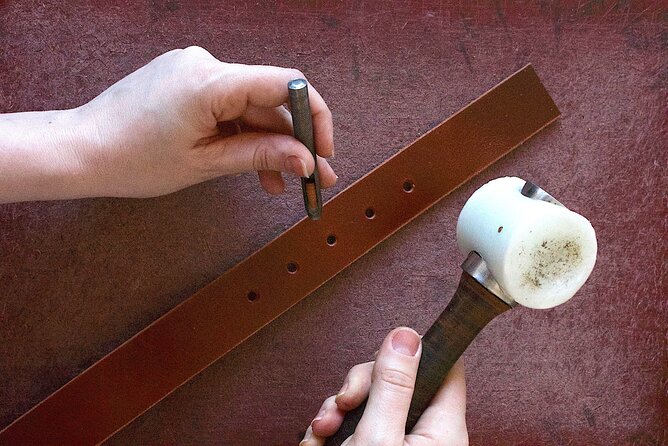
This leather belt workshop takes place at Flechr studio, at 5450 Rue de Bordeaux in Montreal’s Plateau Mont-Royal district. The setting matters because you are not being rushed through a large tourist attraction or sent through a production line. You spend the session at a designer’s studio, learning one craft with a small number of people.
The activity lasts approximately 2 hours 30 minutes. That is a useful length for a beginner class. You have enough time to learn the basic process and work on your belt, but the session is still short enough to fit into a day of exploring Montreal.
You should arrive ready to pay attention and take part. This is not a demonstration where you simply watch Kimberly make a belt. The class is built around doing the work yourself, with guidance along the way.
More workshops and classes in Montreal:
- The Bagel Class presents : Montreal Bagel Making Workshop!
★ 5.0 · 463 reviews - 8 Iconic Stops. 12 Comfy Seats. See Banff’s Best in First Class.
★ 5.0 · 316 reviews - Athabasca Canyon Run Family Rafting: Class II Plus Rapids
★ 5.0 · 193 reviews
Choosing leather and planning the belt
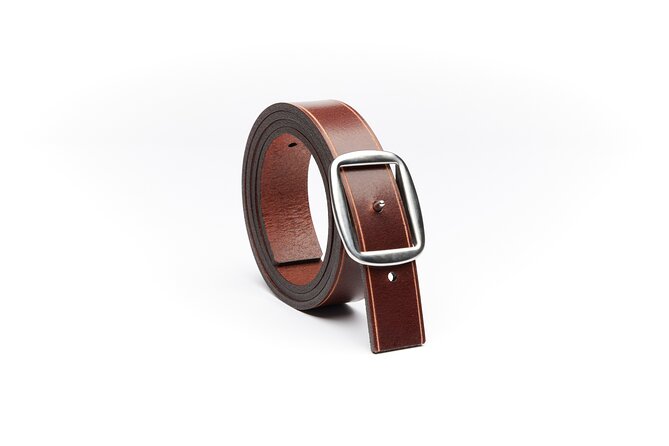
The first part of the class introduces the materials and the basic decisions behind a belt. You learn how to select the right type of leather, an important step because leather affects how the finished belt looks, feels, and holds up.
For a beginner, this is one of the most useful parts of the session. Leather can look simple from a distance, but different types have different qualities. A belt needs to be durable enough for regular use, and your choice also affects the final character of the piece.
Kimberly Fletcher guides you through this process rather than leaving you to guess. Her role is especially valuable for first-time leatherworkers, since you can ask about the material before making permanent cuts.
This is also where the class starts to feel personal. You are not simply copying a finished example. You are making choices that help give the belt its own look. The supplied information does not specify the range of leather colors or finishes available, so you should not book expecting a particular shade or style unless you confirm it with Flechr in advance.
Cutting and shaping leather by hand
Once the leather has been selected, you learn how to cut and shape it for the belt. This is the point where the class becomes especially hands-on. The work requires care, since a belt must be sized and formed properly to become a useful accessory.
The value here is not only the final object. You learn why accuracy matters and how a flat piece of leather becomes something made for the body. Kimberly’s guidance helps make the process approachable, especially if you have never handled leatherworking tools before.
The available information does not give exact sizing rules or explain how measurements are taken. For that reason, you should not assume that every possible belt size or custom adjustment is available. If you have a specific fit in mind, ask about it before booking or at the start of the session.
A little patience helps. Craft workshops can be satisfying precisely because the material does not behave like a factory-made product. Small decisions and careful handling shape the result.
Assembly, finishing, and the required hammer blows
After cutting and shaping, you assemble the belt. You also learn finishing techniques that make the piece feel more personal and complete. This is where the belt changes from separate components into a wearable accessory.
A few hammer blows are necessary during the process. The noise is limited according to the activity details, but it is worth planning for if you have high sensitivity to sound. This is not a silent studio activity, and people who need a very quiet environment may find that part uncomfortable.
The hammering also marks an important part of the craft. You are not just decorating a prepared belt. You are using basic leatherworking methods to secure and finish your own piece. The sound is brief, but it is part of the work.
The exact finishing options are not listed, so you should keep your expectations open. The class promises techniques for making the belt unique, but it does not specify every decorative choice or final detail.
A few more Montreal days worth comparing
- Montreal: Guided Bus Tour
★ 4.4 · 3,064 reviews - Montreal: Hop-On Hop-Off Double-Decker Bus Tour
★ 4.1 · 2,760 reviews - Montreal Mile End Authentic Food Tour with 7 Delicacies Tastings
★ 5.0 · 2,598 reviews - The Original Old Montréal Walking Tour by Guidatour
★ 4.5 · 2,217 reviews
Why the group size matters
The workshop is limited to a maximum of four people. That small size is one of its strongest practical features. Leathercraft involves physical steps that are easier to understand when someone can watch what you are doing and correct you early.
A large class can make a beginner feel lost, especially during cutting or assembly. Here, you have a better chance to get direct attention from Kimberly Fletcher. The single published rating is not the only reason to value this format. Small numbers genuinely matter in a class where each person is making an individual object.
The personal teaching style also comes through in the available feedback. One participant praised Kimberly’s patience, humor, and skill, and described the finished belt as wearable art. That combination is important. Good craft instruction needs technical ability, but beginners also need someone who lets them work through mistakes without making the session feel tense.
You should still remember that a small class does not guarantee a completely private lesson. Up to four people may attend, and the pace may be shared. For most beginners, that is a useful balance between individual help and a social workshop setting.
Who will get the most from this workshop
This class is aimed at beginners. You do not need previous leatherworking experience, which makes it a good choice if you want to try a new craft during a Montreal visit without committing to a longer course.
It also suits people who enjoy practical souvenirs. A photograph or purchased item can remind you of a trip, but a belt carries the memory in a more direct way. You made it, and you learned a skill while doing so.
The recommended minimum age is 13. That makes the activity suitable for many older children and teenagers with an interest in making things, though younger participants should be considered in light of the cutting, assembly, and hammering involved.
This is also a good match for anyone who enjoys a slower activity between sightseeing stops. You are spending much of the session focused on one project, so it rewards attention more than constant movement.
It may be less suitable if you want a quick Montreal attraction, dislike making decisions about materials, or expect a fully quiet environment. It is also not the right pick if you want a polished designer belt without doing the craft work yourself.
What the 2 hour 30 minute length means
Two and a half hours is long enough to make the workshop feel like a real class rather than a short souvenir activity. You learn the basic ideas, work through several stages, and finish with your own belt.
The time also means you should not schedule an important appointment immediately afterward. The duration is approximate, and hands-on work can take different amounts of time depending on the participant and the project. Leave a little room around the workshop rather than treating the end time as exact.
Because the activity starts and ends at the same address, the logistics are simple. There is no second meeting point and no transfer to arrange. You can plan your route to 5450 Rue de Bordeaux and return to the same location when the session is complete.
The studio is near public transportation, which helps if you are moving around Montreal without a car. The information does not specify the nearest station or bus route, so check your map before leaving and allow enough time to arrive calmly.
Value: a class, a skill, and a usable object
No price is provided here, so I cannot judge the exact cost. The better way to assess value is to look at what the fee includes: approximately 2 hours 30 minutes of instruction, access to the workshop setting, hands-on practice, and a completed leather belt.
That package will appeal to you if you place value on learning and making. You are paying for more than an object. You are also paying for Kimberly’s guidance, the chance to handle leather yourself, and the satisfaction of finishing a personal accessory.
The value is weaker if your only goal is to obtain the cheapest belt possible. A mass-produced belt will almost certainly take less time and may cost less. This workshop makes sense because the belt carries the story of how you made it.
A previous participant described the class as enjoyable and worth the admission price, with particular praise for Kimberly’s patience and humor. Those details help explain the appeal for beginners. The atmosphere matters when the work is unfamiliar, and a patient instructor can make the difference between frustration and a finished project you are proud to wear.
Practical details before you book
The activity is offered in English. If you are comfortable learning craft instructions in English, that keeps the class straightforward. If you need instruction in another language, this may not be the right fit.
A mobile ticket is accepted, and booking confirmation is provided at the time of booking. Service animals are allowed, and most people can participate. The activity is near public transportation, but the meeting point is still a specific studio address, so check the route carefully.
The workshop requires a minimum number of participants. If that minimum is not met and the activity is canceled, you are offered another date or experience, or a full refund.
You can cancel for a full refund if you do so at least 24 hours before the start time. Cancellations or changes made less than 24 hours in advance are not accepted for a refund. Keep the local Montreal time in mind when calculating the deadline.
Is the Flechr belt workshop worth booking?
I would book this workshop if you want a hands-on Montreal activity, enjoy learning by doing, and like the idea of taking home something useful that you made yourself. The small class, direct instruction from Kimberly Fletcher, and beginner-friendly structure give it a strong practical appeal.
Think twice if noise is a serious issue, if you need a fully private lesson, or if you simply want to buy a belt and move on. For everyone else, the Flechr workshop offers a focused two-and-a-half-hour break from ordinary sightseeing, with a real skill and a finished leather accessory at the end.
FAQ
Where does the leather belt workshop take place?
The workshop begins at Flechr studio, 5450 Rue de Bordeaux, Montréal, Quebec H2H 2A8, Canada. The activity ends back at the same meeting point.
How long does the workshop last?
The workshop lasts approximately 2 hours 30 minutes.
Is the workshop taught in English?
Yes. The experience is offered in English.
Do I need previous leatherworking experience?
No. The class is designed for beginners, and no prior leathercraft experience is required.
How many people can attend?
The activity has a maximum of four participants.
Is cancellation free?
Yes, you can cancel for a full refund if you cancel at least 24 hours before the experience start time. Cancellations and changes made less than 24 hours before the start time are not accepted for a refund.
Just added around Montreal
- Full Day Family Bike Rental★ 5.0 · 17 reviews
- Winter Express: Old Montreal Highlights Walking Tour★ 5.0 · 119 reviews
- In the Shadow of the Mountain: Montreal Jewish History Walking Tour★ 4.5 · 33 reviews
- Under the Surface of Montreal’s Chinatown: Guided Food Walking Tour★ 5.0 · 23 reviews
- The Ultimate Montreal Boat Tour – Fall Colors Apéro Edition★ 4.5 · 31 reviews
- Montreal Premium Driving Tour with River Cruise and Notre Dame★ 4.5 · 164 reviews
- Old Montreal: Self-Guided Tour from Place D‘Armes to Old Port★ 5.0 · 5 reviews
- Immersive Virtual Reality Game Activity★ 5.0 · 19 reviews
Workshops, compared.
The Bagel Class presents : Montreal Bagel Making Workshop!
The full write-up →
8 Iconic Stops. 12 Comfy Seats. See Banff’s Best in First Class.
The full write-up →
Athabasca Canyon Run Family Rafting: Class II Plus Rapids
The full write-up →
Sunwapta Challenge Whitewater Rafting: Class III Rapids
The full write-up →
Class 3 Sunwapta River Rafting Adventure in Jasper
The full write-up →
Quebec: Cuivres A. Gilles – (Free Entry) Fee for Workshop
The full write-up →
Lake Louise: Cross Country Skiing Lesson with Tour
The full write-up →Browse the lists this tour appears in