
Reviewed · MONTREAL TOURS
Exclusive Tour of the Montreal Olympic Games by MTL76
Montreal’s 1976 Olympics were far more than a sporting event. They were a costly civic gamble, a political stage, and the backdrop for some of the most memorable performances in Olympic history. This 90-minute walk brings those threads together at the actual Olympic Park, with guide Marc-Élie leading the way.
I like two things right away: the small group limit of 10 people should make it easier to hear the guide and ask questions, and the tour costs only $22.41. I also like that it covers both the sporting drama and the political context, instead of treating the park as a collection of oversized concrete buildings.
The main drawback is clear: you cannot enter the Olympic Stadium because major renovations are underway. The tour is entirely outdoors, so plan for weather and wear comfortable shoes.
Key points about the Montreal Olympic Park walk
- The 1976 Games are explained through politics, sport, and city-building, not just medal counts.
- Marc-Élie guides the experience in English and is described as especially passionate about Olympic history.
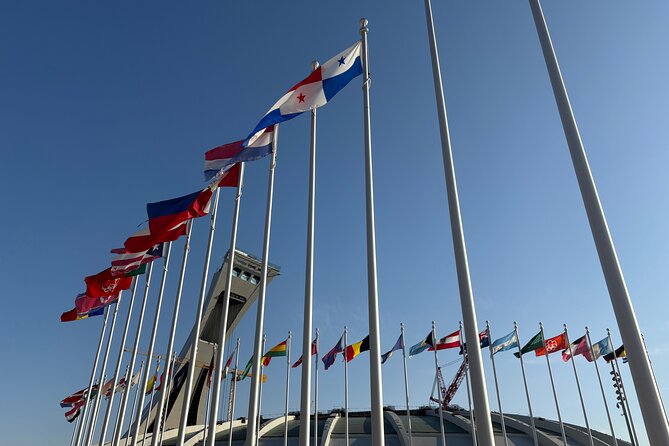
- The route includes the cauldron, Olympic rings, athletes’ village, stadium, and Nadia Comaneci Square.
- The group is limited to 10 people, a useful size for a walking tour with several stops.
- The stadium interior is not included, so this is a site tour rather than an indoor stadium visit.
- The walk ends near Aréna Maurice-Richard, with help available for returning to the start, reaching the metro, or continuing to another activity.
Why Montreal’s 1976 Olympics still make a good tour subject
The appeal of this experience is not simply that it takes you to a famous stadium. Montreal’s Olympics produced a complicated legacy, and the tour promises to explain that story on the ground where it happened.
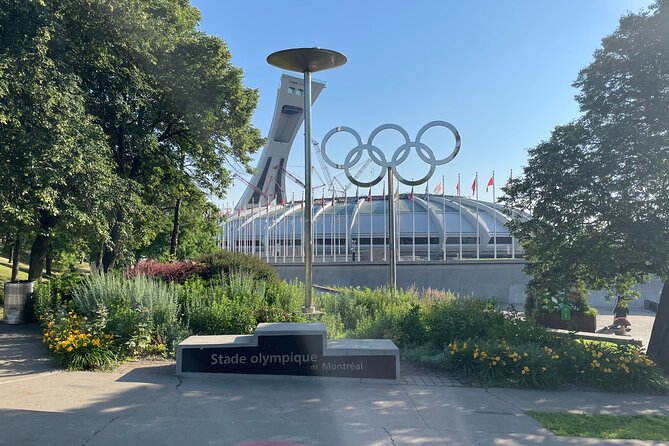
You begin near the Olympic cauldron and rings. That gives the visit a clear starting point and a useful frame. The guide first places the modern Games in the broader Olympic story, then turns to Montreal’s effort to win the event. For me, that opening matters because it helps you see the park as the result of ambition, negotiation, and civic pride, not just as a sports venue.
The Games also had major political stakes and unexpected turns. Those themes give the walk more substance than a simple architecture tour. You are not only asking what happened at the stadium. You are also considering why Montreal wanted the Games, what the event meant to the city, and how the 1976 edition fit into a tense international period.
The strongest praise for this experience focuses on the guide’s enthusiasm and presentation. Marc-Élie is described as a dedicated Olympic fan who makes the subject informative and interesting. That is important here. A large site can feel abstract if you do not have someone connecting the buildings, athletes, and decisions into one readable story.
A few more Montreal days worth comparing
- Montreal: Guided Bus Tour
★ 4.4 · 3,064 reviews - Montreal: Hop-On Hop-Off Double-Decker Bus Tour
★ 4.1 · 2,760 reviews - Montreal Mile End Authentic Food Tour with 7 Delicacies Tastings
★ 5.0 · 2,598 reviews
The Olympic cauldron and rings: a practical beginning
The first stop is beside the Olympic cauldron and rings. You will hear a short account of the Games, from their ancient origins through their modern form, before moving into Montreal’s part in the story.
This is a good meeting point because the symbols are easy to recognize and the setting gives you immediate visual context. If you arrive early, you should have a moment to get oriented before the walk begins. The tour starts at 2705 Boulevard Pie-IX, in the Olympic Park area.
The opening also helps you understand the tour’s approach. This is not built around one long lecture at the stadium. Instead, the information is spread across several outdoor locations, with each stop adding another piece of the 1976 story.
Because the activity lasts about an hour and a half, expect a focused visit rather than a full-day exploration of Olympic Park. That is a strength if you want a clear introduction before visiting other parts of Montreal. It may feel brief if you want a detailed architectural study or time inside every venue.
The Esplanade and Jean Drapeau’s Olympic gamble
At the Esplanade of Olympic Park, the guide explains how Montreal secured the Games and the role of Mayor Jean Drapeau. This stop shifts the focus from Olympic tradition to local ambition.
The subject is valuable because hosting the Games can reshape a city, but it also creates large financial and practical risks. The tour presents Montreal’s bid as a major civic effort, giving you a better sense of why the project mattered to local leaders.
I like this part of the route because it ties the site to a decision made long before the opening ceremony. You begin to see the park as a physical expression of a city trying to announce itself on an international stage.
The Esplanade should also help you grasp the scale of the project. The walk does not merely point at a structure and list its dimensions. It connects the open public space with the political work that brought the Olympics to Montreal.
You should keep your expectations in check, though. The information provided does not promise access to exhibits, archival displays, or a formal museum presentation. The value comes from the guide’s explanation and the places you see along the route.
The former athletes’ village and the politics of 1976
The next stop is in front of the former athletes’ village. Here, the story turns to the unusual setting of the 1976 Games, including political issues and unexpected developments.
This is one of the more useful stops for anyone who knows the Olympics mainly through famous athletes. The Games did not take place in a vacuum. International politics shaped the event, and the athletes’ village offers a natural place to discuss the human side of that complicated setting.
You will not be entering the former village based on the information provided. Instead, the guide uses the exterior location as a point for explanation. That keeps the visit moving and allows the tour to cover several connected sites within 90 minutes.
For me, this is where the tour becomes more than a nostalgia walk. Montreal’s Olympic story includes civic pride, political tension, and hard questions about the cost and purpose of hosting a global event. A good guide can make those issues easy to follow without turning the visit into a lecture hall.
The small group cap should help here. With no more than 10 people, you can likely stay close to the guide and ask for clarification when a political or historical point needs more explanation. The tour is offered in English, so English-speaking visitors can follow the presentation directly.
Same trip, a completely different kind of day out:
- The Original Old Montréal Walking Tour by Guidatour
★ 4.5 · 2,217 reviews - Old Montreal Small-Group Walking Tour | Max 10 | by MTL Detours
★ 5.0 · 2,088 reviews - Montreal City Sightseeing Tour with Live Commentary
★ 4.0 · 1,953 reviews - Montréal: Guided Sightseeing River Cruise
★ 4.2 · 1,889 reviews
The Olympic Stadium and its troubled construction
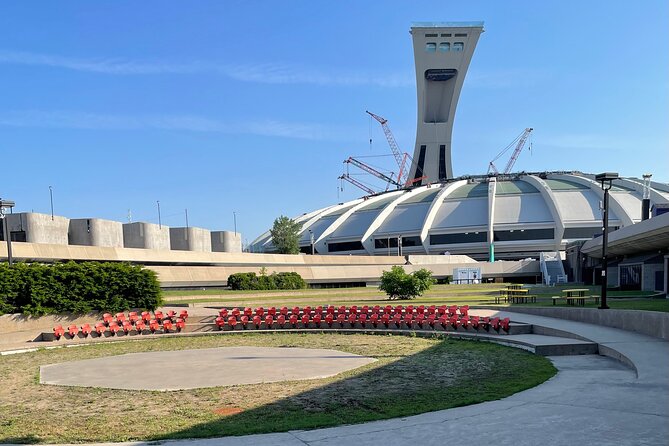
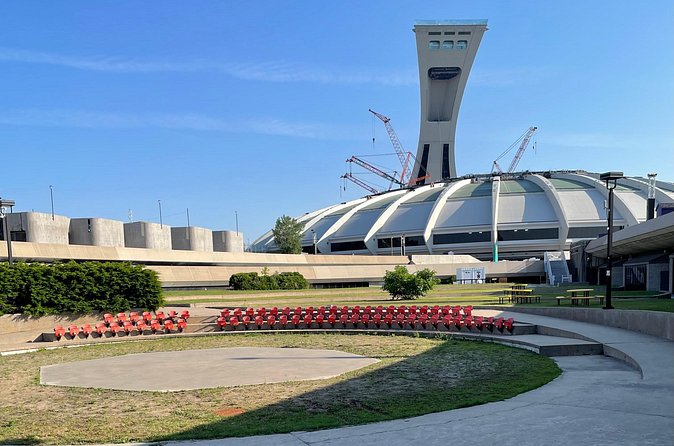
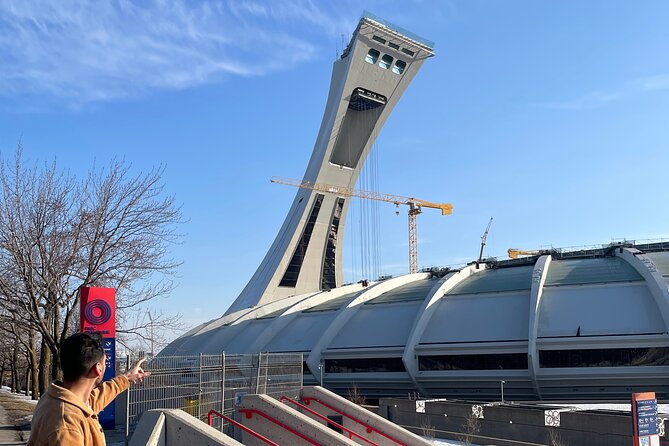
At the foot of the Olympic Stadium, Marc-Élie explains the structure’s construction problems, unusual design, and long-term legacy. This is likely the visual high point of the walk, even without interior access.
The stadium is a bold building, and the tour treats it as more than a backdrop for photographs. You learn about the difficulty of creating it and the surprises that came with the project. That context can change the way you look at the stadium. Its unusual form becomes part of a story about engineering, deadlines, ambition, and cost.
The major limitation is that the stadium is undergoing significant renovations, so you cannot go inside. That means you should book this experience for the outdoor setting and expert explanation, not for an interior tour.
Still, the exterior visit has real value. The guide can point out the building’s main features while explaining why its construction became such a major part of Montreal’s Olympic legacy. For many visitors, that is enough to make the stop worthwhile, especially at this price.
If you have mobility concerns, the supplied details say most people can participate and that service animals are allowed. The activity is near public transportation. Since the route is outdoors and involves walking between stops, you should still judge your comfort based on your own needs.
Nadia Comaneci Square and the sporting drama
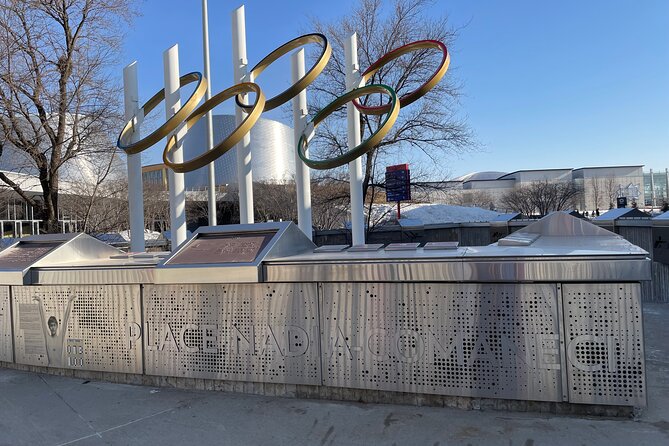
At Nadia Comaneci Square, the focus moves back to the athletes and performances that made the 1976 Games famous. The stop looks at the achievements that captured worldwide attention, including Comaneci’s unforgettable gymnastics performances.
This adds balance to the tour. Montreal’s Olympics were marked by political issues and construction troubles, but they were also a sporting event watched by millions. The square gives the guide a natural place to discuss the athletes who shaped the public memory of the Games.
I especially like the contrast between this stop and the stadium discussion. One deals with concrete, budgets, and engineering. The other brings the story back to human performance. Together, they show why the Olympics remain memorable even when the host city’s experience is complicated.
The information available does not specify how long the group stays at each location. You should expect brief stops connected by walking, rather than long periods at one site. The 90-minute format works best if you want a well-paced introduction and a few strong stories to carry with you afterward.
Ending at the rings and getting your bearings
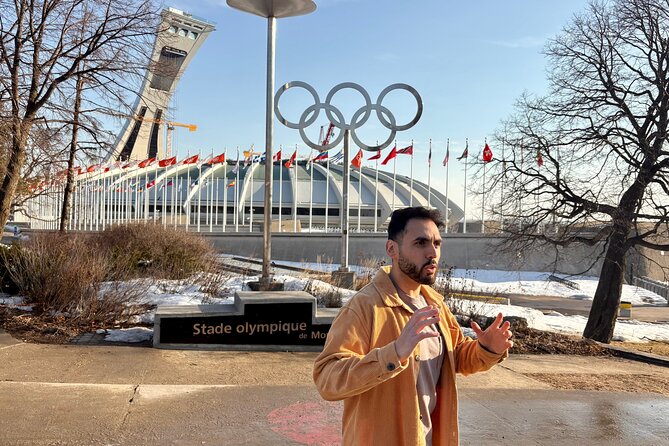
The tour finishes back in front of the Olympic rings, where you can take photos. Ending where the visit began gives the walk a tidy shape, and the rings provide the obvious final picture.
The official end point is listed at Aréna Maurice-Richard, 2800 Rue Viau, which is close to the final part of the route. The guide can escort you back to the original meeting point, take you toward the nearest metro station, or direct you to your next activity.
That final help is useful because Olympic Park is a large area, and you may not know the quickest way onward. It also means you are not simply left at the last stop with no sense of where to go next.
For a photo, allow a little patience if the area is active. The tour promises the chance to capture your experience at the rings, but it does not promise a private photo session or a specific amount of time for pictures.
What the $22.41 price really gives you
At $22.41 per person, this is an inexpensive guided experience by Montreal sightseeing standards. Admission and taxes are included, and there are no extra activity fees listed.
The value comes from interpretation. You could walk around Olympic Park on your own, but you would need to piece together the roles of Jean Drapeau, the athletes’ village, the stadium’s construction, the political setting, and Nadia Comaneci’s performances yourself.
The price is especially fair for someone who wants a short activity between other plans. A 90-minute tour can fit neatly into a morning or afternoon without taking over your day. It also suits visitors who want a first look at the park before deciding how much more time to spend in the area.
The low price does not mean the tour includes everything. You are paying for an outdoor guided walk, not stadium admission, a museum visit, or a private tour. If entering the stadium is essential to you, this will not meet that goal.
The experience is booked an average of 26 days ahead, so I would not wait until the last minute if your Montreal schedule is fixed. Free cancellation is available until 24 hours before the start time, which gives you some flexibility if your plans change.
Who will get the most from this Olympic Park tour
I would recommend this walk to anyone interested in Olympic history, Montreal civic history, architecture, or the political side of international sport. It should also work well for first-time visitors who want a short, guided introduction to an area that can otherwise feel spread out.
The tour is a particularly good fit if you appreciate a guide who cares deeply about the subject. Marc-Élie’s Olympic enthusiasm is a central part of the experience, and the strongest praise focuses on his informative, engaging presentation.
Families and casual sightseers may also like the clear route and compact schedule. Most people can participate, service animals are allowed, and the tour is near public transportation. Still, you should be comfortable with an outdoor walk and plan for the weather.
You may want a different activity if you need an indoor option, dislike historical explanation, or want a full tour of the stadium itself. The renovation restriction is not a minor footnote. It changes the nature of the visit.
Should you book this Montreal Olympic experience?
Book it if you want the story behind Olympic Park, not just a photograph of the stadium. The combination of Jean Drapeau’s campaign, the Games’ political setting, the stadium’s construction troubles, and Nadia Comaneci’s performances gives the walk a useful range.
The best reason to choose it is the guide-led interpretation, especially if Marc-Élie is available for your departure. The small group, modest price, English presentation, and helpful ending near the arena add practical value.
Skip it if you are mainly looking for stadium entry. Since the tour stays outside during renovations, you should treat it as a thoughtful Olympic Park walking tour, with strong stories and landmarks rather than an indoor venue visit.
FAQ
How long does the Montreal Olympic Park tour last?
The tour lasts approximately 1 hour and 30 minutes.
How much does the tour cost?
The listed price is $22.41 per person, with fees and taxes included.
Is the tour offered in English?
Yes. The tour is offered in English.
Who is the guide?
The guide identified in the available information is Marc-Élie. He is described as passionate about Olympic subjects and gives an informative presentation.
Can I enter the Olympic Stadium?
No. The stadium is undergoing significant renovations, so the tour does not include interior access.
Where does the tour begin?
The meeting point is 2705 Boulevard Pie-IX, Montréal, Quebec H1V 2E8, Canada.
Where does the tour end?
The listed end point is Aréna Maurice-Richard at 2800 Rue Viau, Montréal, Quebec H1V 3V4, Canada.
How large is the group?
The tour has a maximum of 10 participants.
Can I cancel for a refund?
Yes. You can cancel up to 24 hours before the experience start time for a full refund. Cancellations or changes made less than 24 hours before the start time are not accepted for a refund.
Just added around Montreal
- Full Day Family Bike Rental★ 5.0 · 17 reviews
- Winter Express: Old Montreal Highlights Walking Tour★ 5.0 · 119 reviews
- In the Shadow of the Mountain: Montreal Jewish History Walking Tour★ 4.5 · 33 reviews
- Under the Surface of Montreal’s Chinatown: Guided Food Walking Tour★ 5.0 · 23 reviews
- The Ultimate Montreal Boat Tour – Fall Colors Apéro Edition★ 4.5 · 31 reviews
- Montreal Premium Driving Tour with River Cruise and Notre Dame★ 4.5 · 164 reviews
- Old Montreal: Self-Guided Tour from Place D‘Armes to Old Port★ 5.0 · 5 reviews
- Immersive Virtual Reality Game Activity★ 5.0 · 19 reviews
Montreal Tours, compared.
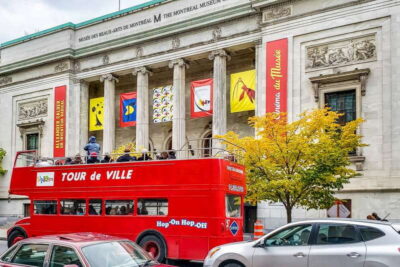
Montreal: Hop-On Hop-Off Double-Decker Bus Tour
The full write-up →
Montreal Mile End Authentic Food Tour with 7 Delicacies Tastings
The full write-up →
The Original Old Montréal Walking Tour by Guidatour
The full write-up →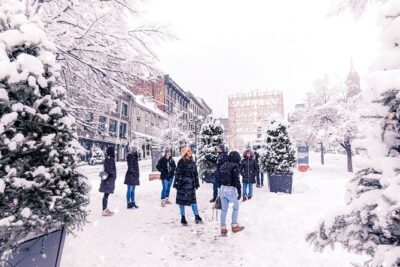
Old Montreal Small-Group Walking Tour | Max 10 | by MTL Detours
The full write-up →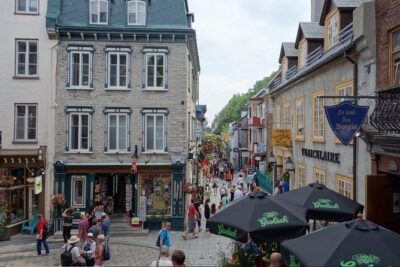
Montreal City Sightseeing Tour with Live Commentary
The full write-up →
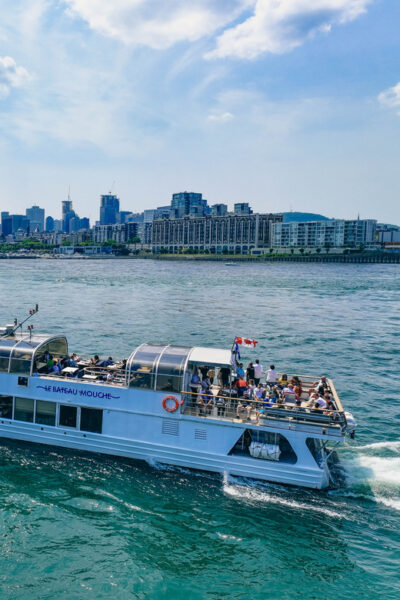
Montreal: Le Bateau-Mouche St. Lawrence Sightseeing Cruise
The full write-up →Browse the lists this tour appears in