
Reviewed · WALKING TOURS
Downtown Toronto: Walking tour experience. English/Spanish
Toronto’s best introduction may be a walk through its sharp contrasts: Victorian brick in the Distillery District, food stalls at St. Lawrence Market, bright murals in Graffiti Alley, and glass towers near Dundas Square. This private outing connects those pieces in English or Spanish, with guide Paul Campbell leading the way.
I like the private format, since Paul can adjust the pace and focus to your interests. I also like the mix of food, architecture, neighborhoods, and street art, rather than a tour that stays only on the usual postcard route.
The main consideration is time. At two to four hours, you may see the major areas only briefly, especially if Toronto Island is included. The route also gives limited historical detail unless you ask for more background, a point worth noting if architecture and history are your main goals.
Key points to know before booking
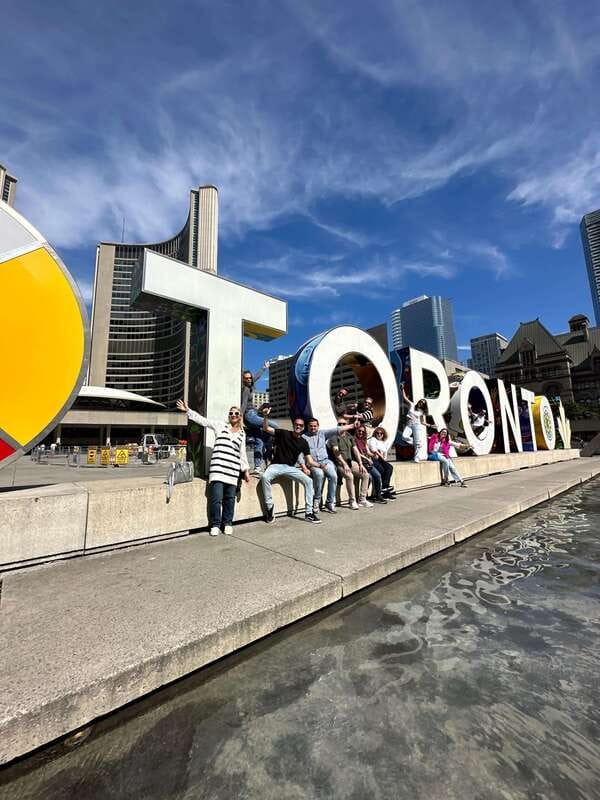
- Paul Campbell leads private groups: The tour can be adjusted for your pace, interests, and mobility needs.
- Seven distinct Toronto stops may be included: The route can cover the Distillery District, St. Lawrence Market, Graffiti Alley, Chinatown, Kensington Market, Dundas Square, and Toronto Island.
- St. Lawrence Market is the food stop: You can see why this long-running market is considered Toronto’s culinary center.
- English and Spanish are available: Choose the language that makes conversation and questions easiest.
- The tour lasts two to four hours: The length gives some flexibility, but fitting every stop into one outing may mean a quick look at several places.
- Kids under 12 are free: Wheelchair access is available, and the tour is offered as a private group experience.
A useful first look at downtown Toronto
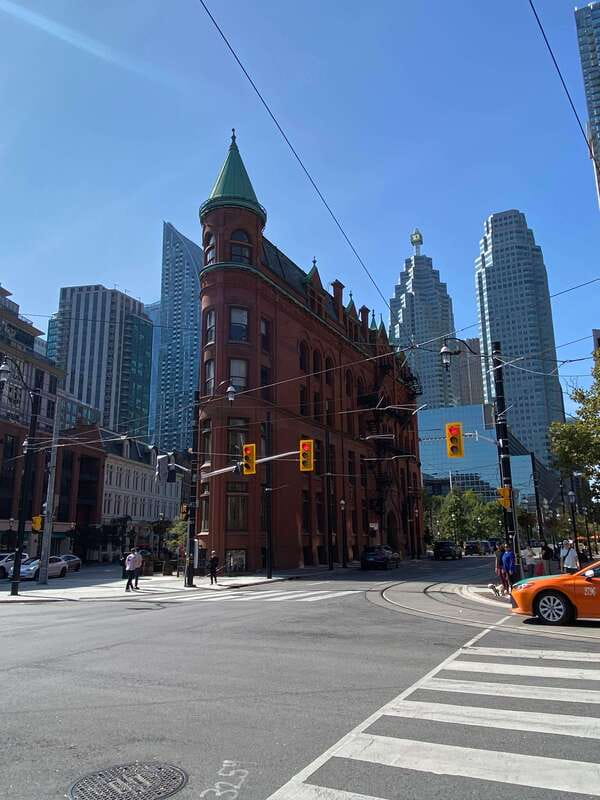
This is not a tour built around one grand monument. Toronto’s character comes from the change of scene every few blocks. Old industrial buildings give way to food halls, immigrant neighborhoods, independent shops, public art, and neon-lit city streets.
That variety is the tour’s greatest strength. You get a broad introduction instead of spending the whole walk in one district. If you are new to Toronto, this can help you decide where to return on your own later.
The private setup matters here. Paul can spend more time at a market if you care about food, or pause longer in an older district if you want architecture. A May booking with two people was flexible enough to shape the outing around their interests, and another couple enjoyed about three hours with him. That is the advantage of a private group: you are not locked into the pace of a large crowd.
The experience is priced at $54 per person. That is a fair price if you value a personal guide, a private group, and a route through several central districts. It is less compelling if you only want a short orientation walk or prefer exploring markets and neighborhoods at your own speed.
More Walking Tours in Toronto
- Show me the City! A Small Group Walking Tour of Toronto
★ 5.0 · 621 reviews - Toronto Distillery District Walking Tour
★ 5.0 · 327 reviews - Toronto: City Highlights Walking Tour | 3-Hour
★ 4.6 · 306 reviews
Distillery District: Toronto’s old industrial face
The Distillery District is one of the tour’s strongest opening points. Its cobblestone lanes and Victorian-era buildings offer a clear change from modern downtown. The area gives you a sense of Toronto’s industrial past without requiring a museum visit.
You can expect attractive brick façades, narrow passages, and a setting made for a slow walk and photographs. The district is polished and visitor-friendly, so it may feel more arranged than lived-in neighborhoods elsewhere on the route. Still, it gives the tour a useful visual starting point: Toronto did not begin as a forest of glass towers.
Ask Paul for more historical context here if that matters to you. One person found the guiding pleasant but wanted more background about the city’s past. That is a helpful clue. The tour offers access to important places, but you may need to prompt the guide for a fuller explanation of dates, people, and events.
St. Lawrence Market: Toronto’s best food stop
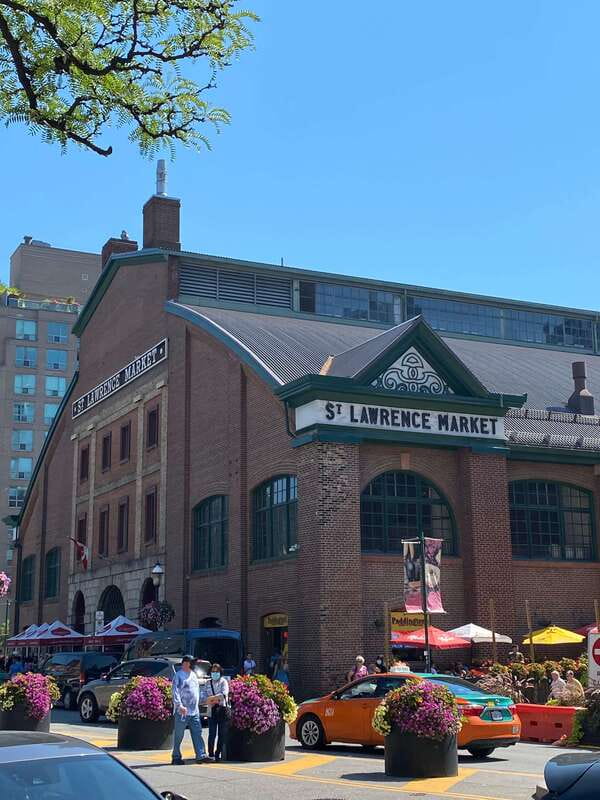
St. Lawrence Market is where the tour shifts from buildings to daily city life. It is known as North America’s largest market and is widely regarded as Toronto’s culinary center. You can expect food counters, local specialties, and a wide range of cultural influences under one roof.
This is a good place to pay attention to how Toronto eats. The market brings together food traditions from many communities, making it more useful than a simple sightseeing stop. You may find something tempting for a quick bite, though the tour description does not promise food tastings or include meals in the price.
I would not plan to rush this stop. If you enjoy markets, the two-hour version may feel short once you account for walking between districts. The four-hour option should give Paul more room to stop, answer questions, and let you look around, though the exact route and starting time depend on availability.
Graffiti Alley: Public art with an edge
Graffiti Alley gives the route a different voice. Its walls carry large-scale street art, with color, humor, and social messages replacing the formal architecture of the earlier stops.
This is more than a quick photo opportunity. Street art changes often, and the setting shows a side of Toronto that polished landmarks cannot. You can look for how artists use walls to comment on public life, identity, and city culture.
The stop also helps balance the tour. The Distillery District shows preserved buildings, while Graffiti Alley shows a more temporary form of expression. One reflects the past through architecture. The other records the present through paint.
Do not expect a formal art lecture unless you request one. The supplied feedback points to a friendly, attentive guide, but not always a detailed historical presentation. If you want to understand the artists or the political messages behind the work, make that part of your conversation with Paul.
Same trip, a completely different kind of day out:
- Toronto: Casa Loma Entry Ticket
★ 4.7 · 2,705 reviews - Toronto: Harbor and Islands Sightseeing Cruise
★ 4.7 · 2,566 reviews - Toronto: City Sightseeing Hop-On Hop-Off Bus Tour
★ 4.3 · 2,544 reviews - Toronto: Ripley’s Aquarium of Canada Entry Ticket
★ 4.7 · 1,748 reviews
Chinatown and Kensington Market: Two sides of city life
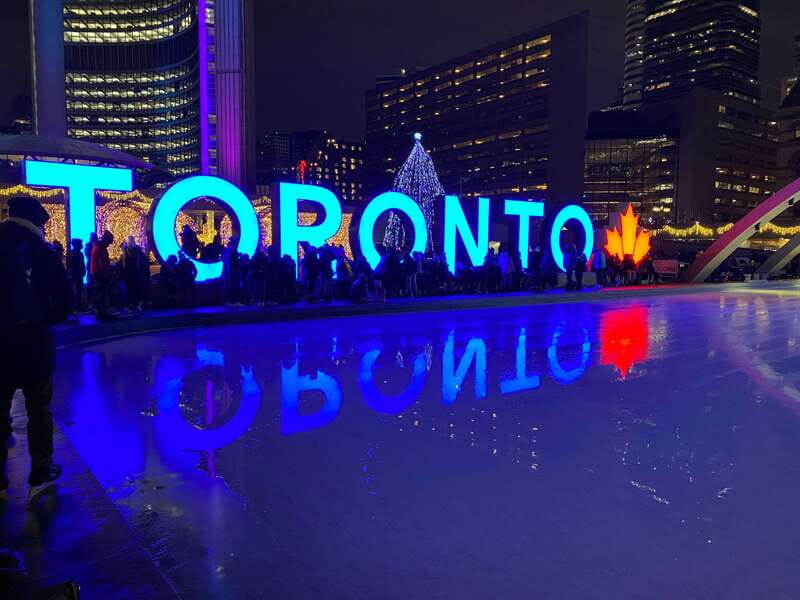
Chinatown brings food, markets, and community traditions into the route. It is a lively district where you can expect Chinese cultural influences alongside the wider mix that defines central Toronto. The tour gives you a chance to see how immigrant communities shape the city’s streets and food culture.
Kensington Market offers a different mood. It is known for independent shops, cafés, performers, and a mix of cultures. The area feels less formal than the Distillery District and more like a neighborhood to browse slowly.
These two stops are especially useful if you want to see Toronto beyond major attractions. They also make the tour more than an architecture walk. You are moving through places where people shop, eat, work, and express their identity.
The drawback is that these neighborhoods reward wandering. A guide can point out key areas, but you may wish for more time to browse shops or stop for food. If you are choosing between a two-hour and four-hour version, I would favor the longer option for this part of the route.
Dundas Square: Toronto’s downtown pulse
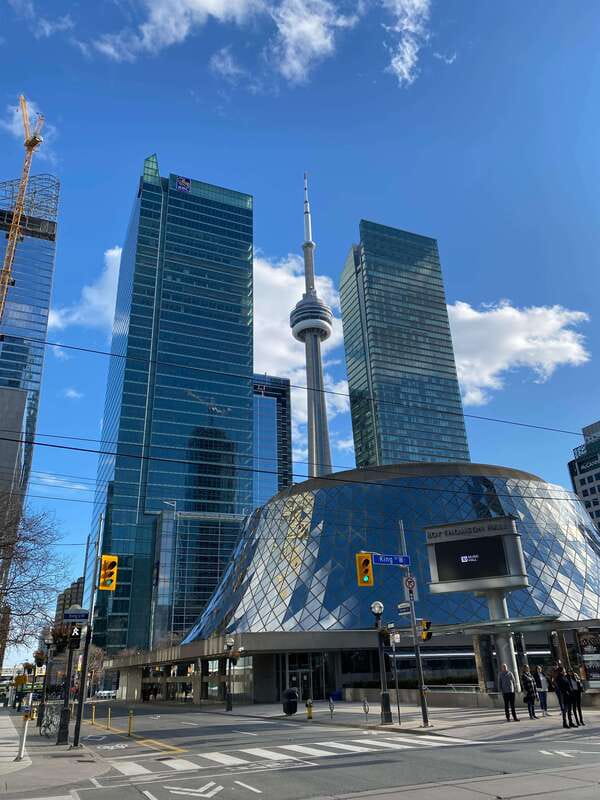
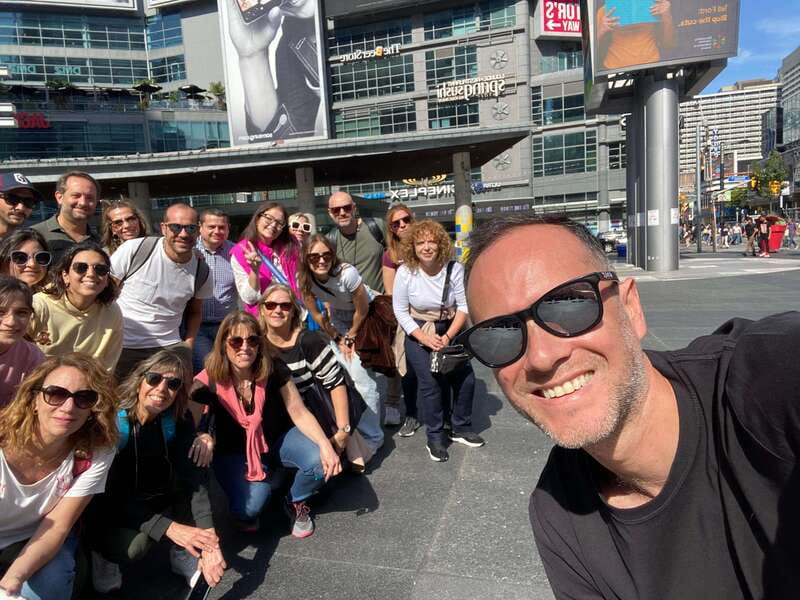
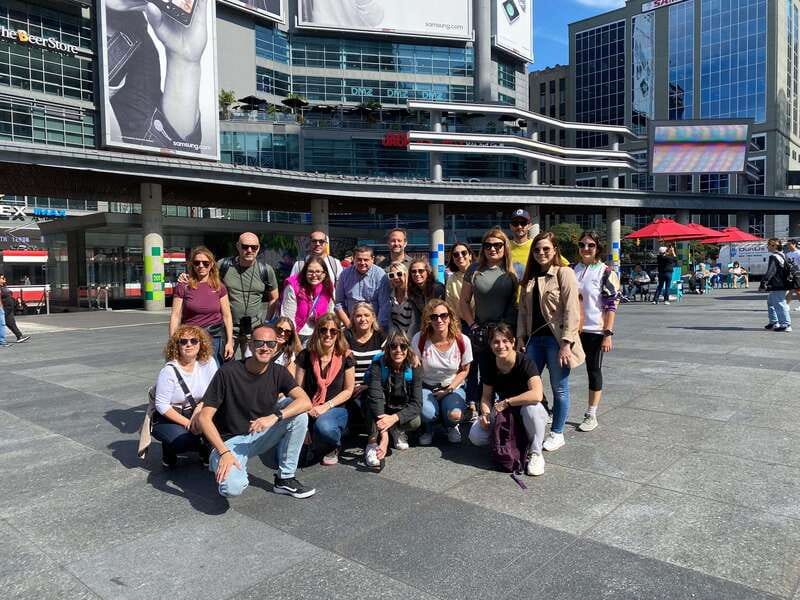
Dundas Square is the most overtly urban stop. Bright signs, entertainment, traffic, and tall buildings create a concentrated burst of city energy. It is not Toronto’s oldest or quietest place, but it shows the modern downtown at full volume.
This stop works well near the end of a city orientation. After older brick buildings, markets, and neighborhood streets, you see the commercial center in a single busy intersection. The contrast is the point.
Dundas Square can also be overwhelming if you prefer calm places. You will not come here for a peaceful pause. You come to see how Toronto presents itself as a major North American city, with advertising and public activity packed into a small space.
Toronto Island: A seasonal change of pace

The Toronto Island portion is seasonal and involves a ferry. When available, it offers a welcome break from traffic and paved downtown streets. You can expect beaches, green space, and views back toward the Toronto skyline.
This is the route’s most scenic setting, but it may also be the hardest stop to fit into a short tour. A ferry ride takes time, and the island is not simply another downtown corner. If Toronto Island matters to you, check that it is operating during your visit and confirm how it fits into the chosen duration.
The island also changes the feel of the experience. Instead of looking at Toronto from inside the city, you see the skyline from across the water. That contrast can make the urban sights easier to appreciate.
Because the island visit is seasonal, it should not be the only reason you book this tour. Think of it as a possible bonus within a broader city walk, not a guaranteed full island excursion.
What Paul Campbell’s guiding style means for you
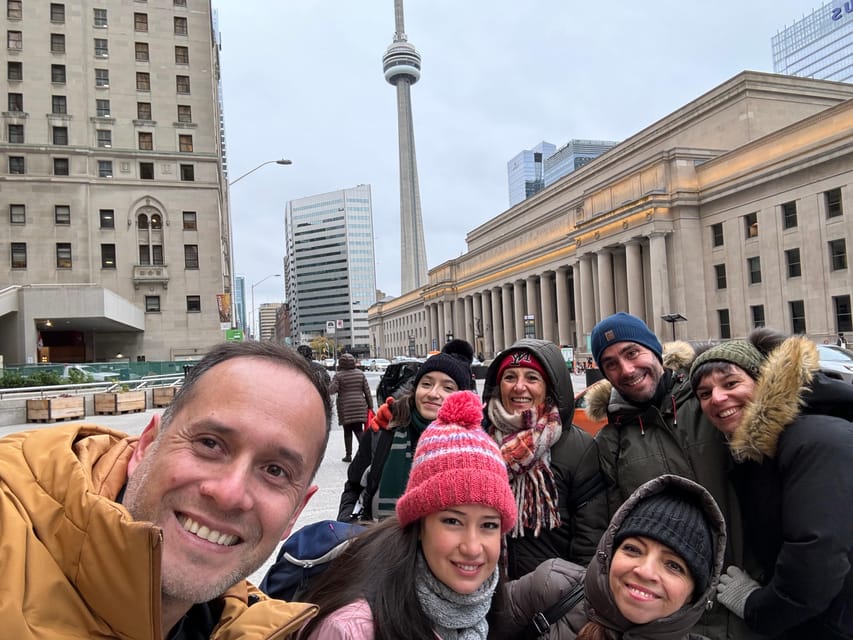
Paul Campbell receives strong marks for being friendly, attentive, and flexible. A wheelchair user specifically noted that he adapted the tour to make the outing work, and another private couple appreciated his charming manner and willingness to shape the visit around them.
That flexibility is the clearest reason to choose this experience over a standard group walk. You can ask to slow down, spend more time at a certain district, or adjust the focus toward food, architecture, neighborhoods, or street art.
At the same time, the available feedback suggests that historical detail may not always be the tour’s strongest feature. If you want a lecture-heavy walk with a firm chronology of Toronto’s development, ask Paul at the start for more historical explanation. If you prefer conversation, practical recommendations, and a relaxed pace, his style may suit you well.
The language choice is another practical advantage. You can take the tour in English or Spanish, which makes it easier to ask questions and understand local context without struggling through a second language.
Accessibility, children, and pace
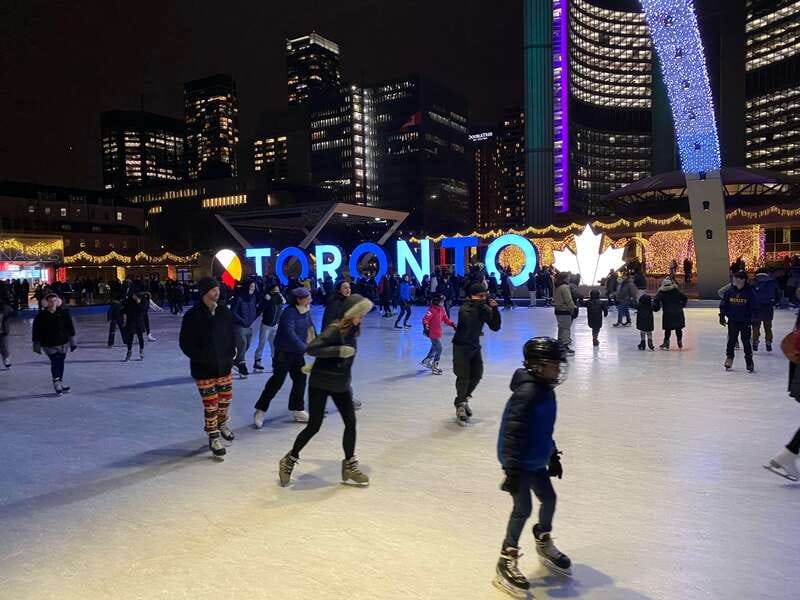
The experience is wheelchair accessible, and the guide has shown that he can adapt the outing for wheelchair users. That is reassuring, though the route includes cobblestones in the Distillery District and a ferry connection for the seasonal island option. Ask about the exact route and surface conditions when booking if mobility is a major concern.
Kids under 12 are free, making the tour more affordable for families. The wide range of stops can also help keep children interested, since the outing moves from old buildings to food, murals, neighborhoods, bright signs, and possibly beaches.
The private format gives families more control than a fixed group schedule. You can keep the pace moving or pause when needed. Still, a four-hour route through several districts may be tiring for younger children, so consider selecting the shorter version if your family prefers a lighter introduction.
Timing, value, and who should book
The listed duration is two to four hours, with starting times based on availability. That range matters because this is not one fixed experience. A shorter walk will likely work best as a first orientation to the central sights. A longer outing gives you a better chance to enjoy the markets and neighborhood areas rather than simply pass through them.
At $54 per person, the value rests on personalization. You are paying for Paul’s time, a private group, language choice, and a route that can cover several major Toronto districts. The price makes more sense for couples, families, or small groups that want their own pace.
I would be more cautious if you are a solo budget visitor who is comfortable using public transit and exploring independently. Toronto’s neighborhoods can be visited without a guide, and the experience does not include meals or a formal attraction admission.
The current rating is 4.5 from 20 reviews, with especially strong praise for Paul’s attentiveness and flexibility. The most useful takeaway is not simply the number. It is that this tour works best when you speak up about what you want to see and how much historical detail you prefer.
Should you book this Toronto walk?
Book it if you want a private introduction to Toronto that mixes food, architecture, immigrant neighborhoods, public art, and city views. It is a good fit for first-time visitors, families, Spanish-speaking travelers, and anyone who values a guide who can adjust the plan.
Choose the four-hour option if you want time at St. Lawrence Market, Chinatown, or Kensington Market, or if the seasonal Toronto Island stop is important. Choose the shorter version for a brisk orientation.
I would book this tour for a flexible introduction, not for a detailed history seminar. Tell Paul what interests you at the start, and you are more likely to get the kind of Toronto walk you want.
FAQ
How long does the Toronto walking tour last?
The tour lasts between two and four hours. Starting times depend on availability.
What languages are available?
The live guide offers the tour in English and Spanish.
Is the tour private?
Yes. It is offered for a private group rather than as a shared group experience.
Who is the guide?
The experience provider and guide is Paul Campbell.
What places can the tour include?
The route can include the Distillery District, St. Lawrence Market, Graffiti Alley, Chinatown, Kensington Market, Dundas Square, and Toronto Island when seasonal.
Is Toronto Island included all year?
No. The Toronto Island portion is seasonal.
Is the tour wheelchair accessible?
Yes, the experience is listed as wheelchair accessible. Paul has also adapted the tour for wheelchair users.
Are children under 12 charged?
No. Kids under 12 are free.
Does the price include food?
The price includes the walking tour and the guide’s time. Food or market purchases are not listed as included.
Can I cancel the tour?
Yes. You can cancel up to 24 hours in advance for a full refund. You can also reserve now and pay later.
Just added around Toronto
- Toronto: Craft Brewery Tour★ 5.0 · 8 reviews
- Toronto Waterfront and Islands Guided Bicycle Tour★ 4.9 · 80 reviews
- Toronto: Toronto Raptors NBA Game Ticket at Scotiabank Arena★ 4.6 · 88 reviews
- Toronto: Toronto Zoo Entry Ticket★ 4.1 · 68 reviews
- Toronto: Must Do NonTouristy Street Art Tour by local Artist★ 4.9 · 30 reviews
- Toronto: Short Distillery District Segway Tour★ 4.8 · 55 reviews
- Toronto: Toronto Maple Leafs Game Ticket at Scotiabank Arena★ 4.6 · 43 reviews
- Toronto: Sailing Yacht Cruise of Toronto Harbor and Islands★ 4.7 · 12 reviews
Walking Tours, compared.
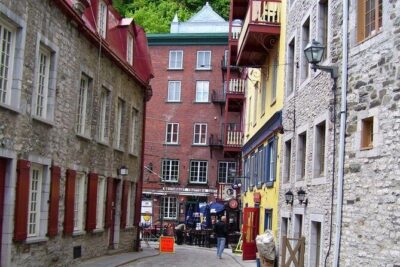

Old Quebec City: Grand Walking Tour with Private Option
The full write-up →
The Original Old Montréal Walking Tour by Guidatour
The full write-up →
Old Montreal Small-Group Walking Tour | Max 10 | by MTL Detours
The full write-up →
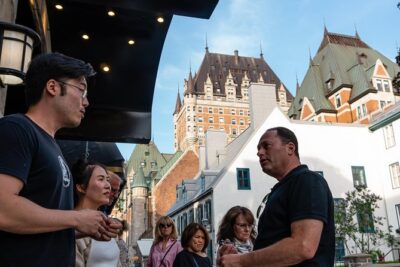
Old Quebec Classique Walking Tour with Funicular
The full write-up →
Vancouver Lost Souls of Gastown Walking Tour
The full write-up →
Quebec: Crimes of New France Animated Walking Tour
The full write-up →Browse the lists this tour appears in