
Reviewed · BEAR WATCHING TOURS
Campbell River: Grizzly Bear-Watching Tour with Lunch
Grizzly bears feeding on salmon in a remote fjord are the main event here, but the journey matters just as much. From Campbell River, you cross the Salish Sea into Bute Inlet, then join Homalco guides who explain the bears, salmon, and long-standing ties to this land. The setting is unforgettable, and sightings can be remarkably close while still carefully managed.
I especially like the small-group feel and the chance to hear directly from Indigenous guides such as Kaylin and James. I also like that part of your fare supports bear conservation, salmon restoration, Homalco language work, and local employment. The tradeoff is simple: this is a long, weather-dependent day, and wildlife is never guaranteed.
Key points at a glance
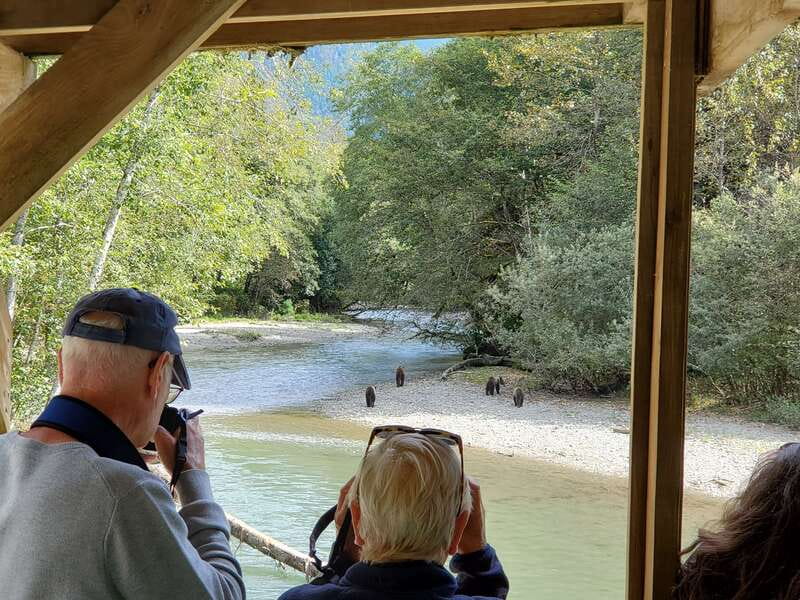
- Salmon season brings grizzlies to Orford Bay: September usually offers the highest number of bears, while October can feel quieter and more intimate.
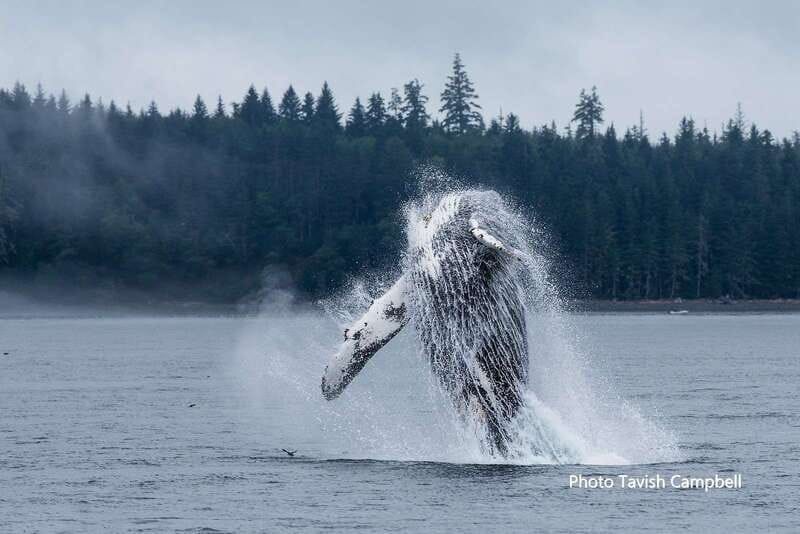
- The Salish Sea crossing is part of the experience: You may spot humpback whales, orcas, sea lions, and other marine life before reaching Bute Inlet.
- Homalco guides connect wildlife with culture: The visit takes place on the traditional territory of the Homalco First Nation.
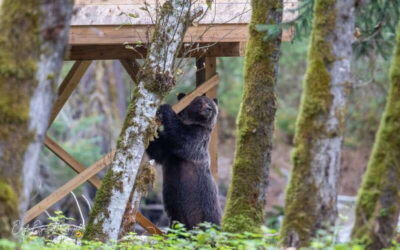
- Three hours on land means more than a quick photo stop: Raised viewing towers and ground-level locations are used according to bear activity.
- Lunch comes with a mountain and estuary view: Expect a large sandwich, cookie, hot drink, snacks, and drinks, with gluten-free catering available when requested.
- You need to be ready for real coastal weather: Bring warm layers, rain gear, sturdy shoes, insect repellent, and a camera.
A full day from Campbell River to Bute Inlet
The trip begins at the Homalco Wildlife and Cultural Tours office at Coast Marina in Campbell River. Arrive 15 minutes early. Parking is across the street at Tyee Plaza Shopping Centre, but avoid spaces reserved for the Coast Discovery Inn.
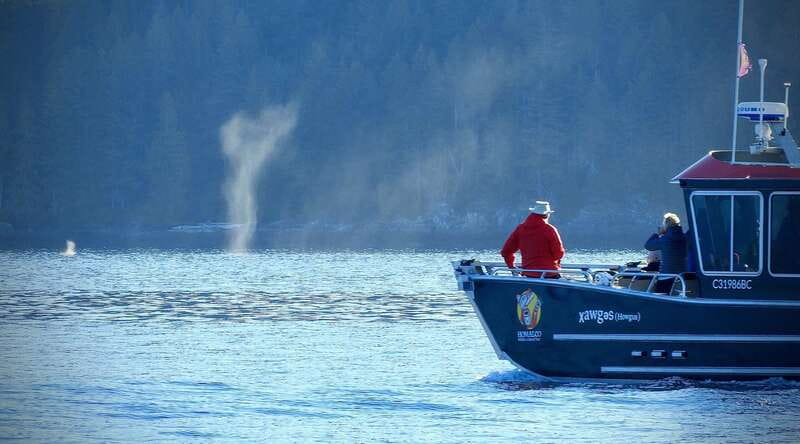
From there, the boat carries you through the Salish Sea toward Bute Inlet. The water journey gives the day a proper sense of scale. You are not being driven to a fenced wildlife park. You are heading into a remote coastal area where animals move according to tide, weather, food, and instinct.
The marine portion can also add its own wildlife sightings. Humpback whales, orcas, and sea lions have been seen along the route, and naturalists such as Holly and Debra help spot animals and answer questions. These sightings are bonuses rather than promises, so keep your binoculars ready and your expectations flexible.
One practical point: the entire experience lasts 510 minutes, or about eight and a half hours. That includes the boat ride, the land visit, lunch, and transfers at the Homalco site. You will spend much of the day outside or on the water, so this is not a casual half-day outing.
More Bear Watching Tours in Campbell River
- Campbell River: Bute Inlet Grizzly-Watching Tour & Boat Ride
★ 5.0 · 112 reviews - Campbell River: Bute Inlet Grizzly-Watching Tour & Boat Ride
★ 5.0 · 61 reviews - Campbell River: Full-Day Grizzly Bear Tour With Lunch
★ 4.6 · 32 reviews
Entering Homalco territory by boat
As you approach Bute Inlet, the scenery becomes the quiet star of the trip. The inlet is one of British Columbia’s major fjords, with steep mountain surroundings and waterways that support salmon and many other animals.
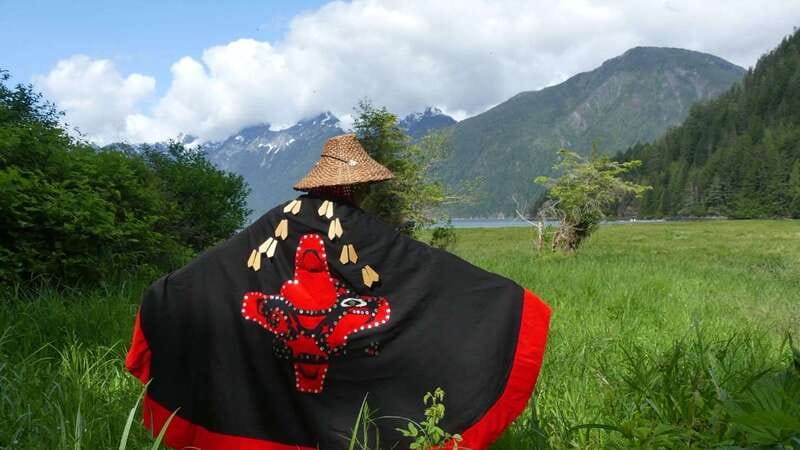
Your guides place the journey in its proper cultural setting. The bear viewing takes place on the traditional territory of the Homalco First Nation, and the experience explains how the people, salmon, bears, rivers, and forest are connected.
That context gives the wildlife viewing more meaning. You are not simply ticking grizzly bear off a list. You are learning why bears return to these channels, why salmon are so important, and how this seasonal cycle has continued for thousands of years.
The boat ride may feel long if your main goal is to see bears as quickly as possible. One guest felt that marine encounters were rushed because the boat did not stop for long wildlife-watching sessions. I would treat the crossing as part of the trip, not just transport, but this distinction matters if you want hours of dedicated bear viewing.
Three hours searching for grizzlies at Orford Bay
At Orford Bay, the day shifts from boat travel to a land-based wildlife search. The land portion lasts about three hours, with Indigenous guides transporting you by bus to raised viewing platforms and selected ground viewing areas.
The route changes according to where the bears are active. The Orford River and Algard Creek are key salmon-spawning channels, but the animals do not follow a fixed schedule. Your guide may move the group between viewing locations to improve the chance of seeing bears while keeping a safe distance.
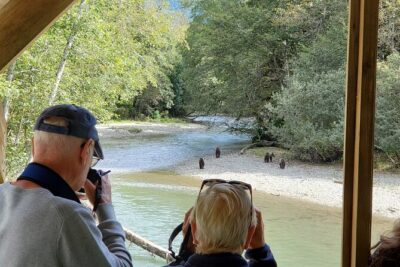
The raised platforms are especially useful. They let you watch the river and surrounding area from a stable position, often with a broad view of the feeding grounds. Ground viewing locations provide a different perspective, but the guides decide where it is appropriate to go.
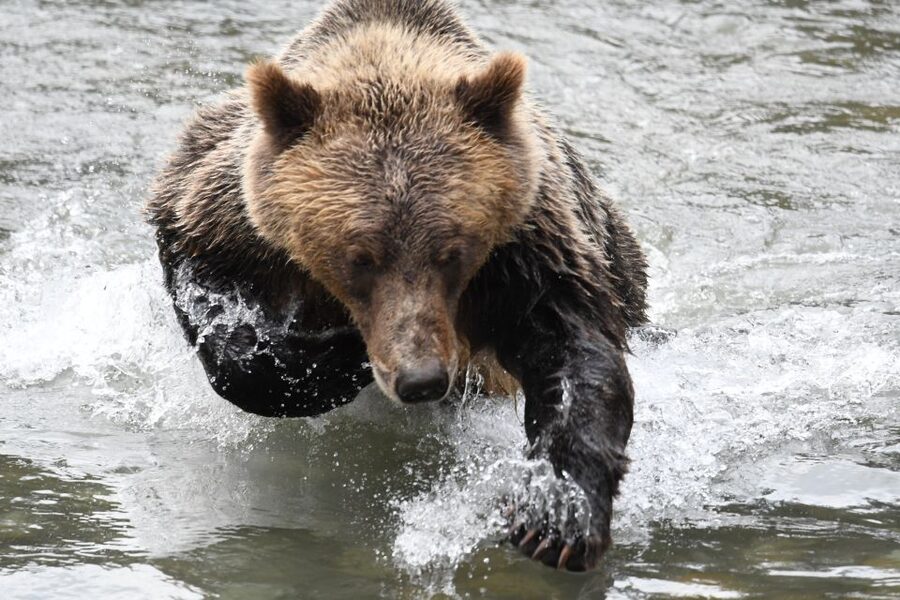
You may see a bear feeding, walking along the river, searching for shellfish, or waiting for salmon. In August, bears often forage for grasses, berries, and shellfish while waiting for the salmon run to move inland. From September onward, salmon become the main attraction, and bear activity generally increases.
The wildlife remains wild. There is no guarantee of a particular number of bears, and even during the best season conditions can change. Guides do their best to find animals, but weather, water levels, food supplies, and bear behavior are beyond anyone’s control.
That uncertainty is part of the bargain. It also makes a sighting feel genuine. You are watching an animal make its own choices, not waiting for a scheduled performance.
Choosing the best month for your priorities
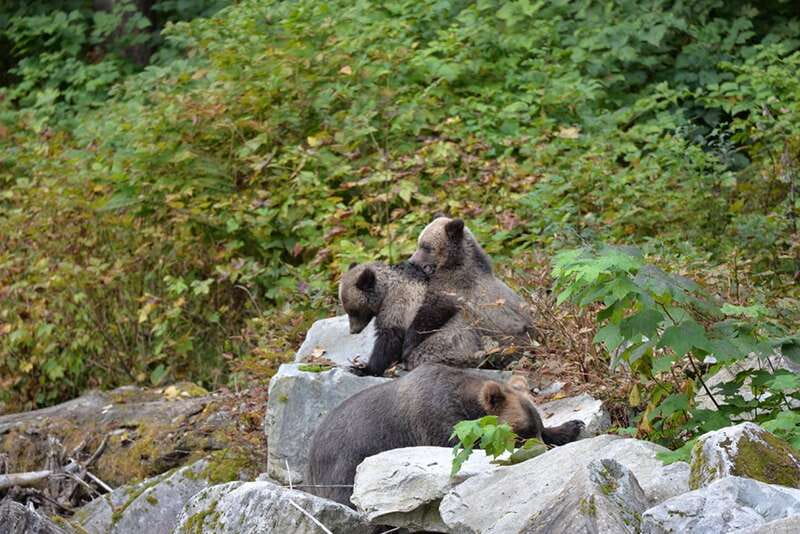
The bear season typically begins around mid-August, when salmon start entering Orford Bay. Each month offers a different balance of weather, bear activity, and visitor volume.
August usually brings the warmest and most pleasant days. Bears are moving down from higher areas, but they may still spend much of their time eating plants, berries, or shellfish. If comfortable weather matters most, August is a sensible choice.
September generally offers the best chance of seeing several bears because salmon are moving through the rivers. It is also the busiest month, and coastal rain becomes more common. If your priority is bear numbers, September is likely the strongest option, but pack seriously for wet weather.
October brings shorter days and more changeable conditions. The reward can be a quieter outing with striking fall scenery and a more intimate feel. Bring waterproof clothing and accept that the weather may shape the route.
Climate change has affected weather and bear behavior, so these patterns are only a guide. A September visit does not guarantee bears, and a quieter October trip can still produce an exceptional sighting.
Same trip, a completely different kind of day out:
- Vancouver Island Half-Day Whale Watching Tour – Telegraph Cove
★ 5.0 · 333 reviews - Vancouver Island Zodiac Whale Watching Adventure – Telegraph Cove
★ 5.0 · 281 reviews - Campbell River: Whale & Wildlife Discovery Cruise
★ 4.8 · 143 reviews - Zodiac Boat Whale and Wildlife 4-Hour Tour from Campbell River
★ 5.0 · 142 reviews
What close wildlife viewing really means
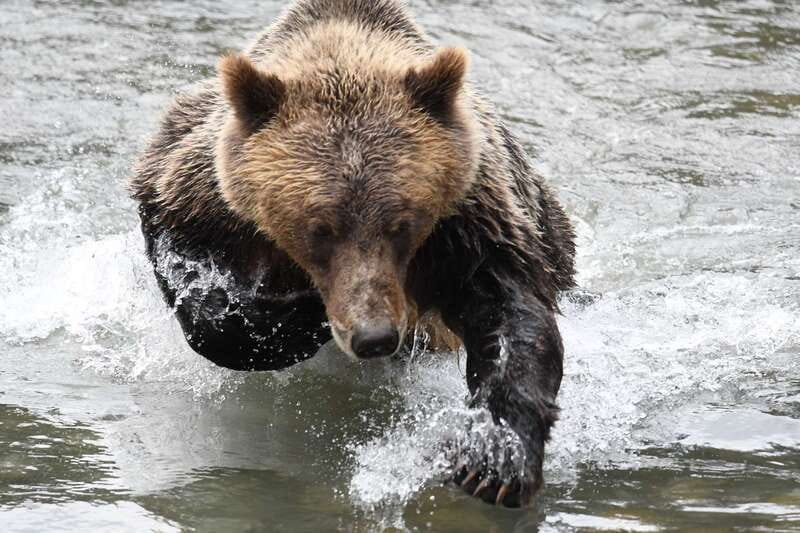
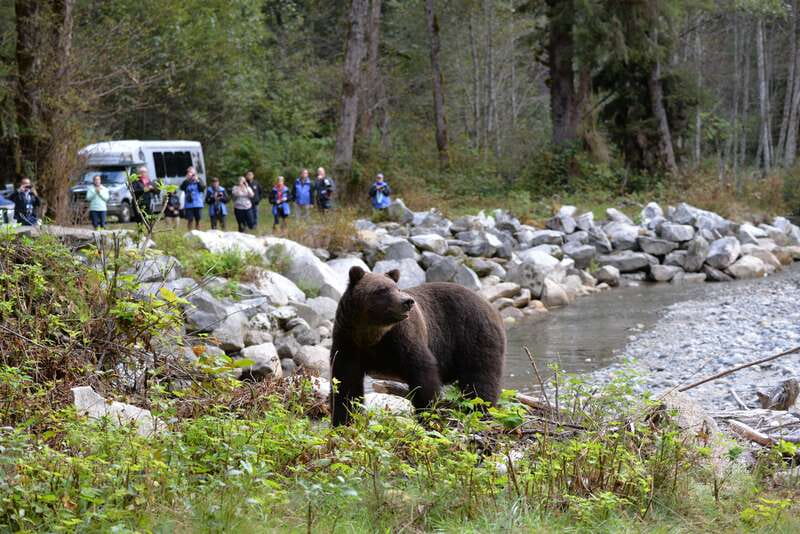
The guides work to give you a good view without treating the animals as a show. A bear may come surprisingly close, but you must follow instructions, remain with the group, and respect the animal’s space.
One October outing produced sightings of eight grizzlies, including three young bears, with one animal observed from roughly five meters away. That is an unusually close encounter, and it also shows why disciplined behavior matters. The group’s calm conduct helped keep the moment safe and respectful.
Other trips have produced six bears or more, while some may offer fewer. You should book this for the quality of the setting and the chance to observe wild animals, not for a guaranteed tally.
The guides also explain the bears’ need to build body fat before winter hibernation. Salmon provide the calories that help them survive the cold months, making the autumn run a crucial part of the annual cycle.
Lunch with a view of the estuary
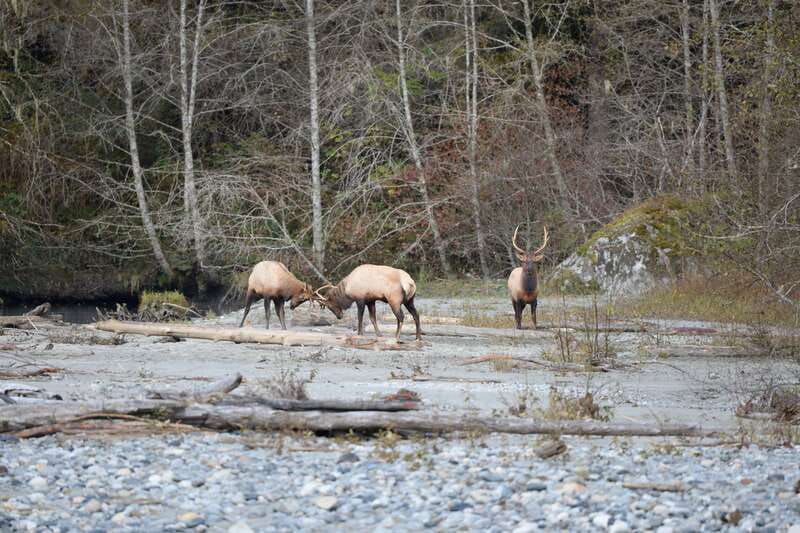
Lunch is served at the dock in Orford Bay, with an open view across the estuary and surrounding mountains. It is a practical break after the land portion, and the setting makes a simple meal feel special.
The meal has included a large sandwich, cookie, and hot drink, along with snacks and drinks during the day. Gluten-free food has been available when requested, which is worth arranging ahead of time rather than assuming on the morning of departure.
Do not expect a restaurant lunch or a long, leisurely meal. This is field food in a remote place. The value comes from eating beside the estuary, with the possibility of wildlife and mountain views around you.
Toilet facilities are available on the vessels. Since the tour reaches a remote area, use facilities when you can and keep your personal items compact.
The guides make the difference
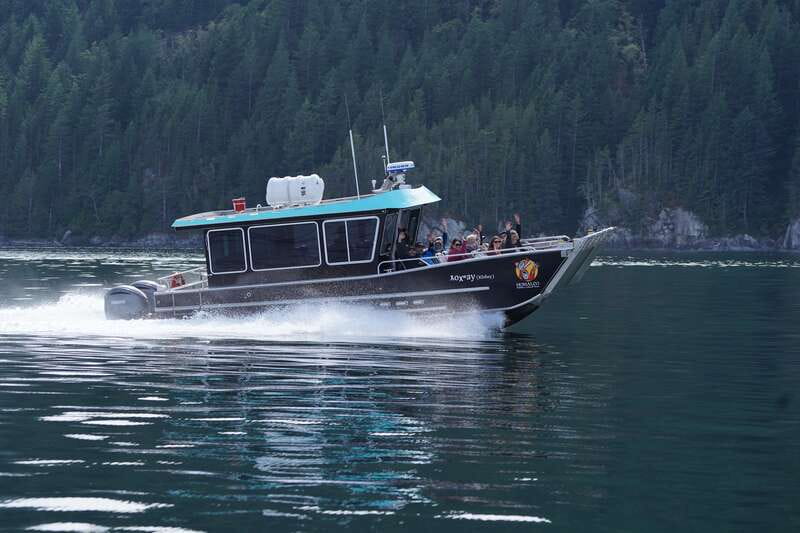
The strongest part of this experience is the human side. The Homalco guides explain the area from a personal and cultural point of view, rather than treating the land as an empty backdrop.
Kaylin and James have led visitors at the Homalco site, while Janet, Guy, and Dude have also been praised for being warm, informative, and fun. On the boat, Holly and Debra have helped identify whales and other marine animals while answering questions.
Guide assignments can change, so you should not book expecting a particular person. What matters is the format: a small group, a live English-speaking guide, and plenty of chances to ask questions directly.
The cultural information is not an extra lecture added to the wildlife portion. It is part of understanding the place. You learn about Homalco ties to the land, salmon, bears, and language, while your booking helps support conservation, salmon restoration, language renewal, and employment opportunities for Homalco people.
Is $460 a fair price?
At $460 per person, this is a major day-trip expense. The price includes the guide, boat and land transportation during the activity, lunch, snacks, and drinks. Hotel pickup and drop-off are not included.
I think the cost makes sense for the right kind of trip. You are paying for a full day in a remote fjord, specialized wildlife access, boat transportation, Indigenous guiding, meals, and a conservation and community contribution. Arranging the same combination independently would not be simple.
The value is weaker if you want a short, guaranteed bear encounter or dislike long boat journeys. The marine portion may include wildlife, but it is not a separate whale-watching tour. The land portion is about three hours, not the full duration of the day.
For a once-in-a-lifetime wildlife outing from Campbell River, the price is defensible. For a casual add-on to a Vancouver Island itinerary, it may take a large share of your budget.
Who should book this experience?
I would recommend it to adults and families with children aged 10 or older who can manage a long day, changing weather, boat travel, and outdoor viewing. It suits people who want wildlife in a natural setting and who value learning about Indigenous ties to the area.
You should be comfortable with uneven outdoor conditions and bus transfers to viewing areas. The tour is not suitable for wheelchair users, people with back problems, or anyone feeling unwell with a cold. Unaccompanied minors cannot join, and passengers aged 10 to 17 must be with an adult.
Pack warm clothing, rain gear, hiking shoes, biodegradable sunscreen, insect repellent, binoculars, and a camera. Drones, tripods, alcohol, and drugs are not allowed.
My verdict on the Campbell River grizzly tour
Book it if you want a serious wildlife day built around place, culture, and conservation rather than a quick photo stop. The best parts are the journey into Bute Inlet, the Homalco guidance, the well-managed viewing platforms, and the chance of seeing bears feeding near the salmon channels.
Skip it if you need guaranteed sightings, have limited time, or find long boat trips uncomfortable. Nature controls the schedule here.
For most prepared visitors, this is a memorable and worthwhile way to see grizzlies on Vancouver Island. Choose September for the strongest chance of bear activity, or October for a quieter outing, and arrive ready for rain, waiting, and the occasional spectacular surprise.
FAQ
How long does the Campbell River grizzly bear tour last?
The tour lasts 510 minutes, which is about eight and a half hours. The day includes boat transportation, the land-based bear viewing, lunch, snacks, and drinks.
Where does the tour meet?
Meet at the Homalco Wildlife and Cultural Tours office at Coast Marina in Campbell River. Arrive 15 minutes before departure.
Is parking available near the meeting point?
You can park across the street in the Tyee Plaza Shopping Centre parking lot. Do not park in spaces designated for the Coast Discovery Inn.
Are bear sightings guaranteed?
No. Guides work to find wildlife, but bears are wild animals and their movements depend on weather, food, and other natural conditions.
What food and drinks are included?
Lunch, snacks, and drinks are included. Lunch has included a large sandwich, cookie, and hot drink. Gluten-free needs have been accommodated.
What ages can join the tour?
Children under 10 cannot join. Passengers aged 10 to 17 must be accompanied by an adult, and unaccompanied minors are not permitted.
What should I bring?
Bring warm clothing, rain gear, hiking shoes, a camera, biodegradable sunscreen, insect repellent, and binoculars. Drones and tripods are not allowed.
Just added around Campbell River
- Telegraph Cove: Half-Day Kayaking Tour★ 4.7 · 9 reviews
- Port Hardy: Sea Otter and Whale Watching★ 5.0 · 19 reviews
- Campbell River: Whale Watching and Wildlife Viewing Day Tour★ 4.9 · 23 reviews
- Campbell River: Kayaking and Whale Watching Tour★ 4.6 · 8 reviews
- Cape Scott: San Josef Bay Day Hike with Scenic Drive★ 5.0 · 11 reviews
- Campbell River: Grizzly Bear Expedition with Lunch★ 4.9 · 11 reviews
- Campbell River: Whale Watching Cruise with Lunch★ 4.9 · 20 reviews
- Campbell River: 7-Hour Big Animal Encounter Boat Tour★ 4.6 · 17 reviews
Bear Watching Tours, compared.
Great Bears of Bute: Grizzly Bear Viewing & Indigenous Cultural Tour
The full write-up →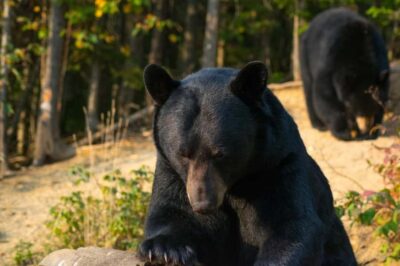
15 min. Tadoussac : Black Bear Observation with Expert Guide
The full write-up →
Tadoussac/Charlevoix: Whale Watching Tour & Bear Observation
The full write-up →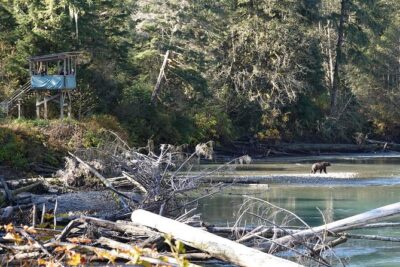
Campbell River: Bute Inlet Grizzly-Watching Tour & Boat Ride
The full write-up →Campbell River: Bute Inlet Grizzly-Watching Tour & Boat Ride
The full write-up →
Campbell River: Full-Day Grizzly Bear Tour With Lunch
The full write-up →Browse the lists this tour appears in