
Reviewed · GLACIER & ICEFIELD TOURS
Abraham Ice Bubble/Sunwapta Falls,Snowshoeing,Icefield, Bow&Peyto
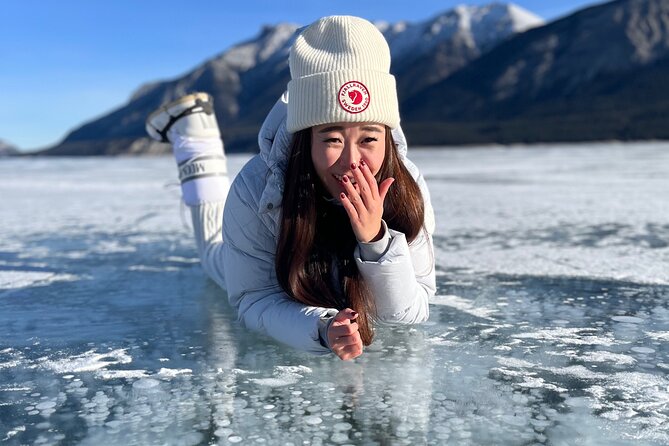
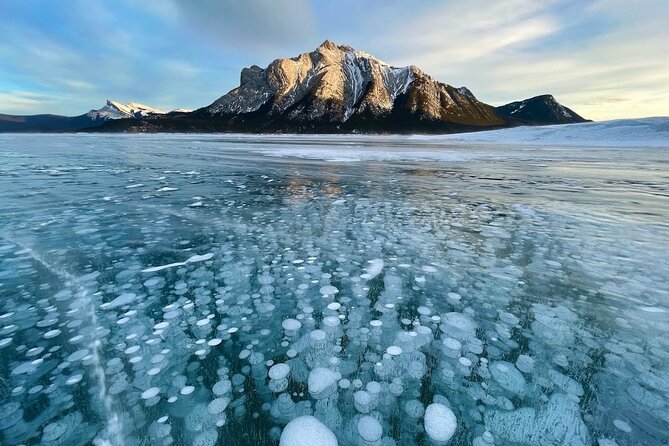
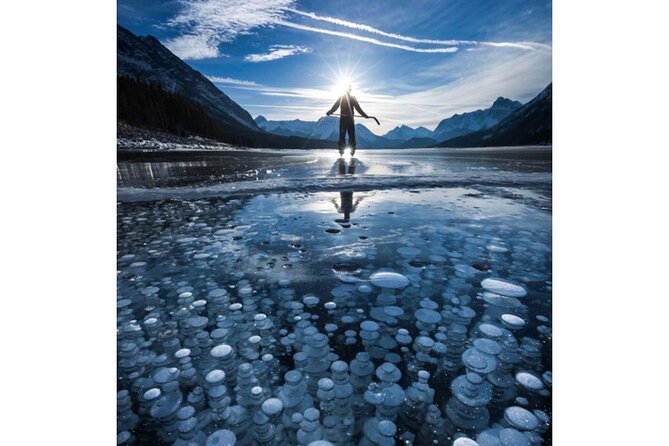
Abraham Lake’s frozen bubbles are the star here: thousands of white pockets trapped beneath clear turquoise ice, usually best from mid-January to early February. Getting there means a long day on the Icefields Parkway, with mountain viewpoints, glacier-fed lakes, and winter stops along the way.
I especially like the sheer range of scenery packed into one outing and the practical winter extras, including crampons, hot drinks, bottled water, and help with photos. Guides such as Kenneth, Lam, and Ray have also been praised for safe driving, good timing, local facts, and keeping the long ride lively.
The tradeoff is simple: this is a very long day, and you must bring your own lunch. Weather and road conditions can also force changes, so book it for the broad sweep of the Rockies rather than one guaranteed photo stop.
Key points to know before booking
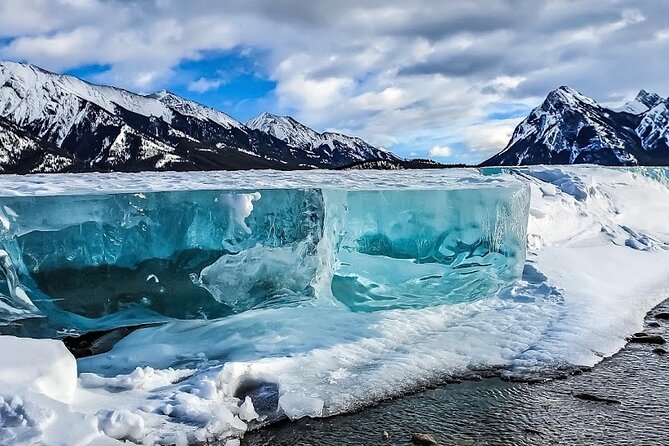
- Abraham Lake’s ice bubbles are a winter-only highlight: The frozen lake is generally visited from mid-December to early March, with the clearest bubble displays often appearing from mid-January to early February.
- The Icefields Parkway is the backbone of the day: You travel through one of the world’s most scenic mountain roads, stopping at Bow Lake, Peyto Lake, Waterfowl Lakes, glaciers, and waterfalls.
- Winter crampons are included: These small traction devices matter on icy paths, especially around Peyto Lake and the Athabasca Glacier viewing area.
- The guides add real value: Kenneth, Lam, and Ray are noted for safe driving, local stories, photography help, hot drinks, and attentive group care.
- Bring lunch and expect a 10 to 12-hour outing: There is no planned meal stop, and the total time includes the long drive from Banff.
- The route is weather dependent: Abraham Lake may be replaced by stops such as the Weeping Wall, Athabasca Glacier, Sunwapta Falls, or Athabasca Falls.
Why this Banff day trip is built around Abraham Lake
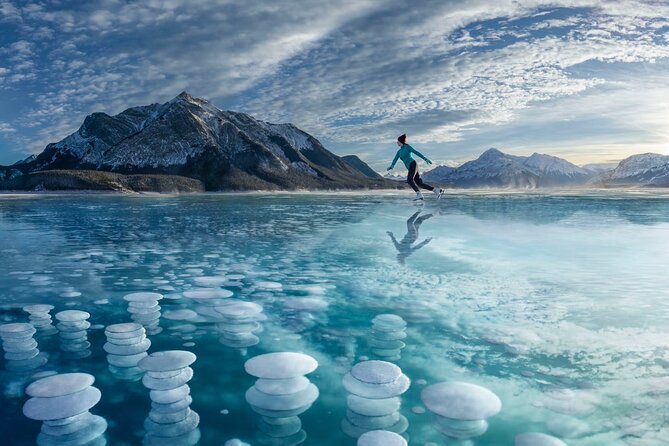
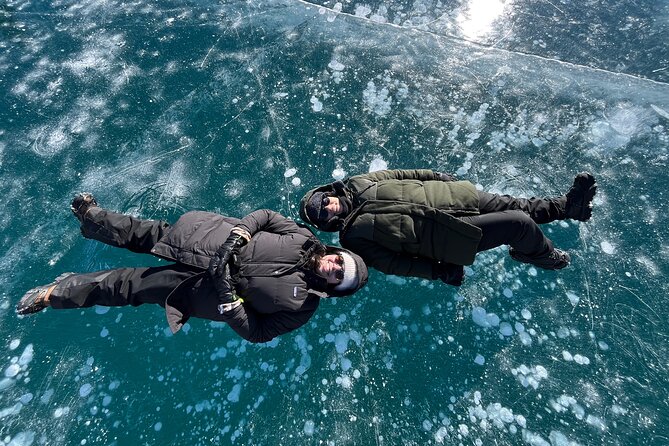
Abraham Lake is a human-made reservoir in Alberta’s Rockies, but its winter ice creates a natural spectacle. Methane bubbles rise from the lakebed and freeze in layers beneath the surface, forming pale circles and columns under the ice. The result looks almost otherworldly, yet the experience is very hands-on: you walk out to the frozen lake, look through the ice, and see the bubbles close up.
The timing matters. The lake usually freezes around mid-December, and the best chance for a strong display of bubbles is often from mid-January through early February. The advertised winter window runs from mid-December to early March, but nature does not follow a strict calendar. Ice clarity, snow cover, temperature, and road conditions can all affect what you see.
You should treat Abraham Lake as the main winter goal, not an absolute promise. The route can change because of weather, and the listed alternatives include the Weeping Wall, Athabasca Glacier, Stutfield Glacier, Tangle Creek Falls, Sunwapta Falls, Goats and Glacier Lookout, and Athabasca Falls. That flexibility is useful on a mountain road, where safety has to come first.
More Glacier Tours in Banff
- Lake Louise, Moraine Lake and the Icefields Parkway Full-Day Tour
★ 5.0 · 836 reviews - Columbia Icefield Tour with Glacier Skywalk from Banff
★ 5.0 · 649 reviews - Johnston Canyon Icewalk
★ 5.0 · 502 reviews
The early start and the first Banff views
The day begins at 7:00 am and ends back at the meeting point. From Banff, the total driving time and sightseeing add up to roughly 10 hours, with the broader tour duration described as 11 to 12 hours. That difference likely reflects pickup, route conditions, and the day’s exact timing.
The opening views include Cascade Mountain, one of Banff’s most recognizable peaks. It rises near the town of Banff and gives you an immediate sense of the scale of the Bow River Valley. This is a quick scenic introduction rather than a mountain hike, so you can enjoy the view without committing to a strenuous trail.
Vermilion Lakes offer another easy visual reward. Three lakes reflect Mount Rundle, the long ridge that towers over Banff. Calm water can create a strong mirror effect, while winter brings a quieter, more subdued feel. These early stops help break up the drive and give you a chance to take photographs before the day heads farther north.
Castle Mountain adds a different shape to the morning. Its layered, fortress-like form comes from erosion, and it is one of those mountain views that looks especially striking from the road. You are not climbing it on this tour. The value is in seeing several famous peaks in quick succession and learning how the mountains relate to the valleys and highway.
Driving the Icefields Parkway
The Icefields Parkway, also called Highway 93 North, is the main event between the stops. It links Banff and Jasper through protected mountain country, with huge peaks, glacier-fed waterways, and wildlife habitat along the route. Even when the van is moving, you are sightseeing through the windows.
A guided drive is useful here because you can focus on the views instead of navigation. You also avoid arranging a long one-day road trip yourself, checking every stop, and managing winter driving conditions. The vehicle is air-conditioned, and the group size can reach 24 people, so this is not a private tour. It is a practical way to cover a great deal of ground without renting a car.
The drawback is equally clear. You spend many hours in the vehicle, and the road distance limits the time available at each stop. If you prefer one long hike or a slow morning beside a lake, this schedule may feel rushed. If you want a broad first look at the Rockies, the mileage works in your favor.
Bow Lake and Peyto Lake: two very different blue lakes
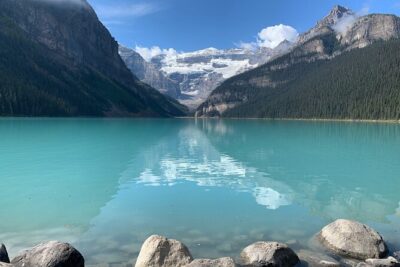
Bow Lake receives about 15 minutes, making it a brief but worthwhile stop. It is one of Banff National Park’s larger glacier-fed lakes, and its turquoise color comes from fine glacial sediment, often called glacial flour. The lake sits beneath a ring of dramatic peaks, with Crowfoot Glacier visible above Bow Lake from the Icefields Parkway.
That short stop is enough for photographs and a quick look, but not enough for a substantial walk. Bring your camera out as soon as you leave the vehicle, since the schedule is tight.
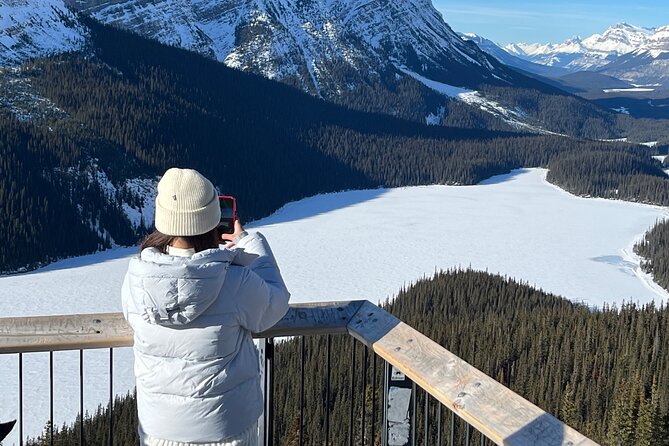
Peyto Lake gets about 30 minutes and usually offers the stronger viewpoint experience. Its bright blue water is fed by glacial rock flour from Peyto Glacier, and the elevated view makes the lake’s shape and color easy to appreciate. It is one of the most popular viewpoints in Banff National Park for good reason.
In winter, this is where the included crampons can be especially helpful. Ice and packed snow may make the approach slippery, and traction lets you concentrate on the view rather than every footstep. Guides Lam and Kenneth have been singled out for helping people move safely and finding good photo positions.
Still, half an hour passes quickly. You can expect time for the main viewpoint and photographs, not an extended hike around the area. If you want a quiet, solitary visit to Peyto Lake, a private drive would give you more control. This tour is about seeing it as one part of a much larger day.
More Waterfall Tours in Banff
- Mountain Lakes and Waterfalls – roundtrip from Banff
★ 5.0 · 486 reviews - Banff: Gondola, Hot Springs, Bow falls & Three lakes tour
★ 4.8 · 157 reviews - Lake Louise Moraine Lake Banff Gondola Cave Basin Bow Falls
★ 5.0 · 156 reviews - Emerald Lake, Takakkaw Falls & Canadian Rockies Hidden Gems
★ 5.0 · 116 reviews
Waterfowl Lakes and the changing winter route
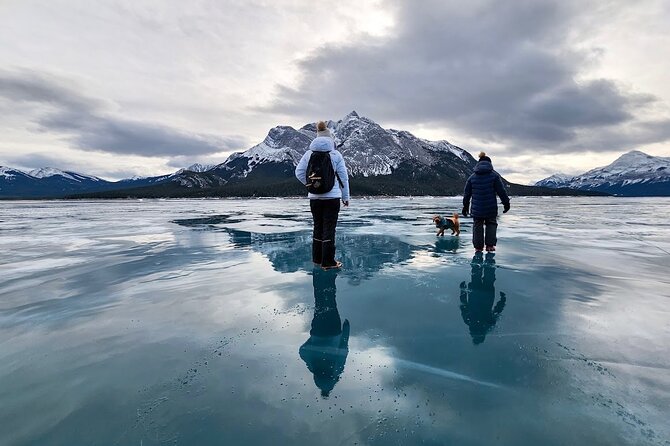
Waterfowl Lakes are glacier-fed lakes surrounded by mountain peaks. Their clear water reflects the surrounding summits, and the area is suited to photography, paddling, hiking, and stargazing at the appropriate time of year. On this outing, the appeal is the peaceful setting and the chance to see another type of Rocky Mountain lake beyond the better-known Bow and Peyto viewpoints.
The exact time at Waterfowl Lakes is not specified, so do not plan around a long independent walk there. The tour moves through a series of scenic locations, and the driver must keep the full route on schedule.
Winter conditions may reshape the rest of the day. The Weeping Wall on Cirrus Mountain is one possible substitute for Abraham Lake. It is a tall rock face with several waterfalls, including Teardrop Falls, and its name comes from the water running down the mountain like tears.
Other possible stops include Athabasca Glacier, Stutfield Glacier, and Tangle Creek Falls. The glacier views show the scale of the Columbia Icefield, while Tangle Creek Falls provides a quick waterfall stop. The route can also include Sunwapta Falls, Goats and Glacier Lookout, and Athabasca Falls.
This is an important booking point: the tour promises a full day of Rocky Mountain scenery, but not one rigid list of stops in every season and every weather pattern. Snow, visibility, and road access affect the plan.
Athabasca Glacier and the waterfalls beyond Banff
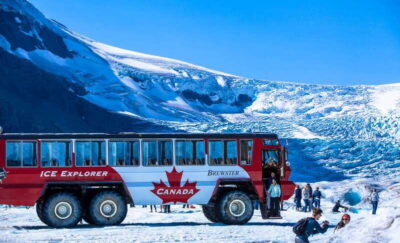
Athabasca Glacier is part of the Columbia Icefield, one of North America’s major icefields. From the designated stop, you can see the glacier and its blue ice, although the separate Columbia Icefield Adventure is not included. You are not automatically buying a snowcoach ride or a full glacier excursion.
That distinction protects the price, which is listed at $68.34 per person. For that amount, you are paying mainly for transportation, route planning, guiding, and access to a long series of scenic stops. The paid Columbia Icefield Adventure would be an extra cost if you choose to add it.
Sunwapta Falls drops about 18 meters and is fed by water connected to the Athabasca Glacier. Its flow is strongest in late spring and early summer, though the waterfall remains a dramatic stop in other seasons. The visit is listed at about 15 minutes, enough to see the falls and hear their force without turning the day into a hike.
Athabasca Falls receives about 45 minutes. It is not famous for extreme height, but for the volume and power of water forced through the narrow rock channel. The river crashes through the gorge, creating a stop with a different mood from the broad, still lakes.
These northern stops may replace Abraham Lake in winter conditions, and that can be a fair exchange. You lose the unusual ice bubbles but gain glaciers and powerful waterfalls. The tour works best when you see the route as a flexible sampler of the Rockies.
What the guides add to a long day
The strongest part of this experience is not only the scenery. It is the guide’s role in making a long, complicated day feel manageable.
Kenneth has been praised for safe driving, humor, good timing, photography tips, and looking after the group’s comfort. He has also provided hot chocolate or tea and helped people find strong photo locations. Lam is described as calm, patient, helpful, and attentive during walks, with a habit of joining the group at stops rather than simply pointing from the vehicle. Ray is noted for a clean vehicle, smooth driving, friendly service, and useful information.
Those details matter because the tour has no restaurant lunch stop and includes a lot of driving. Regular bathroom breaks, water, warm drinks in winter, and someone willing to take group photos make a real difference.
The listing says the tour is offered in English and includes a multilingual guide. Confirm the language arrangement if that point matters to you. The group may include up to 24 people, so the experience depends partly on how efficiently everyone gets on and off the vehicle.
What to pack for comfort and safety
Bring a packed lunch. There is no planned meal stop, and the route travels through areas where you should not count on finding a quick café. Pack food that is easy to eat during a short break, along with extra snacks if you tend to get hungry on long drives.
In winter, dress for standing outside beside frozen lakes and waterfalls. The tour supplies crampons, but you still need suitable cold-weather clothing and footwear. Bottled water and hot drinks are included in winter, yet they do not replace a warm coat, gloves, and a hat.
Keep your camera ready, but do not let photography slow you down. Bow Lake allows only a short visit, while Peyto Lake and Abraham Lake are the places where you will likely want more time for careful photos. Kenneth and Lam have helped with pictures, which is useful if you are traveling alone or want more than a selfie.
The tour is open to most people, but remember that this is not a passive scenic drive. You get out at icy viewpoints, walk around frozen areas, and use crampons in winter. Anyone with mobility concerns should ask the operator for current details before booking, since the exact route and surface conditions can change.
Is $68.34 good value?
At $68.34 per person, the price is strong for a full-day mountain outing if you do not have your own car. You get transportation from Banff, a driver-guide, bottled water, winter hot drinks, crampons, and a route that covers far more ground than a short local sightseeing trip.
The value is highest for first-time visitors who want to see the Icefields Parkway without handling winter roads or planning every viewpoint. It is also useful for solo visitors, since the guide can help with photos and you do not need to arrange a private vehicle.
The price does not include meals, personal expenses, travel insurance, gratuity, or the Columbia Icefield Adventure. A suggested guide gratuity of CAD 15 per person should be part of your budget. You also give up flexibility: stops are timed, the group can be sizable, and the weather can alter the plan.
Who should book this Banff experience?
I would choose this trip if you have one free day, want a broad taste of the Canadian Rockies, and are especially interested in Abraham Lake’s winter ice bubbles. It suits photographers, first-time Banff visitors, solo visitors, couples, and anyone who prefers not to drive long mountain roads.
It also works well for people who like variety. In one day, you can see peaks, reflective lakes, glaciers, waterfalls, and frozen ice formations. The guide support is a real benefit when paths are slippery or the route changes.
I would think twice if you dislike early starts, long drives, short sightseeing windows, or bringing your own lunch. If your main goal is to walk on a glacier, the separate Columbia Icefield Adventure may suit you better. If your only goal is Abraham Lake, check the seasonal window and weather outlook before booking.
Should you book it?
Book this tour if you want a practical, good-value way to cover the Icefields Parkway and several major Rocky Mountain sights in one day. The Abraham Lake bubbles give the winter version a distinctive focus, while the alternate glaciers and waterfalls help protect the day from poor conditions.
Go in with realistic expectations: this is a scenic road trip with many stops, not a relaxed single-site excursion. Bring lunch, dress warmly, accept that the route may change, and expect a long return to Banff. For the right person, that is a fair trade for one packed day among the Rockies.
FAQ
How long does the tour last?
The tour lasts about 11 to 12 hours, with the total time from Banff described as around 10 hours in some details. Travel time is included.
What time does the tour start?
The stated start time is 7:00 am.
Where does the tour end?
The experience ends back at the meeting point.
Is Abraham Lake visited all year?
No. Abraham Lake is listed as a winter stop from mid-December to early March, subject to weather conditions. The ice bubbles are often best from mid-January to early February.
What happens if Abraham Lake is not accessible?
The route may change because of weather or road conditions. Possible alternatives include the Weeping Wall, Athabasca Glacier, Stutfield Glacier, Tangle Creek Falls, Sunwapta Falls, Goats and Glacier Lookout, and Athabasca Falls.
Is lunch included?
No. You should bring your own lunch because there is no planned lunch stop.
Are winter crampons provided?
Yes. Crampons are included during the winter route.
Is the Columbia Icefield Adventure included?
No. The Columbia Icefield Adventure is not included in the tour price.
How many people can join the tour?
The tour has a maximum group size of 24 people.
Can I cancel for a full refund?
Yes, if you cancel at least 24 hours before the experience start time. Cancellations made less than 24 hours in advance are not refunded, and changes within 24 hours are not accepted.
More Snowshoeing Tours in Banff
- Abraham IceBubble, Peyto, Bow Lake with Snowshoeing& Icewalk
★ 5.0 · 146 reviews - Abraham IceBubble, Peyto, Lake Louise, Bow Lake, Snowshoeing
★ 4.9 · 79 reviews - Snowshoeing Tour to the Paint Pots
★ 5.0 · 60 reviews - From Banff: Snowshoeing Tour in Kootenay National Park
★ 4.9 · 37 reviews
Just added around Banff
- Jasper to Banff One-Way Tour★ 5.0 · 76 reviews
- Jasper to Lake Louise One-Way Tour★ 5.0 · 19 reviews
- Sunset at Moraine Lake & Stargazing Tour from Canmore/Banff★ 5.0 · 95 reviews
- 2 Day Banff Lake Louise Johnston Canyon Gondola Cave Basin tour★ 4.5 · 8 reviews
- Sunrise Adventure: Alpenglow at Moraine Lake & Lake Louise★ 5.0 · 20 reviews
- Private Guided Tour to Banff Lake Louise|Moraine|Icefields &More!★ 5.0 · 5 reviews
- Experience Golden Hour at Moraine and Lake Louise★ 5.0 · 18 reviews
- Moraine Lake & Louise – Morning or Sunset Tour from Banff/Canmore★ 5.0 · 194 reviews
Glacier & Icefield Tours, compared.
Columbia Icefield Skywalk and Ice Explorer Ticket
The full write-up →
Columbia Icefield Tour with Glacier Skywalk
The full write-up →
Lake Louise, Moraine Lake and the Icefields Parkway Full-Day Tour
The full write-up →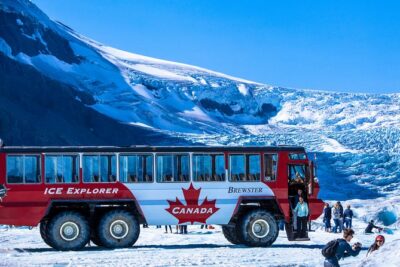
Columbia Icefield Tour with Glacier Skywalk from Banff
The full write-up →
Columbia Icefield, Skywalk, Crowfoot Glacier, and Lakes Tour
The full write-up →
Athabasca Glacier and Columbia Icefield Day Trip
The full write-up →Browse the lists this tour appears in