
Reviewed · WHALE WATCHING
Victoria: 3-Hour Whale Watching Tour
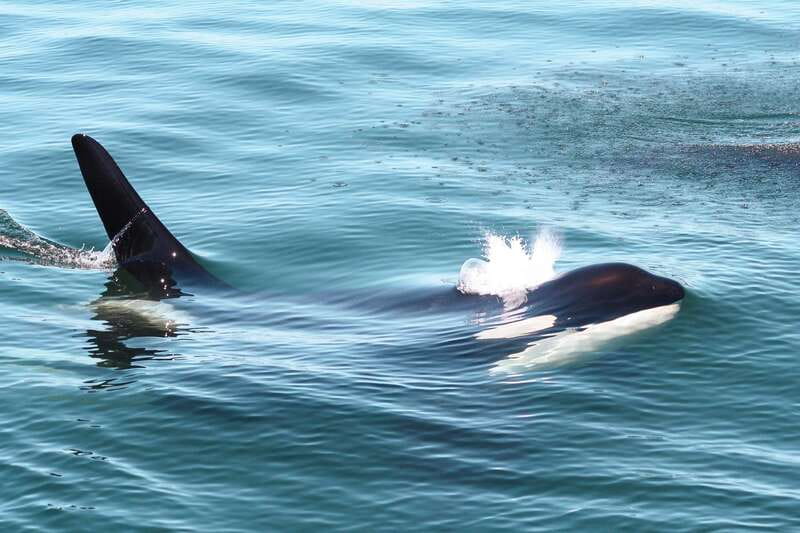
The best part of this Victoria whale-watching trip is the mix of serious wildlife knowledge and a comfortable boat. You may spend the morning watching orcas hunt, a humpback surface, or sea lions raft together, then warm up inside with hot chocolate while the naturalists explain what you just saw. I especially like the 360-degree viewing deck and the fact that individual whales are sometimes recognized by name.
I also like the careful, respectful approach to the animals and the useful extras: hot drinks, a washroom, loaner jackets and pants, and photos taken for you. The main drawback is simple: whales are wild. Some trips see orcas, humpbacks, seals, sea lions, porpoises, and even otters, while another outing may produce only one whale. The boat is also not suitable for wheelchair users.
Key points at a glance
- Marauder IV comfort: A heated indoor cabin, washroom, covered areas, and open decks make this a sensible choice in cool or wet weather.
- 360-degree viewing: You can move around the boat instead of being tied to one forward-facing seat.
- Strong naturalist team: Guides including Katie, Morgan, Heather, Ali, Ian, and Jasper explain animal behavior, local ecology, and coastal history.
- Wildlife variety: Orcas and humpbacks are the stars, but seals, sea lions, porpoises, otters, bald eagles, and marine birds may also appear.
- Free practical extras: Hot drinks, loaner all-weather clothing, and a photo package reduce the need to pack or photograph everything yourself.
- Central Victoria departure: Check in at 1119 Wharf Street, then walk to the boat. Allow extra time for parking in summer.
Why this three-hour boat trip works so well
Whale watching can be a gamble, but the experience is not only about checking off orca or humpback. You are heading into the Salish Sea, a busy marine area with whales, seals, sea lions, porpoises, birds, and working coastal communities. The trip gives you a chance to understand that setting, not just point a camera at a fin.
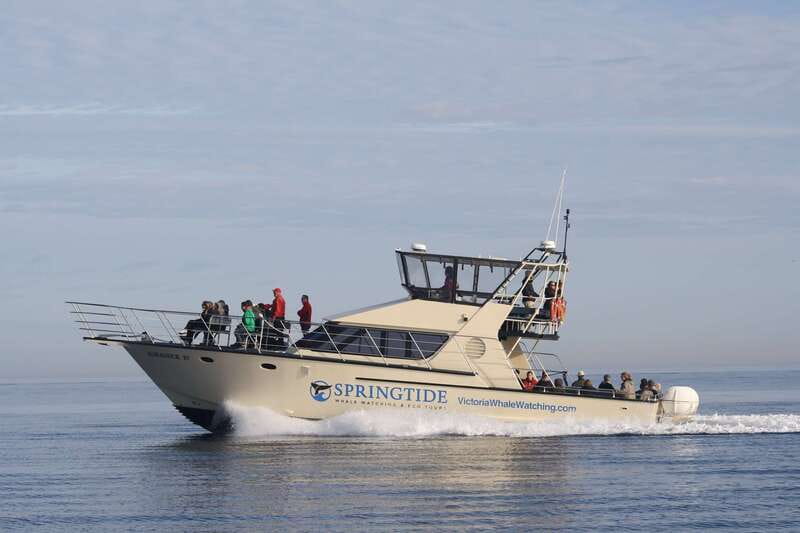
SpringTide Whale Watching uses the Marauder IV, a motor yacht with indoor and outdoor viewing areas. I see that as a good middle ground. You get the open-water feel of a smaller boat, but you are not committed to sitting in spray for three hours. When the wind picks up, you can step into the heated cabin. When the sea calms and wildlife appears, you can head outside and use the walk-around deck.
The trip lasts about three to three and a half hours. That is long enough to travel beyond Victoria Harbour and spend meaningful time looking for animals, but short enough to fit into a busy Victoria day. You should still treat it as a half-day commitment once check-in, walking to the marina, and parking are included.
More Whale Watching Tours in Victoria
- Victoria Half-Day Whale Watching Adventure with Free Photos
★ 5.0 · 2,259 reviews - Victoria Whale and Wildlife Cruise
★ 5.0 · 1,729 reviews - Victoria Zodiac Boat Whale Watching Adventure
★ 5.0 · 916 reviews
Check-in at 1119 Wharf Street
Your day begins at the SpringTide office at 1119 Wharf Street, not at the dock. The office sits at street level between Fort and Yates Streets. Look for the whale sign above the entrance.
Arrive at least 30 minutes before departure. I would not cut this close, especially in summer. Parking near the waterfront can fill quickly, and you may need time to find a lot and walk back to the office. The company has also used phone calls to help with arrival information, clothing, and parking, which is useful if you are unfamiliar with downtown Victoria.
After check-in, staff escort you toward the marina. One practical advantage is that you do not have to work out the waterfront boarding point on your own. The walk is short, but keep your group together and stay alert for the staff member guiding everyone to the boat.
Leaving Victoria Harbour for the Salish Sea
Once aboard, the captain and crew give safety instructions before departure. The first stretch out of the harbour lets you settle into the vessel and choose your preferred viewing spot.
The Marauder IV has several kinds of space:
- An indoor heated cabin for shelter
- Covered viewing areas for cold or rainy conditions
- An outdoor deck with 360-degree views
- Seating throughout the boat
- A washroom
- An onboard sound system
The multiple decks matter more than they may sound on paper. Whale watching is all about timing and sightlines. One person may spot a blow off the port side while another sees a dorsal fin behind the boat. With a walk-around deck, you can move rather than crowd toward one small viewing platform.
The boat is described in the feedback as clean, well maintained, and a comfortable size. It is large enough to offer seating and shelter, but not so large that the crew feels distant. You may find that the back of the boat feels steadier, an especially useful tip if you are prone to motion sickness. A passenger who had serious sea-sickness concerns found a later zodiac trip comfortable, but this particular experience is on the Marauder IV, so the larger covered yacht is the relevant option here.
How the naturalists turn sightings into a lesson
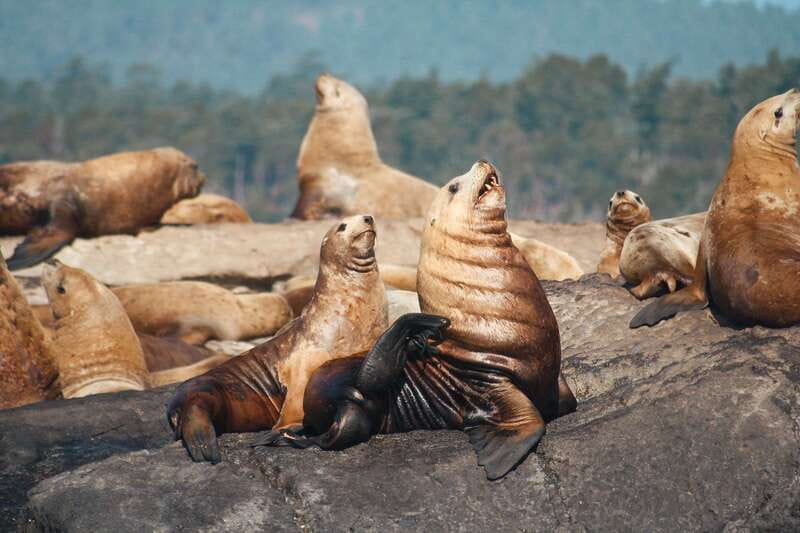
The crew is one of the strongest parts of this outing. Naturalists explain the whales you see, but they also cover the Salish Sea, marine mammals, birds, and the history of British Columbia’s rocky coast.
That broader talk gives each sighting more meaning. If an orca surfaces, you may learn about pod behavior, feeding, family groups, or the way local crews identify individual whales. If a humpback appears, the guide can put its size and behavior into context. The crew has been able to recognize whales by name, and guides such as Katie, Morgan, Heather, Ali, Ian, and Jasper have been singled out for clear, lively presentations.
The team also works together. The captain handles the boat and positioning, while the naturalists scan the water and keep the group informed. This is important because wildlife can appear in more than one direction. A good crew helps you understand what happened instead of leaving you to guess at a distant splash.
One small caution: sound quality can vary by location. A passenger sitting toward the back found some commentary hard to hear when the microphone was not being used. If the naturalist’s explanation matters to you, stand or sit where you can hear the onboard sound system clearly, and ask questions when the boat is quieter.
Same trip, a completely different kind of day out:
- Victoria & Butchart Gardens Tour with Ferry from Vancouver
★ 4.5 · 2,703 reviews - Victoria and Butchart Gardens Day Trip from Vancouver
★ 4.5 · 2,242 reviews - Victoria Guided Food and History Tour
★ 5.0 · 2,015 reviews - Vancouver: Victoria, Gulf Islands Cruise, & Butchart Gardens
★ 4.7 · 1,165 reviews
The main search: orcas and humpback whales
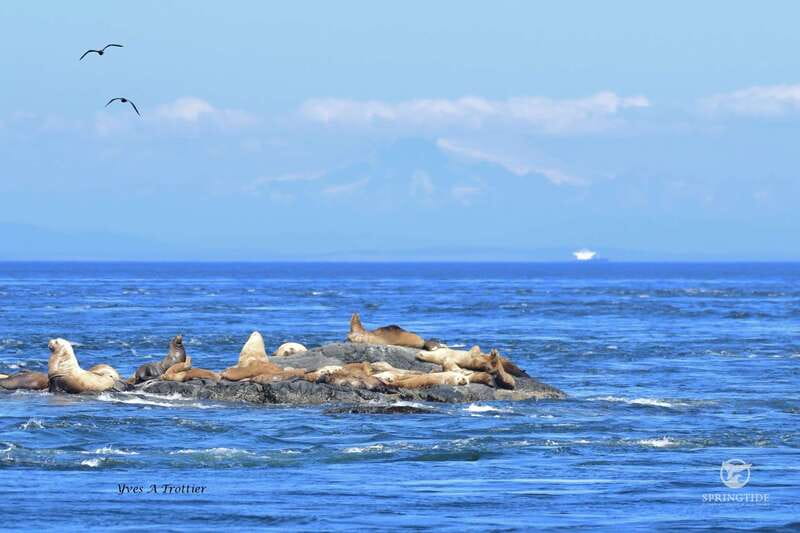
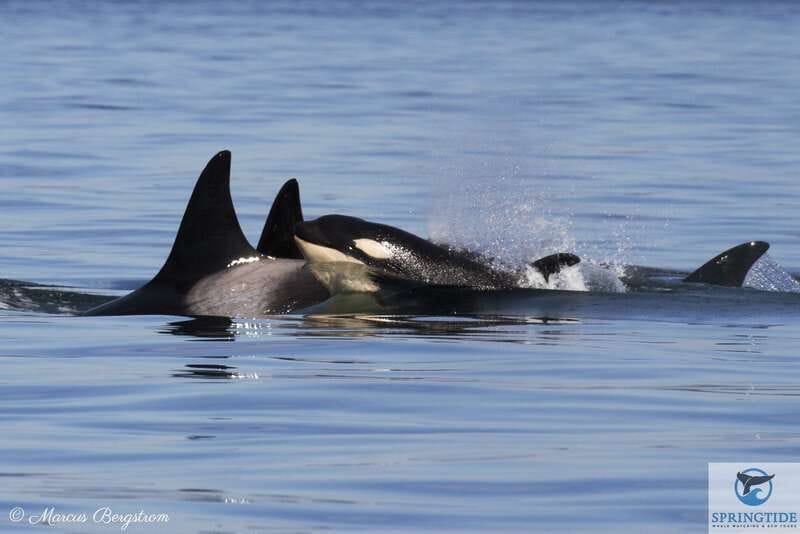
The central goal is to find orcas and humpback whales. Sightings reported on different outings have included single humpbacks, several whales in one area, family groups, and more than one orca pod. One especially strong outing included two pods of orcas and a young humpback. Another produced more than 20 humpbacks. Those are memorable possibilities, not promises.
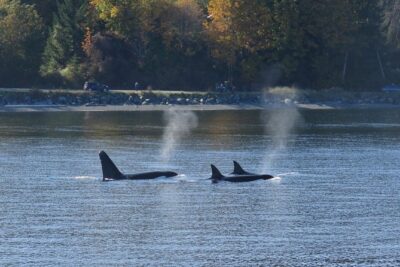
Orcas can be thrilling because their movement is quick and social. You might see a dorsal fin, a traveling group, or feeding behavior before the animals disappear again. The naturalists explain what is happening and help identify individual whales when possible. That turns a brief sighting into something more personal and informative.
Humpbacks often offer a different kind of viewing. Their larger bodies can surface more slowly, and you may have time to watch repeated blows, tail movements, or a mother and calf. A humpback remained near the boat for about an hour on one outing, while other trips saw several whales spread across the same area.
The crew’s job is to look for wildlife without treating the animals like a show. The strongest accounts describe a calm approach and respect for the whales. That is worth considering when you compare operators. Good whale watching depends on patience and restraint, not simply getting as close as possible.
Seals, sea lions, otters, birds, and surprise sightings
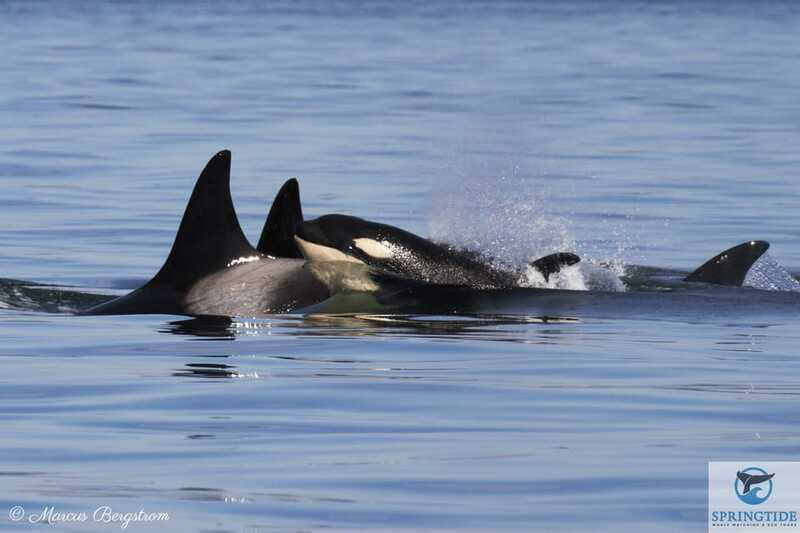
You should not measure the trip only by orca count. The Salish Sea supports a broad mix of life, and the crew keeps watch for smaller or less expected animals.
Possible sightings include:
- Harbour seals
- Sea lions
- Porpoises
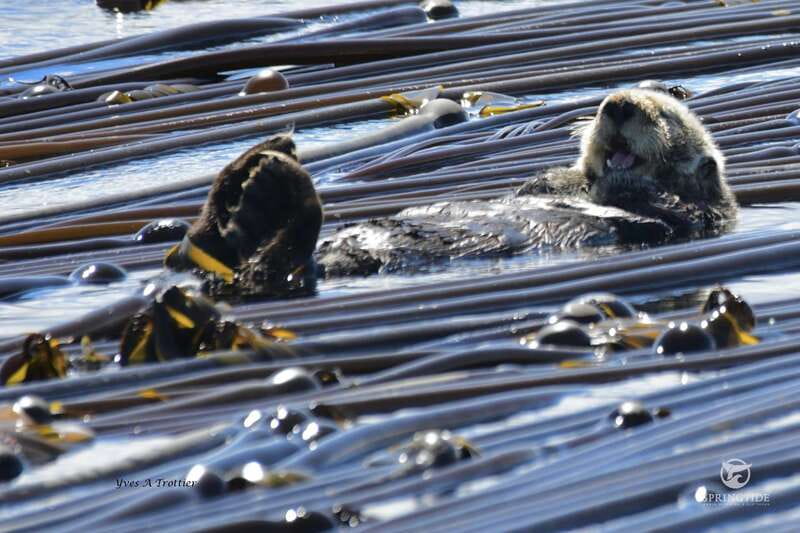
- Sea otters
- Bald eagles
- Marine birds
- Grey whales
- A bear on shore
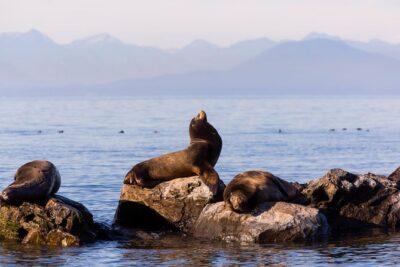
Sea lions can be a highlight in their own right, with their size, noise, and habit of gathering in groups. Seals may appear closer to shore or in calmer water. Otters are harder to predict, but individual animals have been spotted on the route, including an otter known as Ollie.
Bird life also adds interest when whales are scarce. Trips have included bald eagles, juvenile eagles, and large groups of seabirds. One outing produced a grey whale, another a bear on land. These sightings are not guaranteed, but they show why you should keep scanning after the first whale has disappeared.
Staying warm on the open water
Victoria may feel mild at the dock, yet the water can be cold once the boat leaves the harbour. Bring warm layers, long trousers, and closed-toe shoes. A hat is a smart addition, too.
SpringTide provides hot drinks and has all-weather jackets and pants available. Hot chocolate and coffee can make a real difference after a windy stretch outside. The covered sections also help keep rain off, though you should still dress for conditions rather than assume the cabin will solve everything.
I would use the boat this way: start outside if the weather is comfortable, move inside when you get cold, then return to the deck when wildlife is spotted. You do not need to spend the full three hours in one place. The ability to change position is part of the value of this boat.
The photo package is more useful than it sounds
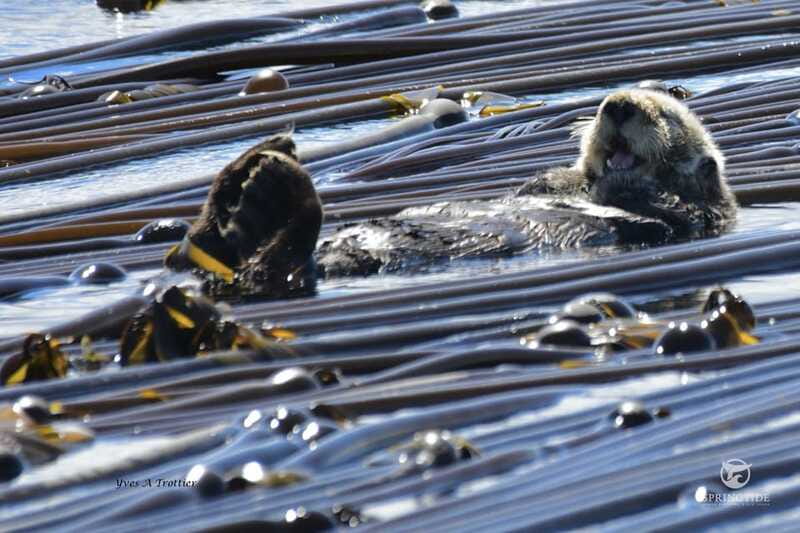
The crew provides a photo package, which means you can spend less time trying to hold a camera steady while watching the water. This is a real benefit. Whale photography is difficult even in calm conditions, and a phone often captures an empty patch of sea just after the animal surfaces.
The crew has taken photos during the trip and made them available to participants at no extra charge. You can still take your own pictures, but you are free to watch the animals instead of treating the entire outing like a camera assignment.
Do not expect every image to be a perfect close-up. Whales move, weather changes, and ethical viewing keeps a proper distance. The photo package works best as a record of the day, while your own memories come from being ready when the animal appears.
Is $123 a fair price?
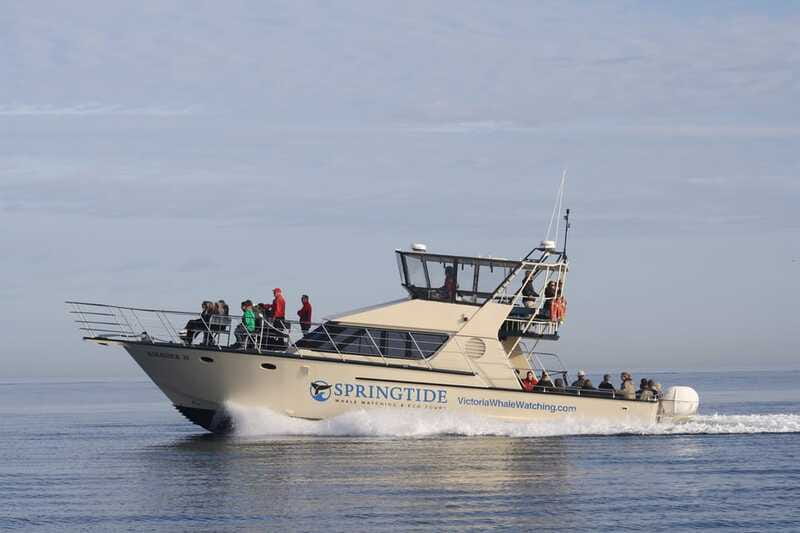
At $123 per person, this is not Victoria’s cheapest way to spend a morning. The price makes more sense when you add up what is included: about three hours on the water, trained naturalists, a heated cabin, washroom, hot beverages, loaner weather gear, an onboard sound system, and a photo package.
You are also paying for the crew’s local experience. Finding whales is not as simple as driving to a fixed attraction. The captain and naturalists must read reports, scan open water, communicate, and make decisions while conditions change. Several outings have included both orcas and humpbacks, but no operator can guarantee that result.
I would consider the price good value if seeing wildlife is a major reason for your Victoria visit and you want comfort as well as time on the water. It is less appealing if you only want a quick scenic cruise or if your budget is very tight. A no-whale day can still include seals, birds, sea lions, or a pleasant boat ride, but you should be emotionally prepared for uncertainty.
You can cancel up to 24 hours before departure for a full refund, and the reserve-now, pay-later option helps if your schedule is still shifting.
Who should book this tour?
This trip suits first-time whale watchers, families, couples, solo visitors, and anyone who wants more shelter than an open zodiac provides. The crew has handled children of different ages with clear safety instructions, and the indoor cabin gives families a place to warm up.
It is also a good choice for people who care about learning. The naturalists explain the animals and the coast instead of simply announcing a sighting. You will get more from the trip if you ask questions and keep watching between major sightings.
This is not suitable for wheelchair users. If you have serious mobility concerns, confirm the current boarding arrangements before paying. If you are prone to motion sickness, the covered yacht and access to a steadier rear area may help, but bring whatever personal remedy you normally use.
My call: book it if wildlife and comfort both matter
I would book the SpringTide tour if you want a well-equipped boat, strong naturalist commentary, and a fair chance to see more than one type of marine animal. The crew’s passion, the 360-degree deck, and the option to warm up inside make three hours on the Salish Sea easier to enjoy.
Book with realistic expectations. Orcas may appear, or you may spend more time with humpbacks, seals, birds, and sea lions. That uncertainty is part of wild whale watching. For a central Victoria departure and a boat that protects you from much of the cold and rain, the $123 price is reasonable, especially when the free photos and hot drinks are included.
FAQ
Where do I check in for the whale-watching tour?
Check in at the SpringTide office at 1119 Wharf Street, between Fort and Yates Streets. Do not go directly to the dock. Look for the whale sign above the street-level entrance.
How early should I arrive?
Arrive at least 30 minutes before departure. Allow extra time to find parking, especially during the busy summer months.
How long does the tour last?
The tour lasts about three hours, with the actual time on the water sometimes running between three and three and a half hours.
What wildlife might I see?
The main targets are orcas and humpback whales. You may also see seals, sea lions, porpoises, sea otters, marine birds, bald eagles, grey whales, or a bear on shore.
What should I wear and bring?
Bring warm clothing and closed-toe shoes. Long trousers, several layers, a hat, and weather protection are sensible choices. All-weather jackets and pants are available on board.
Is the boat wheelchair accessible?
The activity is not suitable for wheelchair users. Contact the provider before booking if you have specific mobility questions.
More 3-Hour Experiences in Victoria
- Victoria: 3-Hour Zodiac Whale-Watching Tour
★ 4.6 · 651 reviews - Victoria, BC: 3-Hour Ultimate Whale & Marine Wildlife Tour
★ 4.6 · 191 reviews - Victoria City Highlights 3 Hour Walking Tour | Grauity-Based
★ 4.5 · 169 reviews - Victoria City Highlights 3 Hour Bike Tour, eBike Upgrade Avail.
★ 5.0 · 129 reviews
Just added around Victoria
- Royal B.C. Museum in Victoria: Full-Day Admission Ticket★ 4.3 · 17 reviews
- Victoria: City Highlights and Butchart Gardens Tour★ 4.6 · 148 reviews
- Pickle Pub Crawl: Ferry Rides and Appetizers★ 4.7 · 52 reviews
- Iconic & Obscure Victoria Walking Tour★ 4.7 · 44 reviews
- From Victoria: Whale Watching Marine Wildlife Excursion★ 4.7 · 19 reviews
- From Vancouver: Full-Day Victoria Tour with Ferry Ticket★ 4.4 · 36 reviews
- Day Trip from Vancouver to Victoria and Butchart Gardens★ 4.6 · 10 reviews
- Brentwood Bay: Bioluminescence Tour★ 4.8 · 20 reviews
Whale Watching, compared.
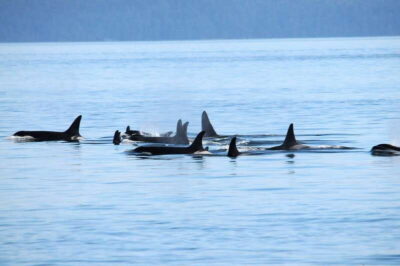
Vancouver Half-Day Whale Watching Adventure with Free Photos
The full write-up →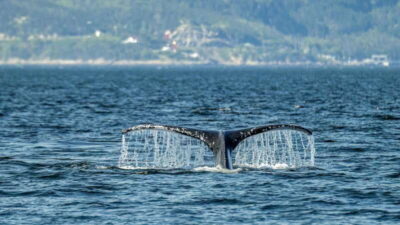
Tadoussac/Charlevoix: Whale Watching Zodiac Tour
The full write-up →Vancouver: Covered Whale Watching Adventure with Free Photos
The full write-up →
Victoria Half-Day Whale Watching Adventure with Free Photos
The full write-up →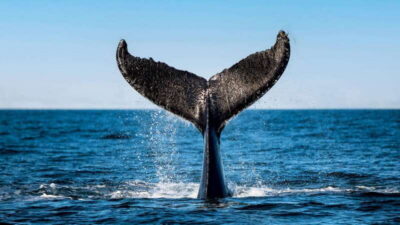
Tadoussac/Charlevoix: 3-Hour Whale Watching Boat Tour
The full write-up →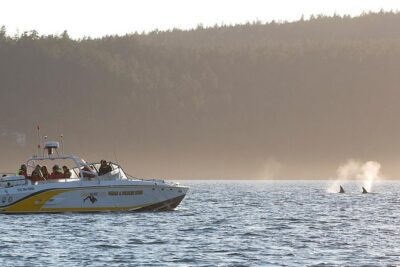
Victoria Zodiac Boat Whale Watching Adventure
The full write-up →Browse the lists this tour appears in