
Reviewed · MUSEUMS
Museum of Illusions Admission in Toronto
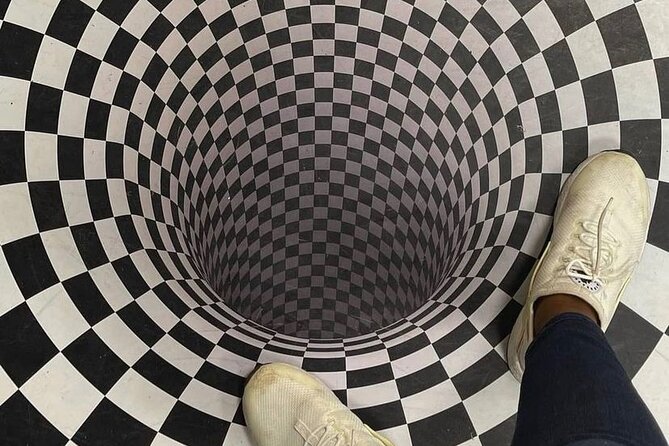
The best part of the Museum of Illusions Toronto is its hands-on mix of optical tricks, puzzle stations, and photo rooms. You can walk through a vortex tunnel, test your balance in a tilted room, study holograms, and take pictures that make ordinary scenes look impossible. I like the freedom of a self-guided visit, and I like that helpful staff may explain the displays or take photos for you. The main catch is value: at $26.23 per person, the compact museum can feel expensive if you finish in half an hour.
I’d plan this as a light, playful stop rather than a full museum outing. Go with a friend or family member if you want the best pictures and someone to tackle the puzzles with you. Crowding can change the whole mood, so a packed time slot may mean waiting, bumping into others, and getting less time at each exhibit.
Quick points to know
- Expect a compact, interactive visit: Most people spend about 30 minutes to an hour, while puzzle fans may stay closer to two hours.
- Bring a photo partner: Many displays work best when someone else takes the picture.
- Try the tilted room and vortex tunnel: These are among the most memorable physical illusions.
- Save time for the wooden puzzles: They can add real substance if you enjoy solving rather than posing.
- Staff can improve the visit: Employees may explain the exhibits and help with photos, with particularly warm praise for staff member Pragya.
- Watch the crowd level: Busy periods can make the small space feel chaotic and limit your time at popular displays.
What the Toronto Museum of Illusions is really like

This is not a traditional museum filled with quiet cases and long labels. It is a compact play space where you test your eyes, balance, sense of scale, and assumptions about what you are seeing.
The attraction combines entertainment with simple lessons about perception. You will find written directions and explanations beside many displays, so read the signs before jumping in. One useful tip is easy to miss: the instructions tell you how to stand, where to look, or how to set up a photo. If you skip them, an exhibit may seem less impressive than it really is.
You move through the museum on your own. There is no required group tour or fixed guide leading everyone from room to room. That keeps the pace flexible, but it also means you need to take some responsibility for getting the most from each display.
The staff can help. Several employees have been praised for being friendly, taking photos, and explaining how the exhibits work. One particularly strong staff experience came from Pragya, who was described as clear, professional, and helpful throughout the visit. That kind of assistance matters here because a well-framed photo or a quick explanation can turn a basic display into a memorable one.
More Museum Tours in Toronto
- Toronto: Royal Ontario Museum Admission Ticket
★ 4.6 · 1,237 reviews - Royal Ontario Museum Admission
★ 4.5 · 411 reviews - Toronto: Art Gallery of Ontario General Admission Ticket
★ 4.6 · 251 reviews
Start at 132 Front Street East
The museum is at 132 Front St E in downtown Toronto, near public transportation. The meeting point is simple: go directly to the Museum of Illusions Toronto and show your admission ticket.
Your confirmation arrives when you book, and advance reservations make sense because this is a popular attraction. The ticket gives you access to all exhibits. Food and drinks are not included, so treat this as one stop in a larger downtown day rather than a place to spend several hours with refreshments.
The attraction is listed as a private activity for your group, but the exhibits themselves can still feel crowded when many ticket holders arrive at the same time. That distinction is worth understanding. You may book your admission in advance, yet still share the museum floor with other groups during your visit.
Children must be accompanied by an adult. Most people can participate, but the experience asks you to stand, move through displays, pose for pictures, and interact with hands-on puzzles. If someone in your group prefers a slower, quieter museum, this may not be the right fit.
The first rooms: optical tricks and photo setups

The opening part of the museum gives you a quick sense of its purpose. You are not simply looking at illusions from behind a barrier. You are expected to step into them, stand in a certain place, solve a small challenge, or use a camera to record the effect.
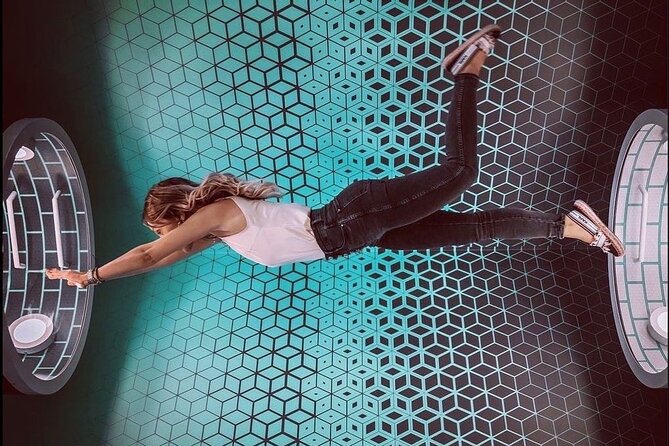
The upside-down displays are a dependable hit for family photos. They create the illusion that you are standing on a ceiling or hanging in an impossible room. The result depends on camera angle, so take a moment to read the directions and frame the shot carefully.
The tilted room is another popular stop. The room changes your sense of balance and makes a simple photograph look wonderfully wrong. It is one of the better examples of how the museum turns a basic physical setup into an experience that works for both children and adults.
You may also encounter photo scenes such as a train station setup and the DJ illusion board. These are not deep historical exhibits, but they give you something active to do. If you enjoy taking playful pictures with family or friends, these displays carry more value than they would for someone who prefers traditional museum objects.
The main drawback is space. When several people want the same photo, you may need to wait. In a crowded session, people can bunch up around the most popular displays, making the visit feel less relaxed.
Vortex tunnels, infinity rooms, and holograms
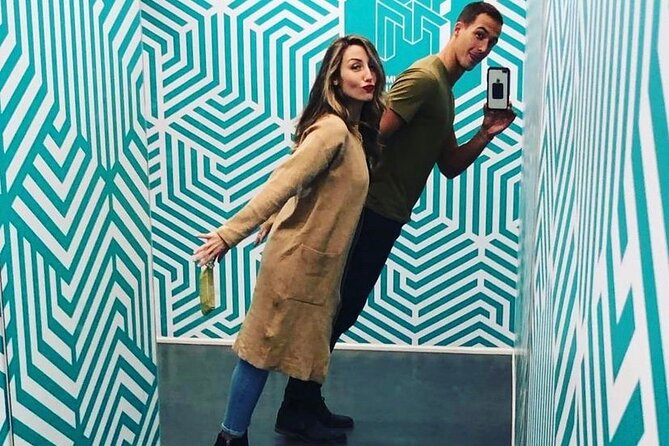
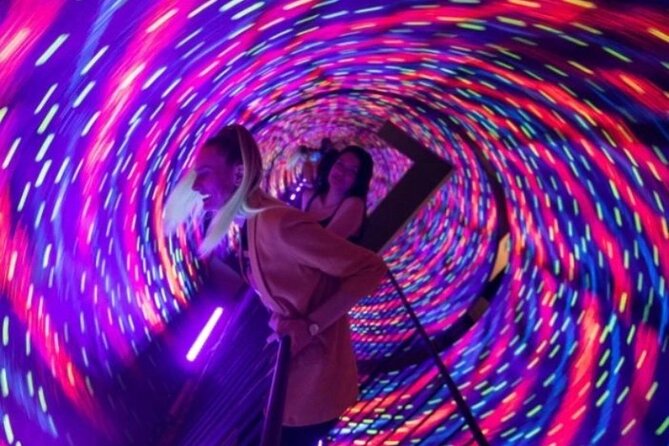
The museum’s more physical illusions are often the most memorable. The vortex tunnel gives you the sensation that the floor and walls are moving, even though the structure itself is fixed. It is a quick experience, but it creates a strong visual effect and makes a good group photo.
The infinity room uses mirrors and repeated reflections to make the space appear much larger than it is. It is one of the rooms that can make the museum feel more inventive than its modest size suggests. You will want to pause here rather than rush through, especially if you are trying to take a clear picture.
Holograms add a different kind of trick. Instead of asking you to move through a room, they challenge how you interpret an image. These displays reward patience. Look from more than one angle and give your eyes a moment to adjust.
The museum also includes a subway-themed illusion and other visual setups. The exact appeal varies by person. Someone who loves taking pictures may spend time finding the best pose, while someone focused on the mechanics may move quickly to the puzzles.
Same trip, a completely different kind of day out:
- Toronto: Casa Loma Entry Ticket
★ 4.7 · 2,705 reviews - Toronto: Harbor and Islands Sightseeing Cruise
★ 4.7 · 2,566 reviews - Toronto: City Sightseeing Hop-On Hop-Off Bus Tour
★ 4.3 · 2,544 reviews - Toronto: Ripley’s Aquarium of Canada Entry Ticket
★ 4.7 · 1,748 reviews
Wooden puzzles for people who prefer doing to posing
The wooden puzzles are important because they broaden the experience beyond selfies. They give you a chance to work with your hands, test a solution, and compete with the person beside you.
This is where visiting with another person helps most. You can compare approaches, trade ideas, and return to a puzzle after seeing the rest of the museum. A solo visitor can still enjoy the challenge, but the social side is weaker, and some photo setups become awkward without a partner.
Puzzle fans may stretch the visit well past the usual hour. That is one way to improve the value of the admission price. If you simply walk from room to room and take a few pictures, you might finish in 15 to 40 minutes. If you read the signs, attempt the puzzles, repeat your favorite illusions, and wait for photos, you can spend much longer.
I would not book this expecting a large collection of brain games. The venue is small, and several displays are designed for a quick interaction. But the puzzles can make the experience feel less like a short photo stop and more like a shared activity.
How long should you plan to stay?
The official estimate is about one hour, and that is a sensible starting point. For many people, the first pass takes 30 to 60 minutes.
Your actual time depends on three things:
- Crowds: Waiting for a popular display slows the visit, though it may also make the experience frustrating.
- Photography: A group taking several poses at each station will stay longer.
- Puzzles: Reading directions and working through the wooden challenges can add substantial time.
Some people may finish in about 15 minutes, especially if they do not stop for puzzles or photos. Others may stay for up to two hours by returning to favorite exhibits and taking their time.
That range explains the mixed reaction to the price. At $26.23, the admission is easier to justify if you treat the museum as an interactive activity and use all the displays. It is harder to justify if you want a long, detailed museum visit with a large number of rooms.
I would allow one hour on your schedule, with flexibility to stay longer if your group enjoys the puzzles. Do not build an entire afternoon around it unless you already know your family or friends like this sort of activity.
Why visiting with someone makes a difference
I would not choose this as a solo outing unless you are comfortable asking staff or other people to take pictures. One solo visitor had an excellent experience because an employee walked through the museum, explained the rooms, and took photos. That is a real benefit, but it may depend on how busy the staff are.
With two or more people, the museum becomes more playful. You can photograph one another in the upside-down room, compare reactions in the tilted room, and solve puzzles together. The exhibits are built for interaction, and the social element is a large part of the value.
Families should note that children often get more from the visit than adults who are not interested in posing. A six-year-old may enjoy the visual tricks, but the venue is not a large children’s discovery center. If your child wants space to run, many games, or a long hands-on session, the museum may feel too limited.
Adults can enjoy it too, particularly if they like unusual photos, visual puzzles, or simple science about perception. I would set the right expectation: this is cheerful, quick entertainment, not a serious study of optical science.
Crowds can change the experience
The museum’s small footprint is its biggest practical weakness. When attendance is light, you can move at your own pace, retake photos, and return to a favorite display. When it is busy, the same rooms can feel tight.
A heavily crowded time may lead to queues at individual illusions, people bumping into one another, and children taking over displays while adults wait. Limited ventilation can also become uncomfortable when the space is full.
Staff friendliness helps, but employees cannot make a small room larger. If you arrive during a crowded period, focus on the less popular puzzles first and return to the major photo rooms later. Read the signs while you wait so you are ready when it is your turn.
The museum may also allow a little extra time in some situations, but you should not count on that. Your ticket is for a set admission experience, and the safest plan is to use your scheduled time efficiently.
Is $26.23 a fair price?
The price is reasonable only if your group uses the museum actively. The ticket includes access to all exhibits, but no food or drinks, and the venue does not provide a long guided program.
I see three ways to judge the value:
Good value: You visit with family or friends, take plenty of pictures, work through the wooden puzzles, and spend around an hour or more.
Questionable value: You walk through quickly, skip the puzzles, and finish in 20 to 30 minutes.
Poor value: You dislike photo-based activities, expect a large museum, or arrive when crowds prevent you from trying the displays properly.
Advance booking is useful because the attraction is popular, but it does not remove the risk of a crowded session. The ticket is non-refundable and cannot be changed after purchase, so make sure your group is committed before paying.
Who should book this Toronto attraction?
I would recommend it most strongly to:
- Families with children who enjoy visual tricks and hands-on activities
- Couples or friends who want unusual photos
- Puzzle fans who will spend time with the wooden challenges
- Visitors looking for a short indoor activity near downtown
- People who enjoy playful science and perception experiments
I would be more cautious if you are visiting alone, unless you are comfortable asking for photo help. I would also hesitate if your main goal is a large museum with many rooms or a long educational program.
The best visit comes from treating the museum as a shared game. Read the instructions, let staff help, take your time with the puzzles, and do not rush past the rooms simply because the venue is small.
Should you book the Museum of Illusions Toronto?
Book it if you want a compact, cheerful activity where you can take strange photos, challenge your sense of balance, and laugh with the people beside you. The tilted room, vortex tunnel, infinity room, holograms, and puzzles give the visit enough variety for a fun hour.
Skip it if $26.23 feels high for a short stop, or if you prefer museums with extensive collections and more serious interpretation. If you do book, go with at least one other person, read every sign, and budget enough time to revisit the displays you like. That is the best way to turn a small attraction into a worthwhile Toronto memory.
FAQ
Where is the Museum of Illusions Toronto?
It is located at 132 Front St E, Toronto, Ontario, M5A 1E2, Canada. The museum is near public transportation.
How long does the visit take?
The estimated duration is about one hour. Some people finish in 15 to 40 minutes, while visitors who enjoy the puzzles, photos, and repeat visits to favorite displays may stay longer.
What does the admission ticket include?
Your ticket includes access to all the exhibits at the Museum of Illusions Toronto. Food and drinks are not included.
Is this activity suitable for children?
Yes, children can participate, but every child must be accompanied by an adult. The displays appeal especially to children who enjoy optical tricks, puzzles, and taking pictures.
Can I visit the museum alone?
Yes, you can visit alone, but many displays are more enjoyable with someone who can take photos. Staff may be able to help with pictures and explain the exhibits.
Can I cancel or change my booking?
No. The experience is non-refundable and cannot be changed for any reason. A cancellation or amendment request does not result in a refund.
Just added around Toronto
- Toronto: Craft Brewery Tour★ 5.0 · 8 reviews
- Toronto Waterfront and Islands Guided Bicycle Tour★ 4.9 · 80 reviews
- Toronto: Toronto Raptors NBA Game Ticket at Scotiabank Arena★ 4.6 · 88 reviews
- Toronto: Must Do NonTouristy Street Art Tour by local Artist★ 4.9 · 30 reviews
- Toronto: Toronto Zoo Entry Ticket★ 4.1 · 68 reviews
- Toronto: Short Distillery District Segway Tour★ 4.8 · 55 reviews
- Toronto: Toronto Maple Leafs Game Ticket at Scotiabank Arena★ 4.6 · 43 reviews
- Toronto Highlights Walking Tour with Tower Entry★ 4.8 · 53 reviews
Museums, compared.
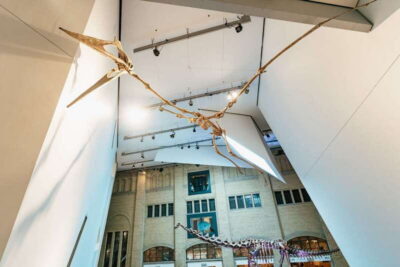
Toronto: Royal Ontario Museum Admission Ticket
The full write-up →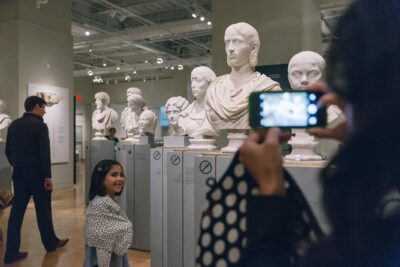
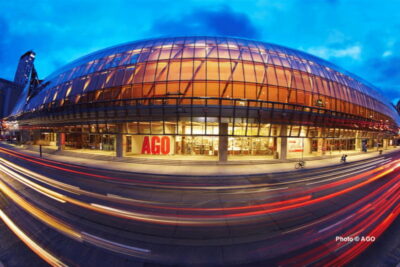
Toronto: Art Gallery of Ontario General Admission Ticket
The full write-up →

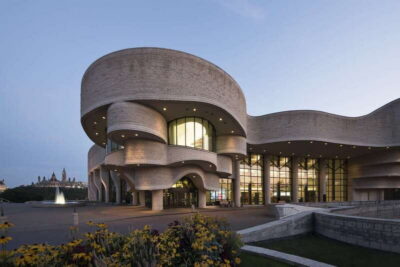
Gatineau: Canadian Museum of History Admission
The full write-up →
Browse the lists this tour appears in