
Reviewed · CITY TOURS
Underground city & Downtown. Great way to stay warm!
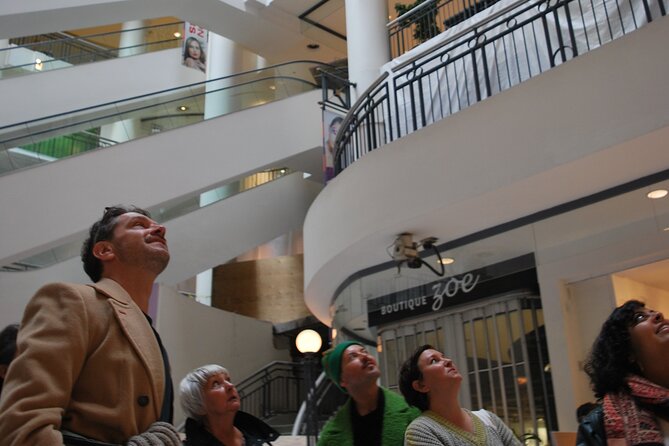
Montreal’s Underground City is not one vast secret cavern. It is a working network of malls, walkways, metro stations, offices, hotels, and public spaces tucked beneath and between downtown buildings. This tour helps you understand how the pieces fit together, then brings you back above ground for Montreal’s architecture, culture, and city life.
I like two things right away: the warm indoor route is practical in winter, and the small group of no more than 10 people gives guide Thom room to answer questions. The tour also includes a 24-hour metro pass and a gift card, according to the tour details shared with participants, which adds useful value beyond the two-hour walk.
The main drawback is the physical demand. You’ll cover plenty of ground, use escalators, and encounter stairs. This is not recommended for people using walkers, crutches, or canes, and it is not designed for people with limited mobility.
Key points to know before booking
- A warm introduction to Montreal: Much of the route takes place indoors, making it useful during cold or snowy weather.
- Thom brings the city to life: His style combines local history, architecture, French Canadian culture, and practical advice.
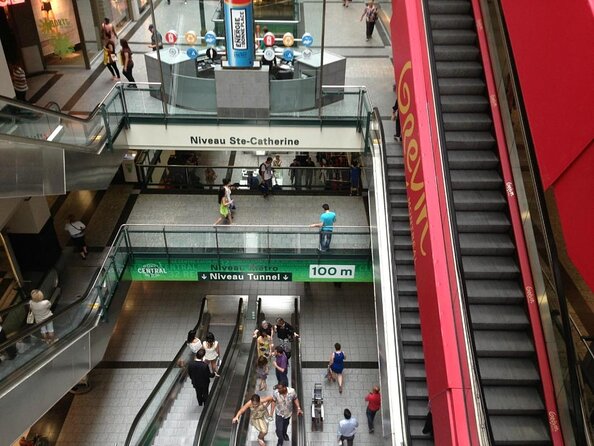
- The Underground City is a network, not a single attraction: You’ll learn how tunnels, malls, metro stations, and public spaces connect.
- A strong first-day tour: The route helps you get your bearings before exploring Montreal on your own.
- Several major districts in two hours: The walk touches Place Ville-Marie, Place des Arts, Chinatown, the Financial District, and the World Trade Centre.
- Expect stairs and escalators: Comfortable walking shoes and reasonable mobility are important.
Why Montreal’s Underground City deserves a closer look
Montreal’s underground network is easy to misunderstand. The name suggests a hidden city far below the streets, but the reality is more useful and more interesting. The network links office towers, shopping areas, metro stations, hotels, restaurants, museums, and public spaces. Some sections are below ground, while others pass through indoor buildings or connect at street level.
That distinction matters. Without a guide, you might walk through a shopping centre and never realize you have entered one of the main arteries of the network. Thom explains how the system developed and why it works in a city known for harsh winters.
I like this approach because the tour treats the Underground City as part of daily Montreal life, not as a novelty. You learn how local people use it to move around, stay warm, shop, work, and reach transit. By the end, the tunnels should feel less like a maze and more like a practical second street system.
The route begins at 1000 Rue de la Gauchetière Ouest at 10:30 a.m. It ends at the Montreal World Trade Centre, at 747 Rue du Square-Victoria. That final location is handy for continuing into Old Montreal, Chinatown, downtown, or nearby restaurants.
More City Tours in Montreal
- Montreal City Sightseeing Tour with Live Commentary
★ 4.0 · 1,953 reviews - Old Montreal: Traditional Ghost Walk of the Haunted City
★ 4.7 · 746 reviews - 3 Hour Montreal City Bike Tour with Wine or Beer (AM & PM)
★ 5.0 · 332 reviews
Starting with The Ring and downtown’s modern face
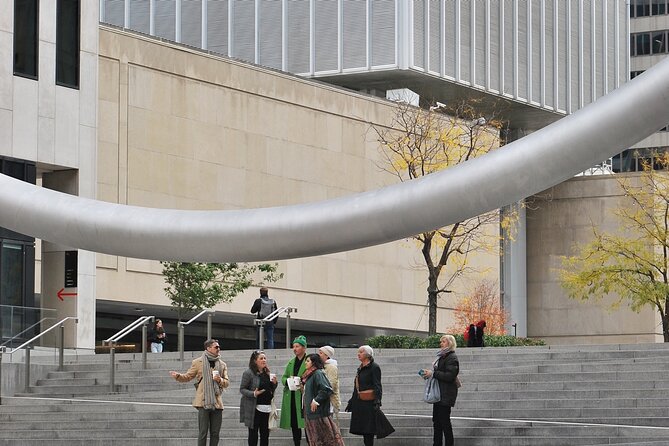
The first stop is The Ring, a large modern installation that has become a popular picture spot. You get about five minutes here, enough for photographs and a quick introduction to the newer visual identity of downtown Montreal.
This is a short stop, but it sets the tone. Montreal is not only about old churches, stone streets, and French colonial history. The city also enjoys bold public art and modern design. The Ring gives you an immediate example of that newer side.
Do not expect a long art lecture at this point. The value is the quick orientation and the chance to take a memorable photo before the group moves into the main subject of the tour.
Finding your way through the Underground City
The Underground City portion takes about 45 minutes, making it the central part of the experience. Thom leads you through tunnels, pathways, and metro links while explaining how the system was built and how to use it.
You’ll see why Montreal’s network has inspired similar projects in other cities. The system is extensive because it connects major downtown destinations rather than functioning as one isolated pedestrian tunnel. Its usefulness becomes clear when you think of it as a connected indoor route through the centre of town.
This is also where the tour earns its keep for first-time visitors. Montreal’s downtown can be confusing when several buildings offer different entrances to the same connected network. A guide can point out the signs, links, and landmarks that help you retrace the route later.
I would pay close attention to the metro information. Several people who took this tour used their 24-hour metro pass afterward to continue exploring independently. That turns the tour into both an introduction and a short lesson in getting around.
The practical lesson is simple: remember landmarks, not just tunnel names. Place Ville-Marie, Place des Arts, and the World Trade Centre become useful reference points as you move through the system.
Place Ville-Marie, the network’s architectural heart
Place Ville-Marie receives about 10 minutes. This is one of the most important stops because it helps explain the relationship between Montreal’s skyline and its underground routes.
The building is a major example of mid-century modern architecture, designed by I. M. Pei. It also sits at the heart of downtown’s underground connections. Here, you can better understand how a modern office complex helped shape the network below.
The stop is not about entering every building or spending time in a museum. It is about seeing how architecture, commerce, and transportation overlap. Montreal’s Underground City exists because large downtown structures were planned as connected parts of a broader urban system.
If you enjoy architecture, this part will likely be one of the highlights. If modern office buildings are not your main interest, Thom’s historical context helps make the stop more than a quick look at a tower.
Same trip, a completely different kind of day out:
- Montreal: Guided Bus Tour
★ 4.4 · 3,064 reviews - Montreal: Hop-On Hop-Off Double-Decker Bus Tour
★ 4.1 · 2,760 reviews - Montreal Mile End Authentic Food Tour with 7 Delicacies Tastings
★ 5.0 · 2,598 reviews - The Original Old Montréal Walking Tour by Guidatour
★ 4.5 · 2,217 reviews
A 15-minute tour of Montreal’s downtown districts
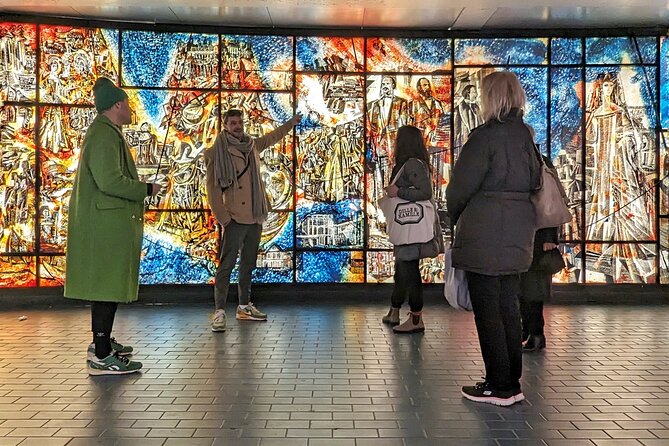
The downtown section gives you a quick look at several distinct areas. You’ll hear about the Quartier des spectacles, Chinatown, the International Quarter, the Financial District, and the Golden Square Mile.
That list may sound ambitious for 15 minutes, and it is. You will not explore each district in depth. Instead, you get a useful map of how the centre fits together and what deserves more of your time later.
The Quartier des spectacles is tied to festivals, performances, and public events. Place des Arts, the next stop, helps give this cultural district a physical anchor. Chinatown offers a different feel, while the International Quarter and Financial District show Montreal’s business side.
The Golden Square Mile adds another layer, with grand architecture and a link to the city’s older wealth. Along the way, Thom points out how neo-Gothic cathedrals, modern towers, shopping streets, universities, museums, and hockey arenas share the same downtown.
That range is one of the tour’s strengths. You are not shown only the postcard version of Montreal. You get a compact look at the city’s working centre, entertainment areas, commercial streets, and cultural institutions.
Still, keep your expectations realistic. This is an overview, not a detailed walking tour of every neighbourhood. If you want extended time in Chinatown, the Golden Square Mile, or the Quartier des spectacles, save those areas for later in your visit.
Place des Arts and Montreal’s cultural pulse
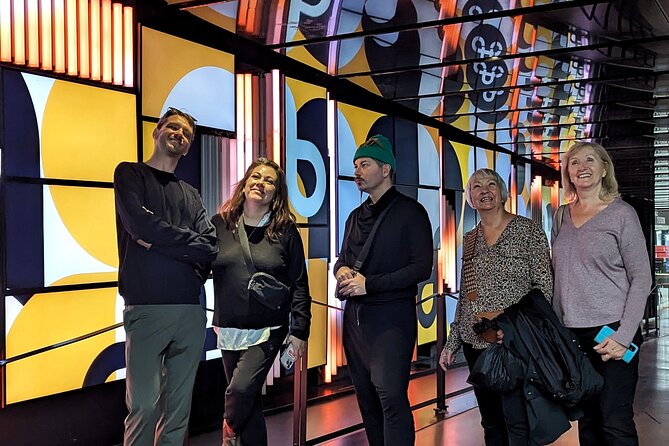
Place des Arts gets about 10 minutes. This modern performing arts centre is home to Les Grands Ballets Canadiens, the Opéra de Montréal, and the Orchestre Symphonique de Montréal.
The stop works well because it links the buildings you are seeing with Montreal’s performing arts life. You learn that the downtown core is not simply a place for offices and shopping. It is also a major stage for music, dance, opera, festivals, and public events.
The brief visit is enough to orient you, but not enough for a performance or a full look around. If you want to attend a show, this is a good place to note the location and return later.
The tour also explains why so much public art appears around Montreal. One participant found the connection between the city’s history, French Canadian culture, and its public art especially useful. That broader context helps individual buildings and installations make more sense.
The Montreal World Trade Centre and the Berlin Wall fragment
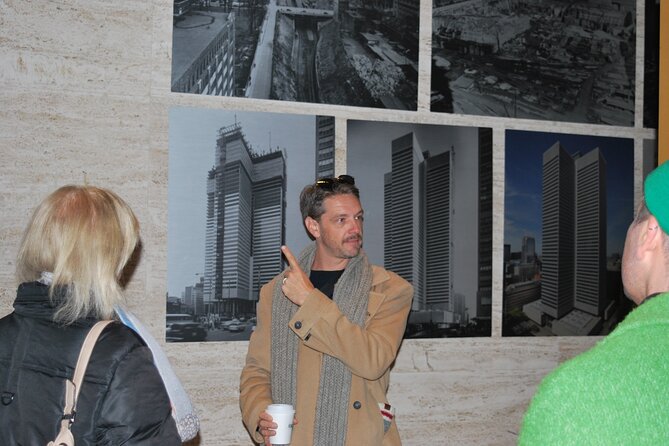
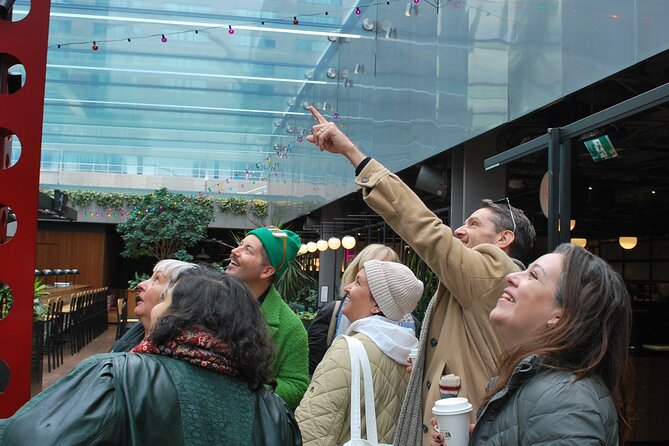
The final stop is the Montreal World Trade Centre, where the tour ends. The visit takes about 10 minutes and shows how the Underground City can include indoor public spaces rather than only narrow corridors.
A fountain area brings light and openness into the building. You’ll also see a section of the Berlin Wall. It is an unexpected object in a Montreal office complex, and it gives Thom a chance to connect the city to wider events and international ties.
This stop makes a good ending because it challenges the idea that the Underground City is simply a set of tunnels. Indoor courtyards, public art, shops, transit links, and architectural features are all part of the system.
The location is especially convenient after the tour. You are close to transit, Old Montreal, Chinatown, downtown, and many places to eat. You can use the remaining time on your metro pass to continue exploring, or walk onward without needing to return to the starting point.
Thom’s guiding style and the value of a small group
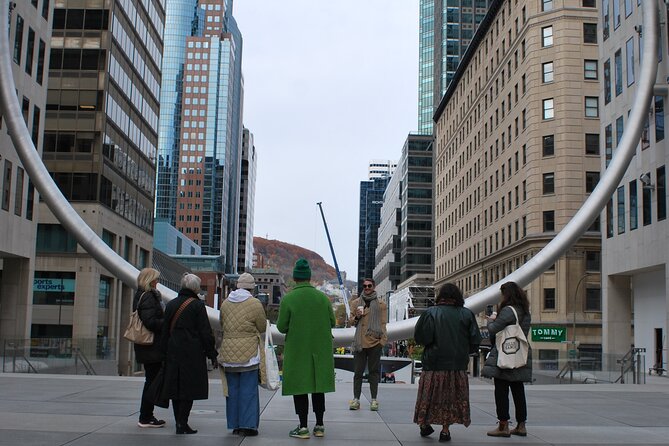
The guide matters a great deal on a tour like this. The physical route alone is not difficult to find, but the meaning behind it is easy to miss. Thom is described as warm, humorous, engaged, and passionate about Montreal. His explanations cover city history, architecture, French Canadian culture, public art, transit, and local recommendations.
That mix is more helpful than a string of dates. You learn why Montreal has its name, why a piece of the Berlin Wall is displayed downtown, how the metro fits into the underground network, and why mirrors appear in one notable building. These details give the city character.
A group limit of 10 people is another real advantage. You can hear the guide more easily in busy indoor spaces, ask questions, and get specific suggestions for the rest of your stay. Several people used the tour to plan what to see next, which is exactly how I would use it.
The tour is offered in English. Two comments were written in French, but the stated tour language is English, so do not book it expecting a French-language experience.
Price, duration, and what you receive
The cost is $66.69 per person for about two hours. Since the major stops do not require separate admission fees, the value comes from the guide’s interpretation, the route planning, the small group, and the added transit benefit.
The reported 24-hour metro pass improves the calculation. If you use it after the tour to reach another part of Montreal, you get more than a guided walk. A gift card and a drink opportunity have also been part of the experience, with alcoholic beverages available only to people 18 and older. Confirm the current inclusions when booking, since extras can change.
I would not choose this tour mainly to collect entrance tickets. I would choose it to understand a confusing part of Montreal quickly and to get practical use from the metro. For a first visit, that can save time and prevent a cold-weather day from becoming a frustrating search through connected buildings.
The tour is often booked well in advance, with an average lead time of 34 days. That suggests planning ahead is sensible, especially if your Montreal dates are fixed.
Who should book this Montreal walking tour
This tour suits you best if you are visiting Montreal for the first time, arriving during cold weather, or staying downtown and want a quick orientation. It also works well for couples, families with older children, solo visitors, and people who enjoy architecture, urban planning, history, or public art.
It is a smart choice near the start of your trip. After two hours, you should have a better sense of where the major downtown districts sit and how to use the Underground City without feeling lost.
You should think twice if stairs, escalators, or extended walking are difficult. The experience is not accessible to people with limited mobility and is not recommended for people using walkers, crutches, or canes.
The pace may also feel quick if you want long photo stops or detailed time inside each district. This is a compact orientation tour, not a slow neighborhood stroll.
Should you book it?
Book this tour if you want Montreal explained as a connected city rather than a collection of separate sights. Thom’s strongest contribution is showing how downtown architecture, transit, public art, French Canadian culture, and the Underground City fit together.
I especially recommend it for a winter arrival or for your first morning in Montreal. You stay warm for much of the route, learn how to navigate the network, and finish near several good areas for lunch and further sightseeing.
Skip it if you need a fully accessible route or prefer to explore at a slow pace. For everyone else, the combination of a small group, a useful metro pass, practical orientation, and lively local storytelling makes the $66.69 price reasonable.
FAQ
Where does the tour begin?
The tour begins at 1000 Rue De la Gauchetière O, Montréal, Quebec H3B 4W5.
What time does the tour start?
The scheduled start time is 10:30 a.m.
Where does the tour end?
The tour ends at the Montreal World Trade Centre, at 747 Rue du Square-Victoria, suite 700, Montréal. The location is close to transit, Old Montreal, downtown, Chinatown, and dining options.
How long does the tour last?
The tour lasts approximately two hours.
Is the tour offered in English?
Yes. The stated tour language is English.
How many people can join the tour?
The maximum group size is 10 people.
Is the tour accessible for people with limited mobility?
No. The route includes substantial walking, escalators, and stairs. It is not recommended for people using walkers, crutches, or canes.
Is a metro pass included?
The experience includes a 24-hour metro pass, according to the tour details provided. Participants can use it after the guided portion to continue exploring Montreal.
Can I cancel for a full refund?
Yes, if you cancel at least 24 hours before the local start time. Cancellations made less than 24 hours before the start are not refunded, and changes within that period are not accepted.
Just added around Montreal
- Full Day Family Bike Rental★ 5.0 · 17 reviews
- Winter Express: Old Montreal Highlights Walking Tour★ 5.0 · 119 reviews
- In the Shadow of the Mountain: Montreal Jewish History Walking Tour★ 4.5 · 33 reviews
- Under the Surface of Montreal’s Chinatown: Guided Food Walking Tour★ 5.0 · 23 reviews
- The Ultimate Montreal Boat Tour – Fall Colors Apéro Edition★ 4.5 · 31 reviews
- Montreal Premium Driving Tour with River Cruise and Notre Dame★ 4.5 · 164 reviews
- Old Montreal: Self-Guided Tour from Place D‘Armes to Old Port★ 5.0 · 5 reviews
- Immersive Virtual Reality Game Activity★ 5.0 · 19 reviews
City Tours, compared.
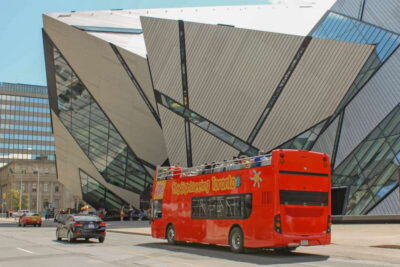
Toronto: City Sightseeing Hop-On Hop-Off Bus Tour
The full write-up →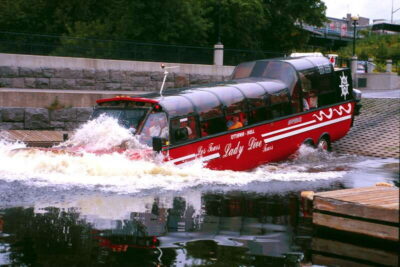
Bilingual Guided City Tour by Amphibious Bus
The full write-up →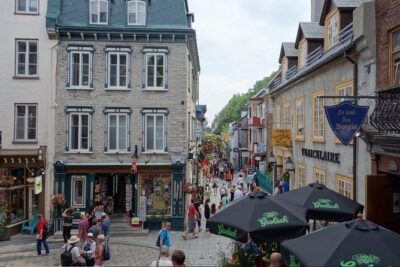
Montreal City Sightseeing Tour with Live Commentary
The full write-up →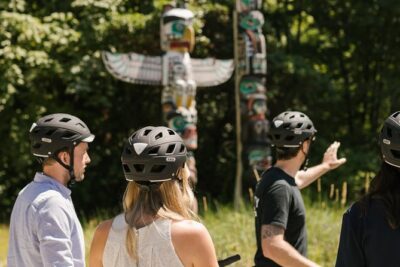
Vancouver City Sightseeing Tour: Granville Island & Stanley Park
The full write-up →
Vancouver City Sightseeing Tour: Capilano Suspension Bridge & Vancouver Lookout
The full write-up →
Browse the lists this tour appears in