
Reviewed · CITY TOURS
Montreal: Discover Reso – The Underground City
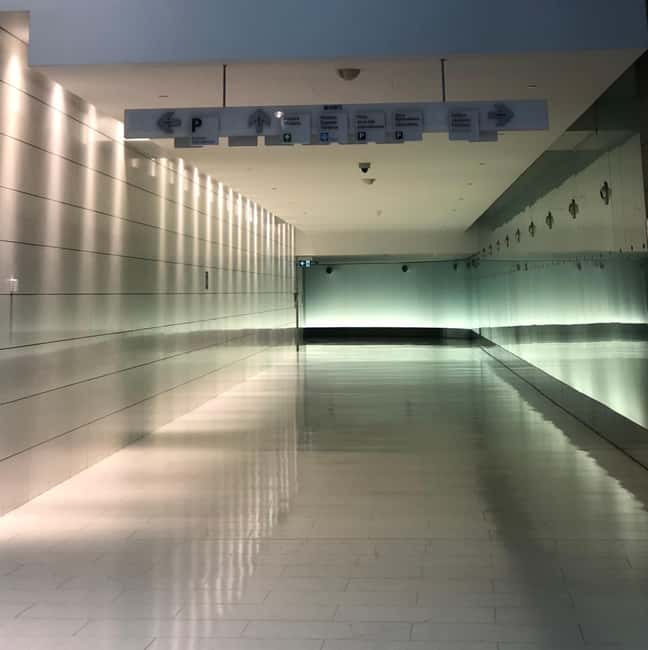
Montreal’s RESO is more than a warm shortcut beneath downtown. It is a 33-kilometre web of shops, food courts, offices, stations, museums, and connecting passages, and local guide Misha helps you make sense of it. You’ll see a piece of the Berlin Wall, ride the metro, stop at an indoor ice rink, and learn how to move around without constantly checking a map.
I like two things here. First, the tour teaches you a useful skill: how to navigate Montreal’s underground network and metro system on your own. Second, it mixes practical stops with odd and photogenic sights, including The Ring, a historic bank turned café, and the Barbie Expo. The main consideration is walking: expect stairs, a lot of ground, and changing temperatures indoors.
Key points at a glance
- A 33-kilometre indoor route: See the central part of Montreal’s RESO while staying mostly protected from snow, rain, and summer heat.
- A useful metro lesson: Misha gives you a short Metro 101 session and includes a ride, a real help if Montreal’s system is new to you.
- Unusual downtown sights: Look for a section of the Berlin Wall, the God of the Sea statue, The Ring, and the year-round 1000 de la Gauchetière rink.
- A photo-friendly itinerary: The fountain at Complexe Desjardins, Les Cours Mont-Royal, The Ring, and the Barbie Expo provide plenty of camera stops.
- Small-group guiding: The group is limited to 10 people, which makes it easier to ask questions and stay together underground.
- Best for confident walkers: The tour is not suited to wheelchair users, children under five, or anyone with a low level of fitness.
Why Montreal’s RESO is worth your time
Montreal’s Underground City is often described as one enormous attraction. That description is a little misleading. The RESO is not one single underground hall with a clear entrance, ticket booth, and grand finale. It is a linked set of indoor passages and commercial complexes built up over time.
That is exactly why it can be hard to understand on your own. You may walk through a shopping centre, emerge near a metro station, pass beneath a hotel or office tower, and suddenly find yourself unsure which direction leads to the next section. Misha’s role is less about showing you one monument and more about connecting the pieces.
I especially like this tour for a first or second day in Montreal. You learn the basic layout early, then you can return to the passages for shopping, food, or shelter from bad weather. Several people who had previously visited Montreal for years still had not properly explored the RESO. That tells you something important: this is a part of the city many independent sightseers miss.
The setting also changes with the season. On a cold winter day, the network gives you a warm route between downtown sights. On a rainy afternoon, it keeps your plans moving. During a heat wave, air-conditioned indoor routes can be a relief. Still, do not expect every section to feel the same. Some areas are polished and lively, while others are simply practical corridors between buildings.
More City Tours in Montreal
- Montreal City Sightseeing Tour with Live Commentary
★ 4.0 · 1,953 reviews - Old Montreal: Traditional Ghost Walk of the Haunted City
★ 4.7 · 746 reviews - 3 Hour Montreal City Bike Tour with Wine or Beer (AM & PM)
★ 5.0 · 332 reviews
Meeting beneath the fountain at Complexe Desjardins
The tour begins inside Complexe Desjardins at 175 René-Lévesque Boulevard West. Once inside, go downstairs to the main atrium and look for the large circular fountain. Benches sit nearby, and the fountain is close to the food court, cafés, and restrooms.
This is a sensible meeting point, especially in winter. You do not need to wait outside in the cold, and the fountain is easier to identify than an ordinary doorway or street corner. Arrive with enough time to find the lower level, since large indoor complexes can be confusing before you know the layout.
Complexe Desjardins also gives you an immediate introduction to the practical side of the RESO. Food, coffee, shopping, and indoor public space all overlap here. The tour quickly shifts from this broad atrium into the connected downtown passages.
The first stops: shops, art, and a bank with a new life
Early in the walk, you visit a local souvenir shop. This is a modest stop, but it can be useful if you want a Montreal-themed gift without setting aside a separate shopping trip. You also receive a shopping route map and instructions, which is one of the more practical extras of the experience.
A former bank now used as a café gives the tour a different mood. The interest is not only the coffee, but the way older commercial architecture has been reused inside a modern downtown network. It is a good reminder that the RESO is not just a basement mall. Its passages connect buildings from different periods and with different personalities.
The route also includes the World Trade Centre of Montreal. Here you see a piece of the Berlin Wall and the God of the Sea statue. These are the sort of details you could easily walk past if you were focused only on finding the next exit.
The Berlin Wall fragment adds a strong historical note to an otherwise commercial setting. The statue gives the stop a more decorative, larger-than-life feel. Misha’s storytelling is central here, since the value lies in understanding why these objects are present and where to look for them.
Learning Montreal’s metro instead of fearing it
One of the most useful parts of the experience is the short Metro 101 lesson. Montreal’s metro is not difficult once you understand the basic system, but visitors can lose time when underground passages, shopping centres, and transit entrances blend together.
Misha explains the essentials and then takes the group on a short ride. This is not just transport between two sightseeing stops. It gives you a quick chance to practise the system while someone is there to explain what you are seeing.
That practical lesson comes up again and again in the tour’s strongest feedback. People used the advice later to reach places such as the farmers market, botanical gardens, and Insectarium instead of relying on taxis or ride-hailing services. You should think of this as a small travel-skills class wrapped inside a walking tour.
If you plan to use public transport during your Montreal stay, take notes or save the route information after the tour. The benefit is greater when you use the metro soon afterward, while the instructions are still fresh.
Same trip, a completely different kind of day out:
- Montreal: Guided Bus Tour
★ 4.4 · 3,064 reviews - Montreal: Hop-On Hop-Off Double-Decker Bus Tour
★ 4.1 · 2,760 reviews - Montreal Mile End Authentic Food Tour with 7 Delicacies Tastings
★ 5.0 · 2,598 reviews - The Original Old Montréal Walking Tour by Guidatour
★ 4.5 · 2,217 reviews
The ice rink and Montreal’s transit crossroads
The 1000 de la Gauchetière indoor ice rink is one of the route’s more unexpected stops. It is open year-round, giving you a sports and recreation space in the middle of the downtown network. The sight of an ice rink beneath the city adds a distinctly Montreal touch, especially for visitors arriving from a warmer climate.
Check the rink schedule in advance if skating is important to you. The tour includes a stop at the rink, but the schedule can affect what you see and whether skating fits into your plans. Also remember that not every visit to the rink will feel equally active or atmospheric.
The route continues to Central Station, Montreal’s major transit hub. This stop helps place the RESO in the wider city. The underground network is not an isolated attraction. It links offices, shopping areas, hotels, restaurants, and transport points, and Central Station shows how useful those connections can be.
The Cathcart Terrace restaurant and Biergarten provides another change of pace. You can see the dining area and get a sense of the food options available along the route. Meals are not included, so treat this as a possible place to return to rather than part of the tour price.
The Ring, espresso, and the best photo stops
At some point, the group steps outside to see The Ring. This large public artwork frames more than 200 years of downtown Montreal history, making it one of the strongest visual stops on the route. It also gives you a brief break from the corridors and a chance to see how the indoor network connects with the city above.
The tour includes a quick espresso or fresh juice stop in the tunnels. The drink itself is not generally included, so bring a payment card or cash for personal purchases. It is a useful pause during a two-hour walk, particularly because the route covers a lot of ground.
Photography is a clear part of the experience. Misha takes plenty of pictures and points out useful angles, which can help if you want more than ordinary snapshots of signs and corridors. The fountain at Complexe Desjardins, the World Trade Centre, The Ring, and the architecture at Les Cours Mont-Royal all give you different types of images.
The tour also includes access to a selfie zone and a visit to the Barbie Expo. The Barbie exhibit is the most deliberately playful stop on the itinerary, with displays designed for close-up photos and colorful scenes. It will appeal most to visitors who enjoy pop culture, fashion, or unusual city stops. If you prefer architecture and civic history, it may feel less essential, but it adds variety.
Les Cours Mont-Royal and the shopping route
Les Cours Mont-Royal brings a more elegant architectural setting to the walk. The complex is part of the connected downtown system, but it feels different from a standard food court or transit passage. You see how Montreal’s indoor city shifts from practical public route to high-end shopping and decorative interiors.
The route also includes the Eaton Centre, now home to Time Out Market, and Place Montreal Trust. These stops are useful for anyone planning to shop or eat downtown. They also help you understand the sheer scale of the network: the RESO is not just a way to avoid snow. It is a linked commercial district below the streets.
The downside is that this portion can feel less like traditional sightseeing. You are moving through shopping centres and indoor public areas rather than visiting historic monuments one after another. I would not book this experience expecting a classic guided walk through Old Montreal. Book it if you want to understand how modern downtown Montreal works.
What the two-hour pace feels like
Two hours is enough time to cover a surprising amount, but it is not enough for long visits at every stop. The route is designed as an orientation walk. You see the highlights, hear the main stories, and learn where to return later.
Expect steady walking, stairs, and some time spent finding your way through large complexes. One person described the route as relaxed but noted that it took longer than expected to get from place to place because the network is easy to confuse. That is not a flaw in the guide so much as a feature of the RESO itself.
Wear comfortable shoes. Bring a camera, but keep your hands free enough to manage stairs and doors. Large bags and luggage are not allowed, and baby strollers are not suitable for this experience.
The network can also have temperature changes between different buildings and sections. Dress in layers so you can adjust as you move. Even on a day when the weather outside is unpleasant, you should not assume every indoor area feels exactly the same.
Misha guides in English and French. Her style is personal and social, with local recommendations added along the route. She has been offering this experience for more than six years and presents it as a local perspective based on her own city experience, not as an official institutional history.
The $29 price and who gets the most from it
At $29 per person, the value depends on how much use you will make of the information afterward. You are not paying for entry to a major single attraction. You are paying for a small-group orientation, a guided route through places that are difficult to connect alone, a metro lesson, and practical advice about food and shopping.
For a first-time visitor, that can be good value. The tour can save you time later and may help you feel comfortable using public transport instead of paying for repeated car rides. The small group, capped at 10, also gives you a better chance to ask questions than a large city tour.
The price does not include meals, drinks, personal purchases, or hotel pickup. Budget for a coffee, juice, or meal if you want one, and remember that the Barbie Expo or other stops may have their own conditions outside the guided experience.
This tour suits adults and older children who can walk steadily and manage stairs. It is not suitable for children under five, wheelchair users, people with low fitness, or anyone carrying large luggage. Unaccompanied minors are not allowed.
Should you book Discover RESO?
Book this tour if you want a practical introduction to Montreal’s downtown connections, especially during winter, rain, or extreme heat. It is also a smart early-trip activity if you plan to use the metro, shop downtown, or return to the RESO on your own.
The strongest reason to go is Misha’s combination of local storytelling and navigation help. You get the Berlin Wall, The Ring, the ice rink, Central Station, the Barbie Expo, and several shopping complexes, but the real payoff is knowing how these places fit together.
Skip it if you want a slow architectural tour, a food-focused outing, or a fully accessible route with little walking. For everyone else, $29 buys a useful two-hour head start on one of Montreal’s strangest and most practical city features.
FAQ
Where does the Discover RESO tour meet?
The meeting point is inside Complexe Desjardins at 175 René-Lévesque Boulevard West in Montreal. Go downstairs to the main atrium and wait near the large fountain.
How long does the tour last?
The guided experience lasts about two hours.
What languages are available?
The tour is offered in English and French.
How large is the group?
The group is limited to 10 participants.
Is food or coffee included?
Meals and drinks are not generally included. Food, coffee, espresso, and fresh juice are available for purchase at stops along the route.
Can I skate at the 1000 de la Gauchetière rink?
The itinerary includes a visit to the indoor rink, which is open year-round. Check the rink schedule in advance if skating is important to you.
Is the tour suitable for wheelchair users or young children?
The experience is not suitable for wheelchair users or children under five. It also involves considerable walking and stairs, so it is not recommended for people with a low level of fitness.
Just added around Montreal
- Full Day Family Bike Rental★ 5.0 · 17 reviews
- Winter Express: Old Montreal Highlights Walking Tour★ 5.0 · 119 reviews
- In the Shadow of the Mountain: Montreal Jewish History Walking Tour★ 4.5 · 33 reviews
- Under the Surface of Montreal’s Chinatown: Guided Food Walking Tour★ 5.0 · 23 reviews
- The Ultimate Montreal Boat Tour – Fall Colors Apéro Edition★ 4.5 · 31 reviews
- Montreal Premium Driving Tour with River Cruise and Notre Dame★ 4.5 · 164 reviews
- Old Montreal: Self-Guided Tour from Place D‘Armes to Old Port★ 5.0 · 5 reviews
- Immersive Virtual Reality Game Activity★ 5.0 · 19 reviews
City Tours, compared.
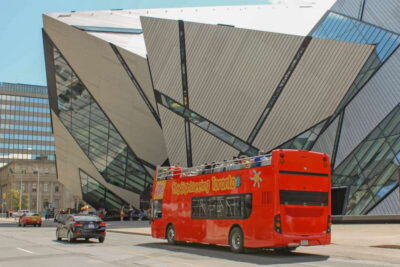
Toronto: City Sightseeing Hop-On Hop-Off Bus Tour
The full write-up →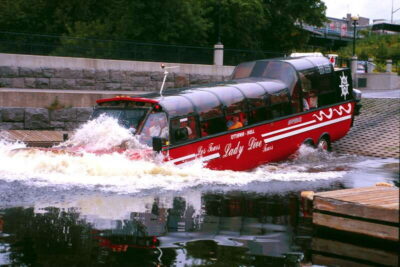
Bilingual Guided City Tour by Amphibious Bus
The full write-up →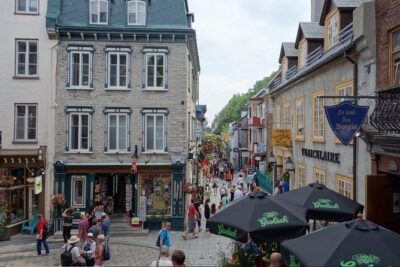
Montreal City Sightseeing Tour with Live Commentary
The full write-up →
Vancouver City Sightseeing Tour: Granville Island & Stanley Park
The full write-up →
Vancouver City Sightseeing Tour: Capilano Suspension Bridge & Vancouver Lookout
The full write-up →
Browse the lists this tour appears in